


Blog
Mosque Carpet Cost for 100, 250 and 500 Worshippers
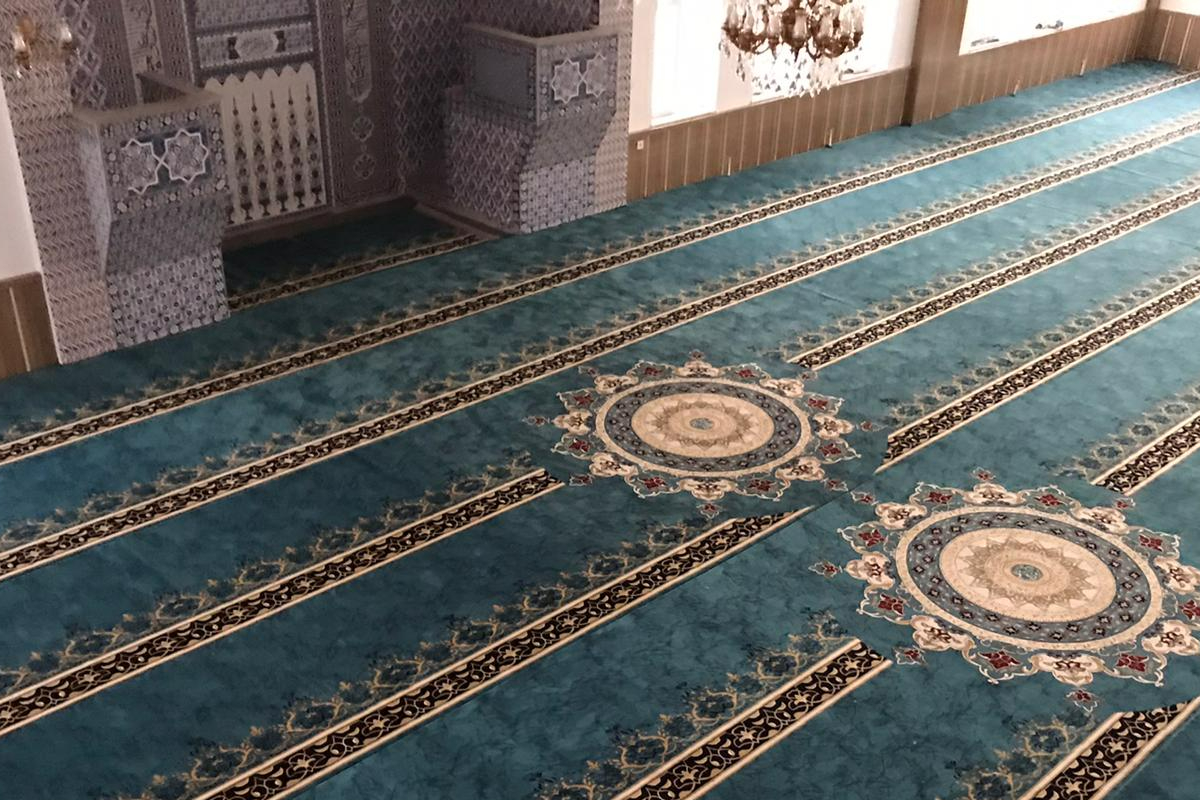
Mosque Carpet Cost for 100, 250 and 500 Worshippers is best answered with a project-specific cost model rather than a universal headline figure. The final amount can change with scope, dimensions, material grade, site conditions, local labor, approvals, logistics, installation responsibilities and the level of custom work. This guide explains how to structure the question so a mosque committee can obtain comparable quotations and avoid false precision. Where no verified current quotation is available, the article deliberately does not invent a price.
For Global projects, the article uses the project brief as the starting point and treats mosque carpet cost for 100, 250 and 500 worshippers as one part of a coordinated mosque. The main objectives are clear prayer-row alignment, comfortable standing and prostration, durable high-traffic performance. The exact solution should still be confirmed against approved drawings, local regulations, manufacturer data and site conditions. A mosque is both a place of worship and an operated building. Design decisions therefore need to work during daily prayers, Friday peaks, cleaning, maintenance, events and future repairs. Cost content should be read as a budgeting framework. A current project price requires verified drawings, local quotations and a defined inclusion list.
Quick project perspective
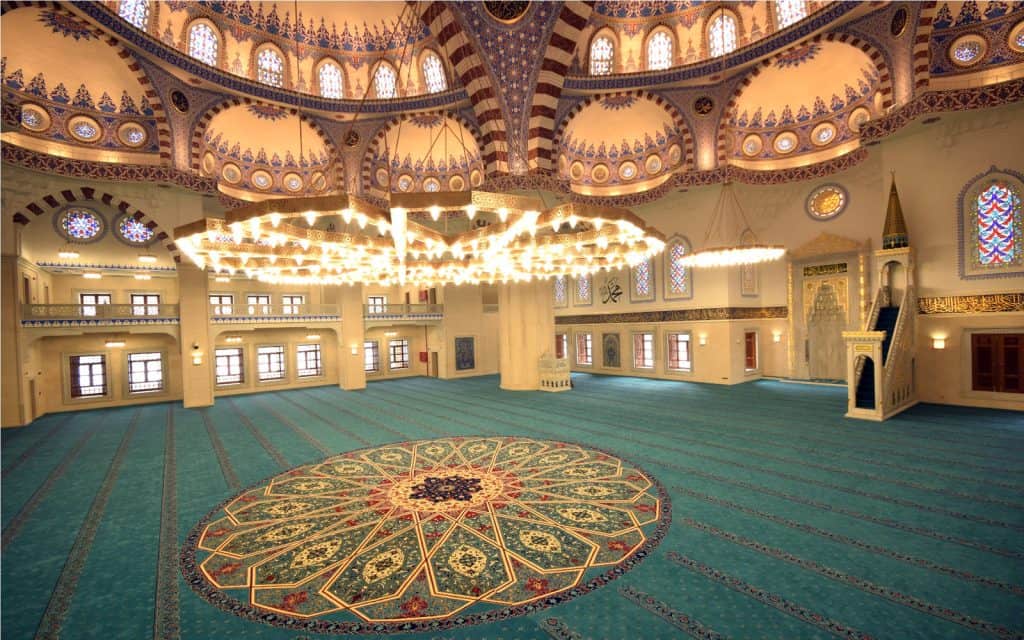
The practical meaning of mosque carpet cost for 100, 250 and 500 worshippers becomes clearer when the team separates visual intent from technical requirements. The visual side may include proportion, color, pattern, material character and relationship to the mosque architecture. The technical side includes prayer-row geometry, pile height and density, backing stability, fiber and yarn construction, edge and threshold detailing, underlay selection. Both sets of decisions should appear in the same drawing and approval process; otherwise an attractive concept can become difficult to fabricate, install or maintain.
Start by recording what the project is trying to achieve for worshippers, maintenance teams and installers. Typical success criteria include clear prayer-row alignment, comfortable standing and prostration, durable high-traffic performance, balanced color and architectural harmony, practical cleaning and stain management, quiet footfall and useful acoustic absorption. Then identify the constraints that cannot be changed easily: verified site dimensions, qibla or structural geometry, local code requirements, access routes and the interfaces with adjacent trades. The most expensive mistake is often a late change to a dimension that has already influenced other trades. Early site verification and formal drawing approval are inexpensive compared with remanufacture or rework. A 250-person scheme needs enough circulation and support space to handle peak arrival without overcomplicating a community-scale plan.
How to build a realistic cost model
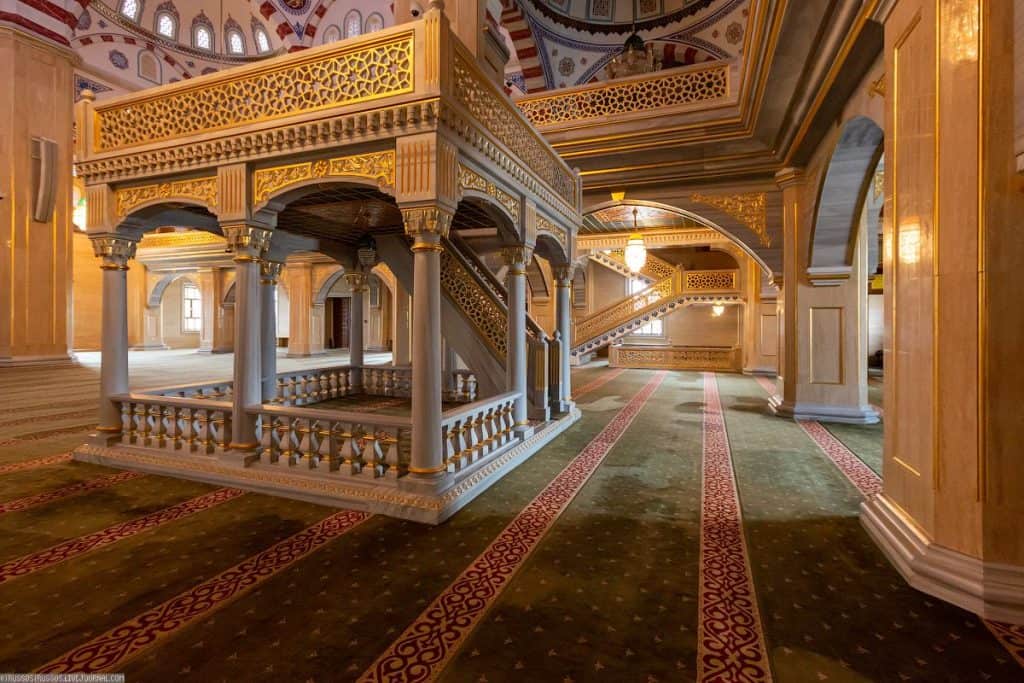
A reliable budget for mosque carpet cost for 100, 250 and 500 worshippers is built from quantities and scope. First define what is being measured, then apply current project quotations to that quantity, and finally add the items that sit outside a simple unit rate. Depending on the subject, those items can include design development, samples, substructure, hardware, specialist labor, packaging, freight, taxes, access equipment, installation, testing and contingency. The important point is that every number has a source and an inclusion list.
| Cost layer | What to define before pricing | Why it changes |
|---|---|---|
| Base quantity | Verified area, count, dimensions or capacity | The quantity determines the starting scope |
| Spezifikation | edge and threshold detailing, fiber and yarn construction, backing stability | Material and performance choices affect manufacturing and labor |
| Project conditions | Site access, programme, protection and interfaces | Difficult logistics or sequencing can add work |
| Delivery and installation | Freight, customs if relevant, unloading, access and installation | A factory price is not automatically an installed price |
| Risk allowance | Design maturity and unresolved conditions | Earlier budgets carry more uncertainty |
For comparison, ask every bidder to price the same drawings and schedule of inclusions. If one proposal includes delivery, installation and finish samples while another excludes them, the headline totals are not directly comparable. Normalize the offers first. For country-specific content, use current local quotations and current tax or customs advice; this pack does not insert a fabricated market rate.
Technical coordination and interfaces
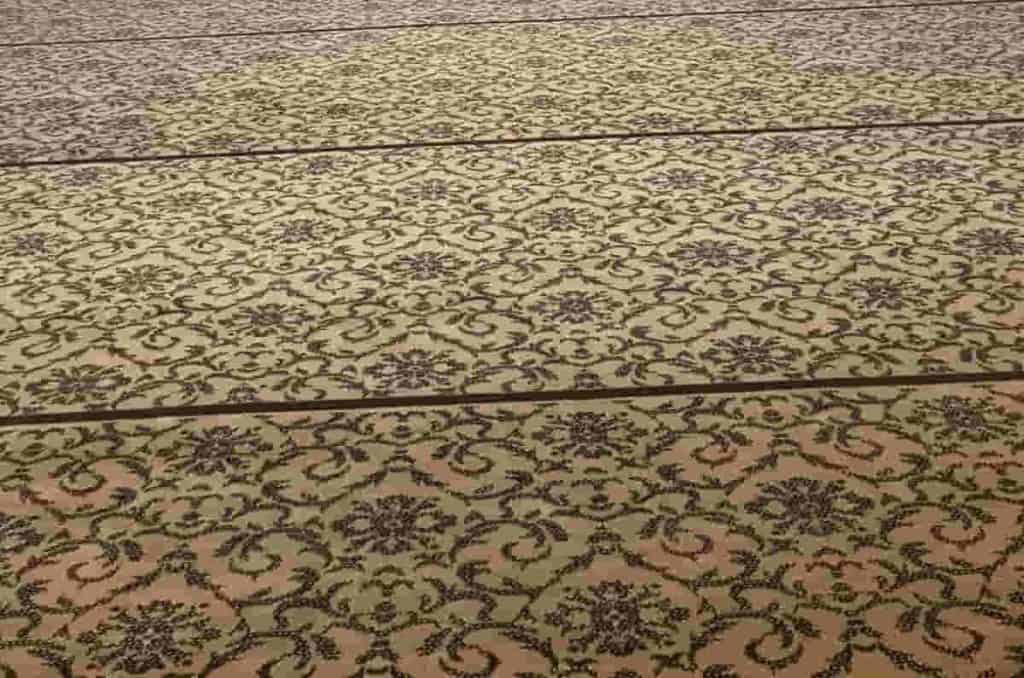
Most problems around mosque carpet cost for 100, 250 and 500 worshippers happen at interfaces rather than in the center of the product or space. Review where it meets structure, floors, walls, ceilings, services, access routes and other specialist elements. Put those junctions on coordinated drawings and identify tolerances. If a detail is not visible on a drawing, it is easy for each trade to assume somebody else owns it.
| Coordination topic | Performance objective | Project action |
|---|---|---|
| Acoustic behavior | Clear prayer-row alignment | Record columns, steps and thresholds |
| Installation tolerances | Comfortable standing and prostration | Select construction and color family |
| Underlay selection | Durable high-traffic performance | Approve a physical sample |
| Maintenance access | Balanced color and architectural harmony | Prepare a cutting and seam plan |
| Edge and threshold detailing | Practical cleaning and stain management | Coordinate delivery and acclimatization |
| Color consistency | Quiet footfall and useful acoustic absorption | Install from a controlled datum |
For this topic, give particular attention to acoustic behavior, installation tolerances, underlay selection, maintenance access, edge and threshold detailing, color consistency. A coordination review should include the architect, relevant engineer, specialist supplier and installer before final production. Mock-ups and samples are most useful when they answer a defined question: color under actual lighting, joint width, texture, carving depth, edge detail, cleaning behavior or installation tolerance.
Materials, finishes and sample approval
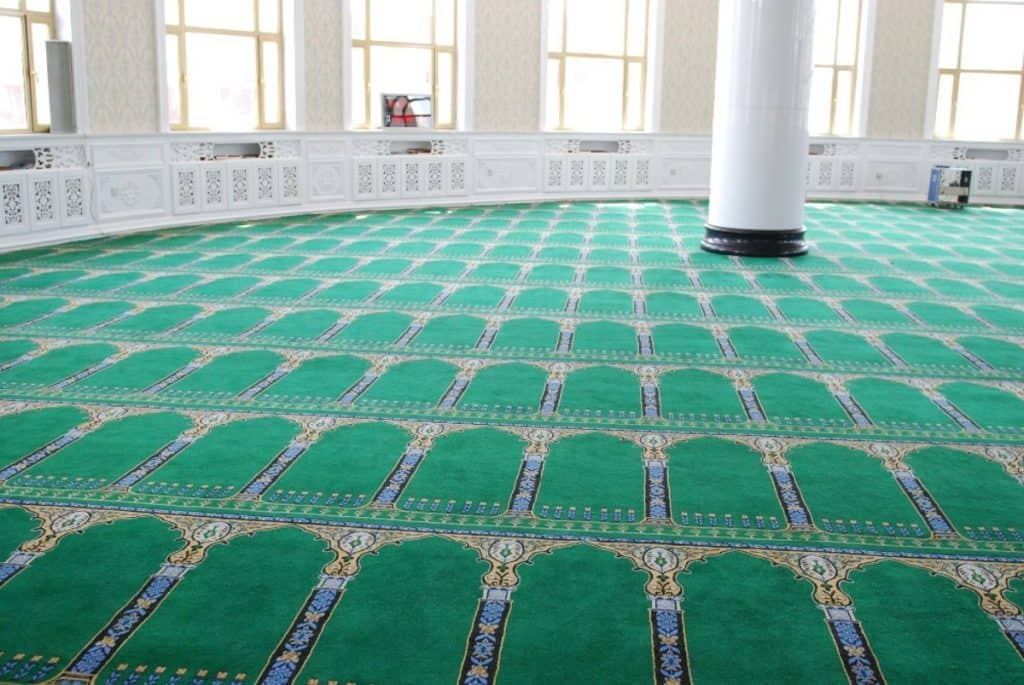
Material names alone are not enough to specify mosque carpet cost for 100, 250 and 500 worshippers. Within nylon blends, solution-dyed yarn, tufted constructions, polypropylene, woven backing, woven constructions, quality can vary by grade, construction, thickness, finish system and manufacturer. Write the required characteristics in the specification and ask the supplier to identify the exact proposed product. Where appearance is important, approve a physical sample under representative project lighting.
- Confirm the exact nylon blends construction, finish and maintenance requirement.
- Confirm the exact solution-dyed yarn construction, finish and maintenance requirement.
- Confirm the exact tufted constructions construction, finish and maintenance requirement.
- Confirm the exact polypropylene construction, finish and maintenance requirement.
- Confirm the exact woven backing construction, finish and maintenance requirement.
- Record the approved sample so later replacements can be compared against the same reference.
At around 500-person planning scale, entry distribution, qibla-wall length, services and crowd movement deserve explicit testing in the design. A sample should be large enough to reveal the decision being made. Tiny swatches may show color but not pattern scale, joint quality, reflectance or craftsmanship. For bespoke work, a representative mock-up can also test the interface with adjacent materials before full production begins. Every project has uncertainty. The professional response is to identify it, state what must be verified, and avoid presenting assumptions as fixed facts.
Design quality and worshipper experience

The design of mosque carpet cost for 100, 250 and 500 worshippers should support the larger experience of the mosque. Evaluate it from the entrance, from the back of the prayer hall and from the imam’s position, not only in a close-up rendering. Useful objectives include comfortable standing and prostration, quiet footfall and useful acoustic absorption, clear prayer-row alignment, balanced color and architectural harmony. The strongest design is usually the one that reinforces the spatial hierarchy without creating unnecessary visual competition.
Possible directions for this project include heritage burgundy with cream lines, borderless prayer-row rhythm, arched mihrab-inspired motifs, Ottoman-inspired medallion accents, custom woven signature pattern. Select one clear primary direction and one or two supporting ideas. Then repeat compatible geometry, color and finish cues across related elements so the mosque reads as a coherent interior rather than a collection of separately purchased products.
Lighting can change perceived color, texture and depth dramatically. Review important samples under the intended color appearance and light direction. Also consider how daylight will alter the material through the day. Durability is not simply a material name. Exposure, detailing, finish system, workmanship, cleaning method and maintenance frequency all influence service life.
Procurement, installation and quality control
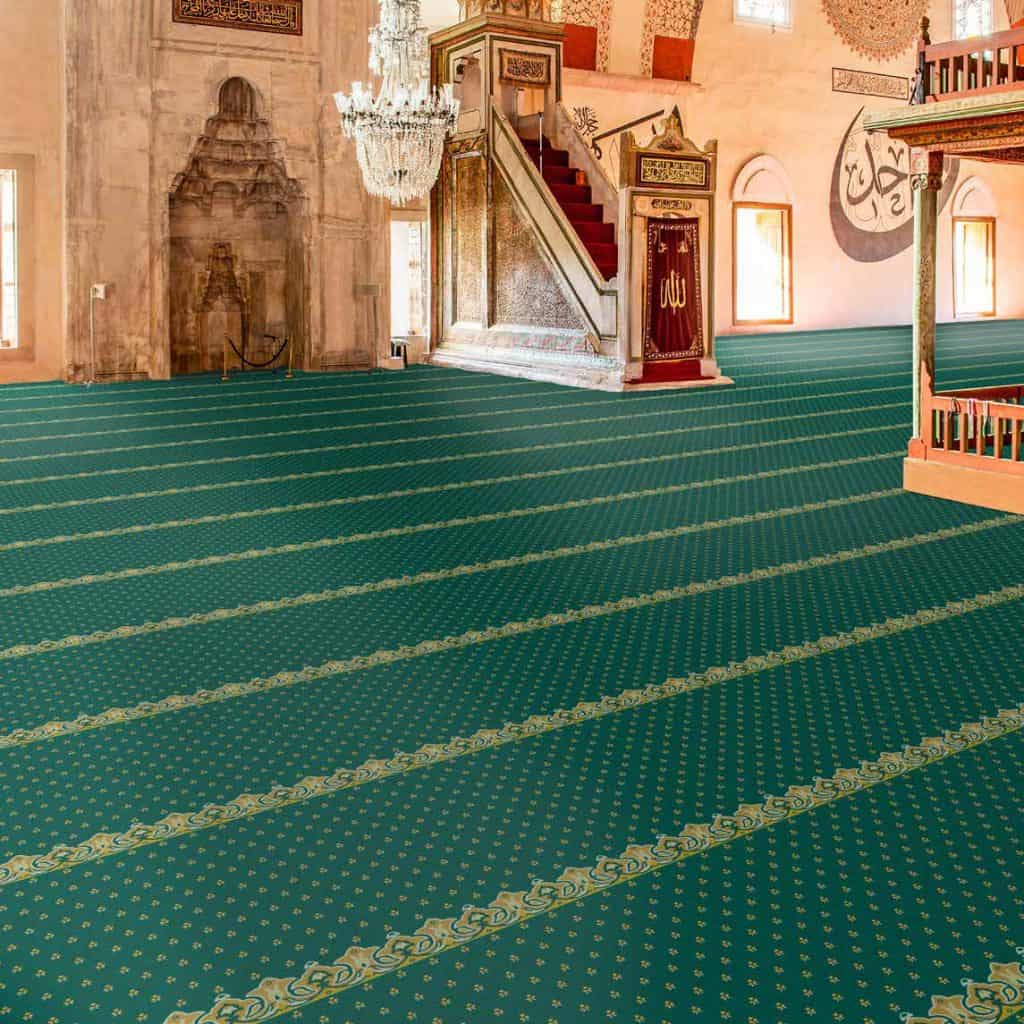
The procurement route for mosque carpet cost for 100, 250 and 500 worshippers should preserve the design intent while making responsibilities explicit. The sequence can be summarized as: survey the prayer hall, confirm qibla direction and row module, record columns, steps and thresholds, select construction and color family, approve a physical sample; then prepare a cutting and seam plan, coordinate delivery and acclimatization, install from a controlled datum, inspect row alignment and seams, issue cleaning and maintenance guidance. Each transition should be linked to an approval—drawing, sample, measurement, inspection or handover record—so the project can demonstrate what was accepted.
- Coordinate delivery and acclimatization.
- Prepare a cutting and seam plan.
- Install from a controlled datum.
- Approve a physical sample.
- Select construction and color family.
- Inspect row alignment and seams.
- Record columns, steps and thresholds.
- Issue cleaning and maintenance guidance.
On site, protect finished work from later trades and inspect it before access equipment or packaging is removed. Photograph critical hidden interfaces where useful. If a defect appears, record whether it is a material, fabrication, transport, substrate or installation issue before deciding the remedy. The best results normally come from early coordination. When architecture, structure, services and specialist mosque elements are developed together, late site compromises are reduced.
Common mistakes and how to avoid them
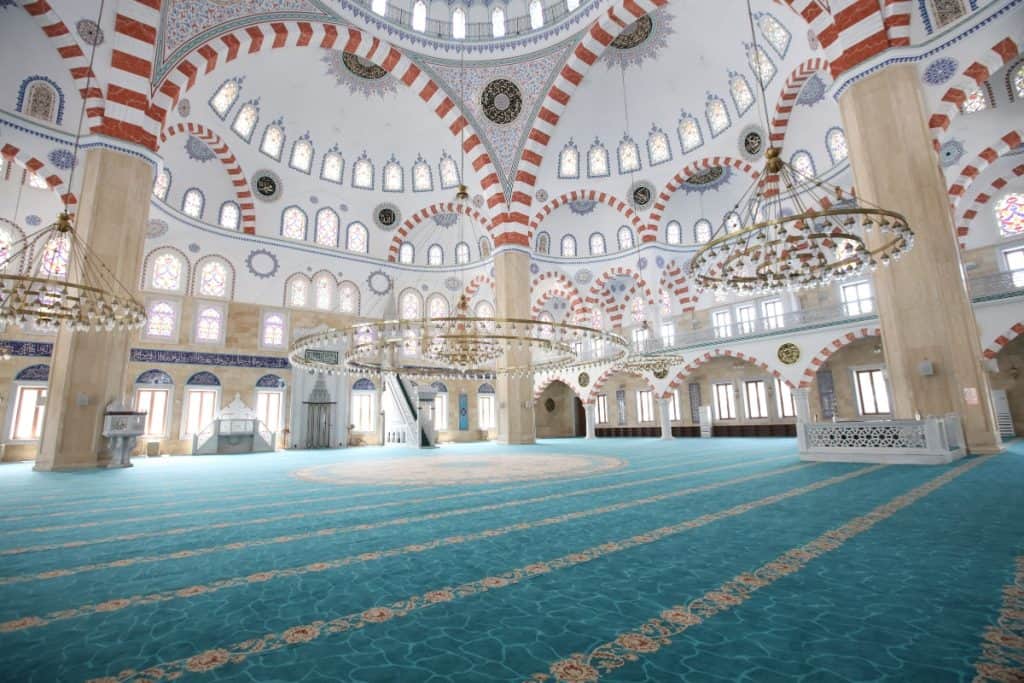
Common mistakes around mosque carpet cost for 100, 250 and 500 worshippers are usually predictable. They include assuming all carpets require the same cleaning method, ignoring row alignment, reusing one image or sample as proof of exact color, placing seams in visually sensitive areas. The preventive action is simple in principle: verify the brief, coordinate interfaces, use project-specific drawings, approve samples and keep a written record of changes.
- Assuming all carpets require the same cleaning method.
- Ignoring row alignment.
- Reusing one image or sample as proof of exact color.
- Placing seams in visually sensitive areas.
- Choosing only by color.
- Using an unsuitable pile for traffic level.
- Forgetting thresholds and door clearances.
Another frequent mistake is treating an online image, old price or generic dimension as a project fact. Use references for inspiration and early planning, but label assumptions clearly until they are replaced by current quotations, approved technical data and verified site information. A good specification describes performance and interfaces as well as appearance. It should tell the contractor what must be achieved, what must be coordinated, and how acceptance will be judged.
Maintenance, life-cycle planning and handover

A project is not complete when mosque carpet cost for 100, 250 and 500 worshippers is installed; it is complete when the operating team can care for it. Handover information should explain cleaning, inspection, adjustment and replacement procedures that are specific to the installed material or assembly. Record finish references and supplier contacts. Where matching may be difficult later, consider an agreed quantity of spare material or replaceable components.
Life-cycle planning should pay attention to installation tolerances, color consistency, fiber and yarn construction, column and mihrab cuts, edge and threshold detailing. The team should know which areas will wear first, what access is required for service and which signs indicate that maintenance is needed. This helps the mosque budget for care instead of waiting for visible failure. Visual quality should be evaluated at the scale of the real space. A detail that looks rich in a close-up image may become noisy from the back of a prayer hall, while a restrained detail can gain strength at architectural scale.
- Keep approved material and finish references.
- Record cleaning or service instructions from the actual manufacturer.
- Schedule safe inspection of concealed or elevated components.
- Protect spare pieces or parts in labeled storage.
- Update records when repairs or replacements are made.
Frequently asked questions
Is there one standard answer for mosque carpet cost for 100, 250 and 500 worshippers?
No single project-independent answer should be treated as mandatory for mosque carpet cost for 100, 250 and 500 worshippers. In the context of Mosque Carpet Cost for 100, 250 and 500 Worshippers, confirm prayer-row geometry, carpet construction, traffic, cleaning method, seams, thresholds and the approved sample. Generic references are useful for early planning, but the final decision should be recorded in approved project documents.
Why does the cost of mosque carpet cost for 100, 250 and 500 worshippers vary?
The cost of mosque carpet cost for 100, 250 and 500 worshippers changes with quantity, dimensions, material grade, customization, local labor, delivery, installation, programme and the exact list of inclusions. For Mosque Carpet Cost for 100, 250 and 500 Worshippers, compare quotations only after every bidder is pricing the same scope and the same revision of the drawings.
Should a mosque committee use an online unit rate as its budget?
Use an online unit rate only as an early sense-check for Mosque Carpet Cost for 100, 250 and 500 Worshippers. A formal budget for mosque carpet cost for 100, 250 and 500 worshippers should use current project quotations and should record the date, market, quantity basis, inclusions and exclusions behind every rate.
Will the supplier provide a production sample before the full order?
A representative sample for Mosque Carpet Cost for 100, 250 and 500 Worshippers should answer a defined approval question: color, texture, workmanship, carving depth, pattern scale, joint quality or finish. Record the approved sample reference before full production is released.
Are columns, mihrab edges and thresholds included in the cutting plan?
Show columns, thresholds, wall returns and other edge conditions explicitly in the drawings for Mosque Carpet Cost for 100, 250 and 500 Worshippers. These junctions affect cutting, tolerances, fixings and visual alignment, so they should be resolved before fabrication or installation.
Which cleaning method is realistic for the facility team?
Choose a maintenance approach for Mosque Carpet Cost for 100, 250 and 500 Worshippers from the actual material, finish, equipment access and facility-team capability. The approved product data should state the cleaning or service method used at handover.
Project checklist and next step
Before finalizing mosque carpet cost for 100, 250 and 500 worshippers, confirm that the project team has a verified brief, current drawings, coordinated interfaces, approved materials or samples, a clear inclusion list, an installation plan and a maintenance record. If the topic involves cost, dimensions, regulation, fire performance, structure or a country-specific requirement, replace generic assumptions with current professional or supplier verification before publication or construction.
- Will the supplier provide a production sample before the full order?
- How will prayer rows align with the qibla?
- Are columns, mihrab edges and thresholds included in the cutting plan?
- Which cleaning method is realistic for the facility team?
- How will replacement pieces be matched later?
- What traffic level will the prayer hall experience?
For MosqueBuild projects, the practical next step is to turn the preferred direction into a project-specific technical request: share the relevant drawings, dimensions, target style, material expectations, delivery location and programme. That information allows carpet, doors, minbar, mihrab, dome-related finishes, lighting or other specialist mosque packages to be matched to the real project rather than to a generic template. Photographs are excellent for establishing design direction, but they are not technical specifications. Material samples, dimensions, shop drawings and project-specific engineering are still required.
 English
 German
 Turkish
 Russian
 French
 Arabic