


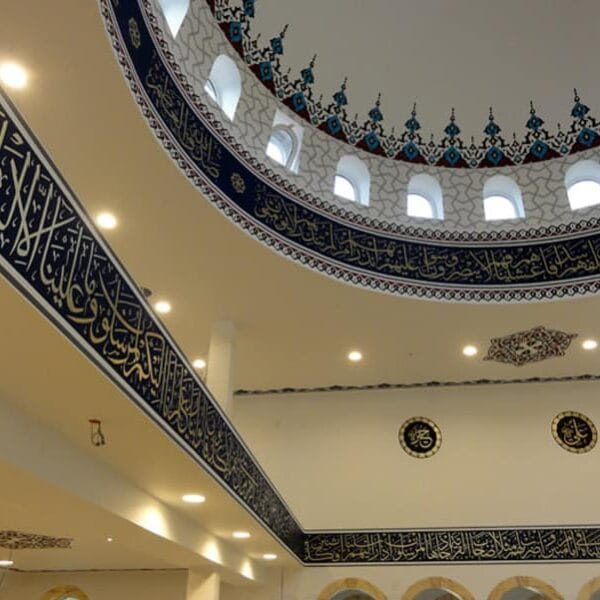
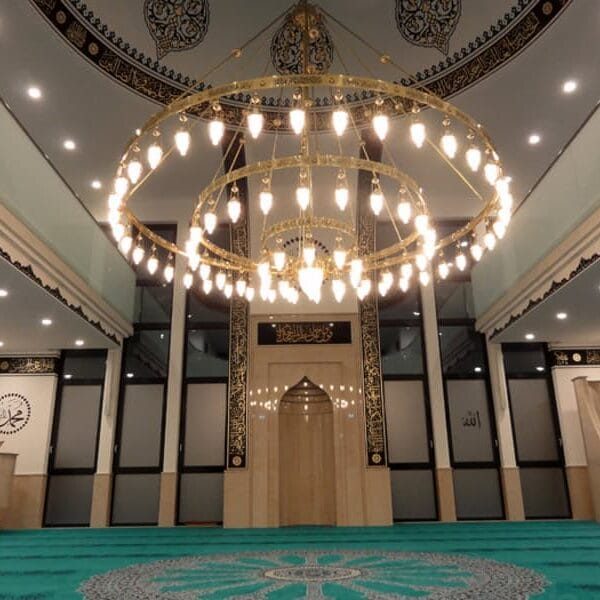
Explore MosqueBuild’s Moschee-Wand- und Deckenkalligrafie solutions for prayer halls, qibla walls, upper wall bands and architectural ceiling areas. Arabic inscriptions should be developed as part of the interior composition, with attention to available dimensions, viewing distance and the relationship between the calligraphy and nearby architectural details.
Custom Calligraphy for Mosque Walls and Ceilings
The scale and structure of a calligraphy layout depend on the surface on which it will be used. Long horizontal wall areas may suit a continuous inscription band, while framed wall panels or ceiling zones require a different proportion. The text, style direction and surrounding ornament should be reviewed together before the final artwork is prepared. Where the mosque already has a defined material and color palette, the calligraphy composition can be coordinated with the mihrab wall, wall cladding, windows and ceiling details.
Project-specific layouts for walls, ceilings and architectural bands
Arabic text content confirmed before final production
Proportions developed around the real surface dimensions
Coordination with qibla-wall elements and surrounding interior finishes
Design review using elevations, photographs or measured drawings
Planning a Mosque Calligraphy Area
Provide the usable width and height of the surface, photographs and the exact requested inscription. If the text will repeat around several walls or connect with dome calligraphy, show the full room geometry so the rhythm and scale can be reviewed as one system.
Can the inscription text be selected for each project?
Yes. The requested Arabic text can be incorporated after its wording and layout have been confirmed for production.
Can wall and ceiling calligraphy be designed as one visual system?
Yes. Related proportions and decorative direction can be developed across multiple architectural surfaces for a more coherent interior.
Alle 18 Ergebnisse werden angezeigt
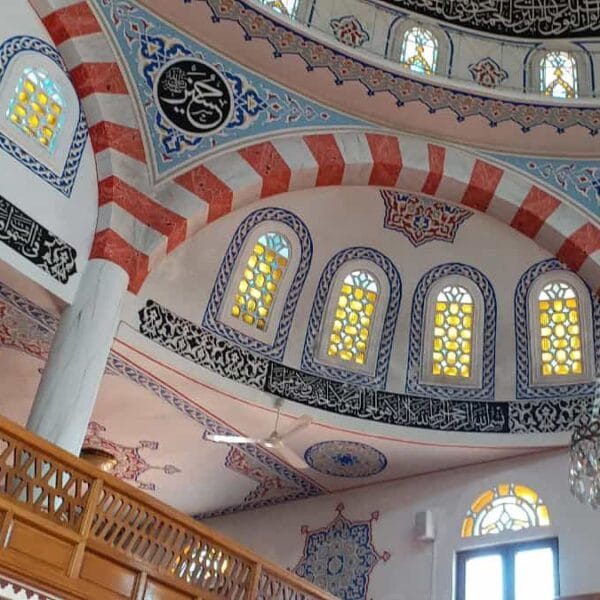
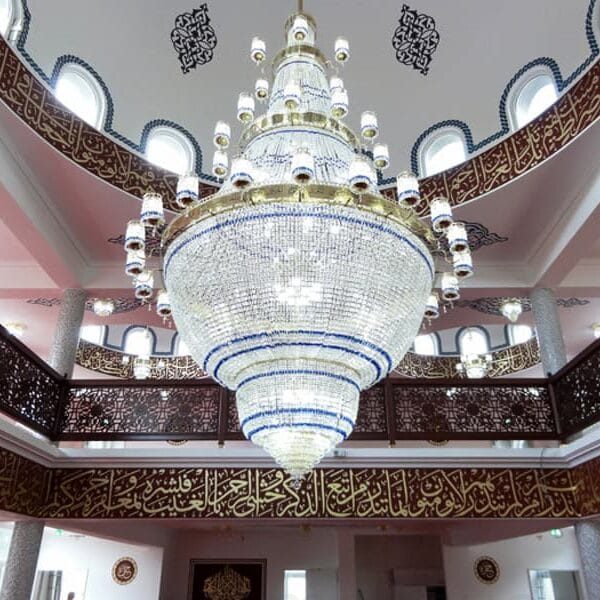
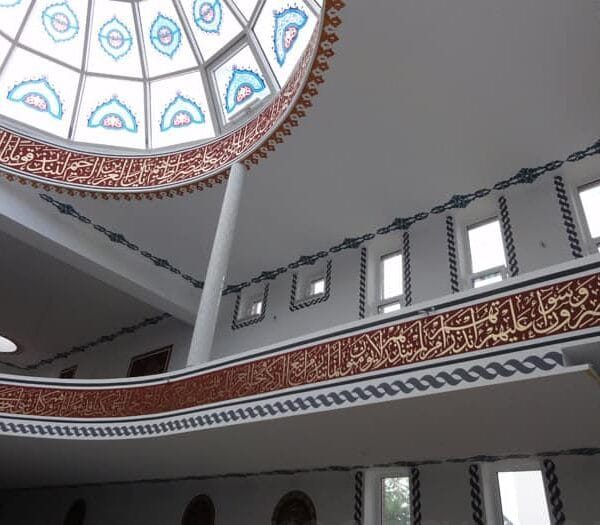
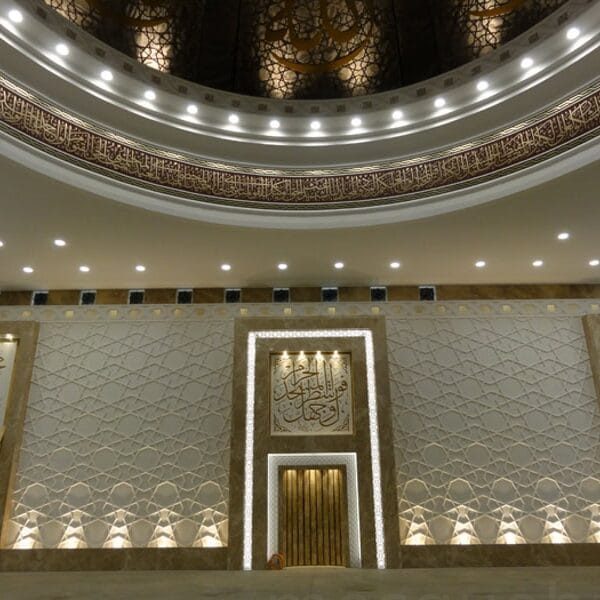
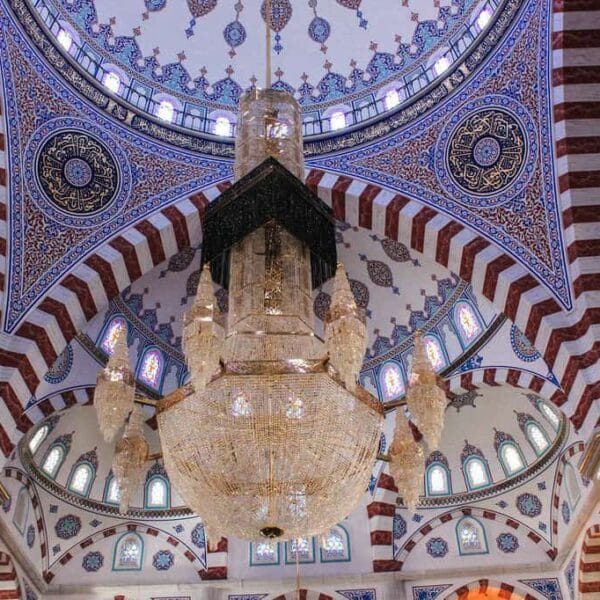
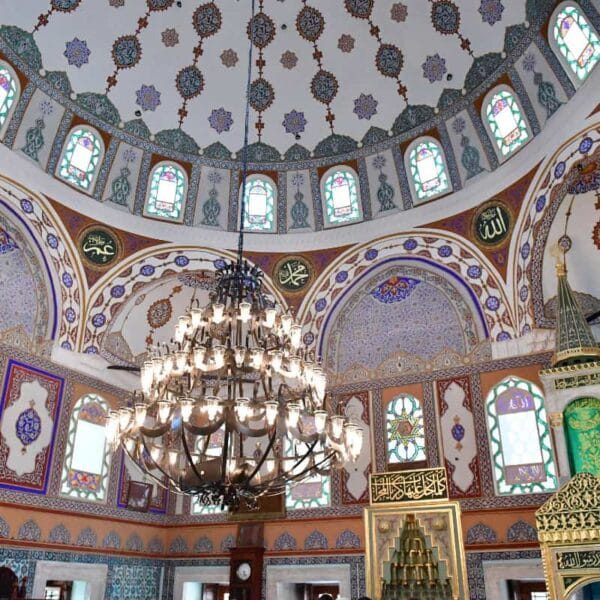
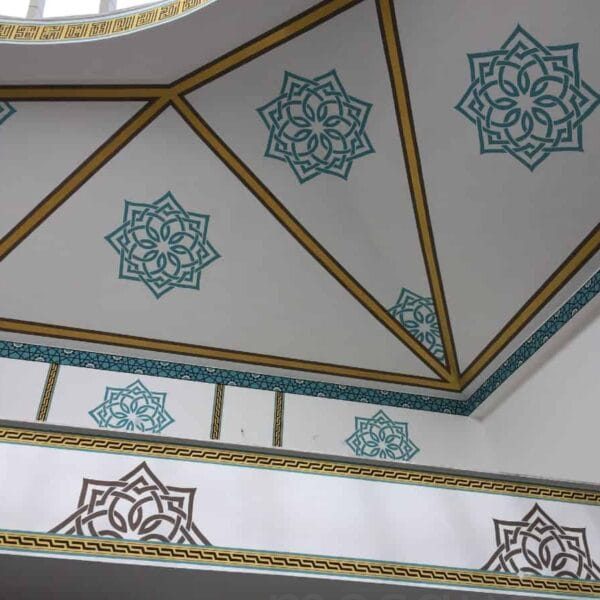
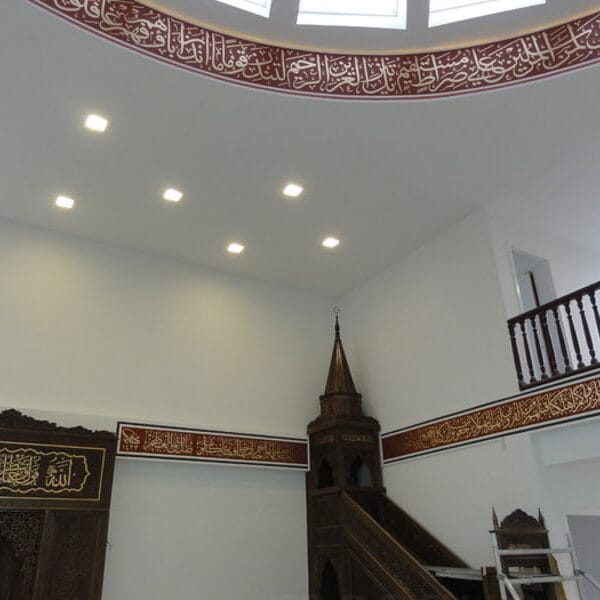
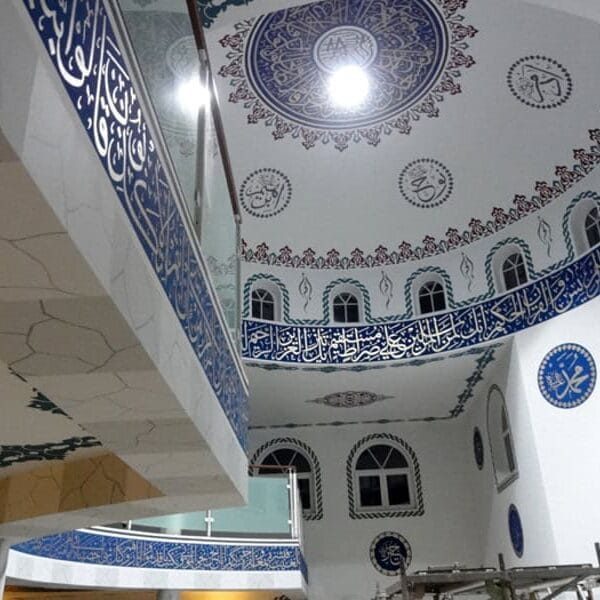
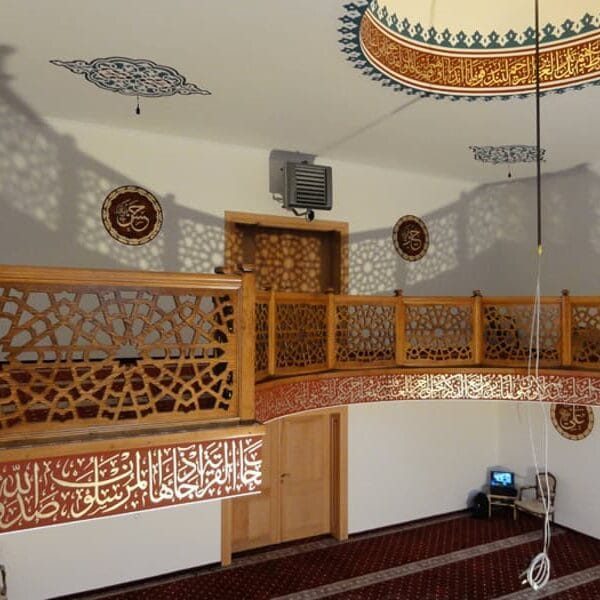
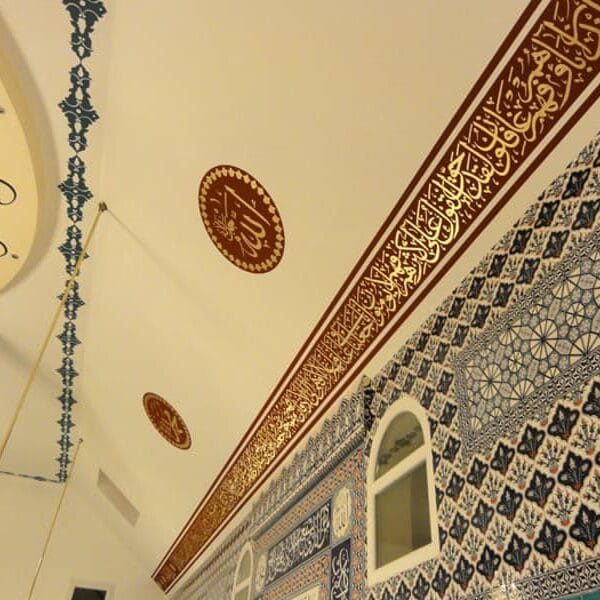
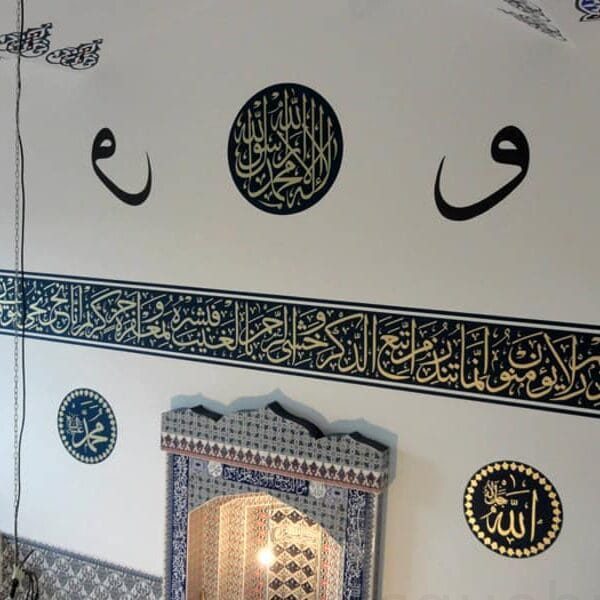
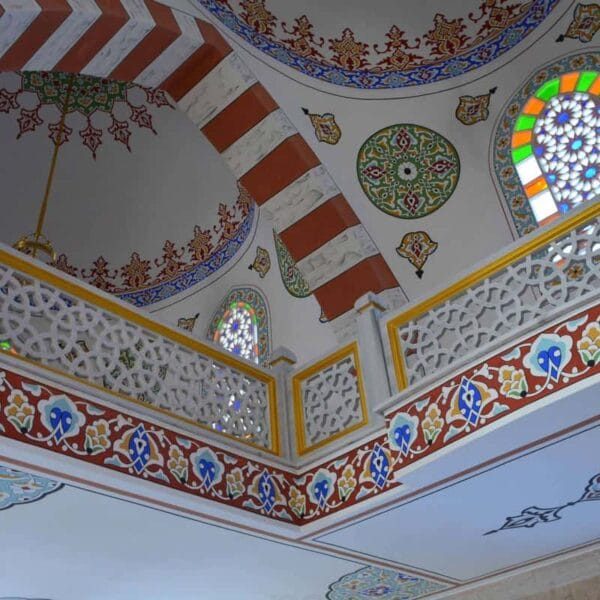
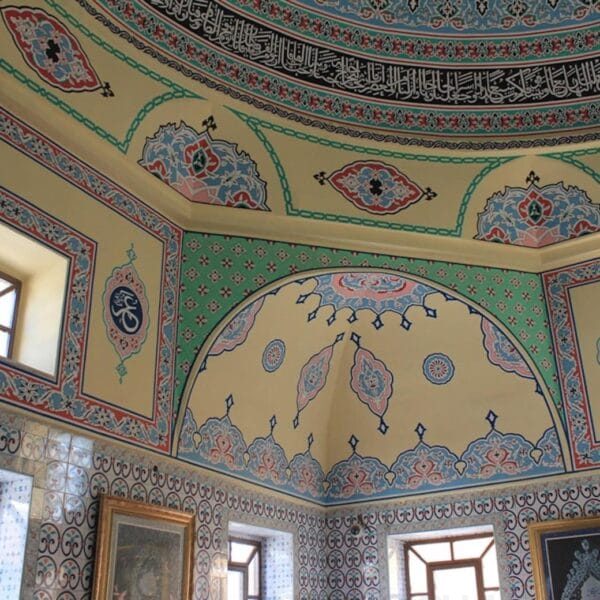
Mosque Wall and Ceiling Calligraphy: Elevating Sacred Spaces with Divine Art
Moschee-Wand- und Deckenkalligrafie is a profound expression of Islamic artistry, transforming prayer spaces into environments of spiritual inspiration and cultural heritage. This intricate art form, rooted in centuries-old traditions, involves the skilled application of Quranic verses, Allah’s names, and prophetic phrases onto mosque interiors. Whether adorning domes, flat ceilings, or walls, calligraphy serves as a visual reminder of faith, guiding worshippers in reflection and devotion.
The Spiritual Significance of Islamic Calligraphy
In Islamic culture, calligraphy is more than decorative—it is a means of preserving and venerating the divine word. Quranic verses, such as Ayat al-Kursi (The Throne Verse) or Surah Al-Fatiha, are meticulously hand-painted or carved onto surfaces, infusing the space with theological depth. The artistry behind Moschee-Wand- und Deckenkalligrafie requires mastery of Arabic script styles like Thuluth, Naskh, or Diwani, each chosen for its aesthetic harmony and readability. These works turn architectural elements into spiritual landmarks, reinforcing the mosque’s role as a house of worship and learning.
Versatility in Application: Domes, Walls, and Ceilings
Calligraphy adapts seamlessly to various architectural features:
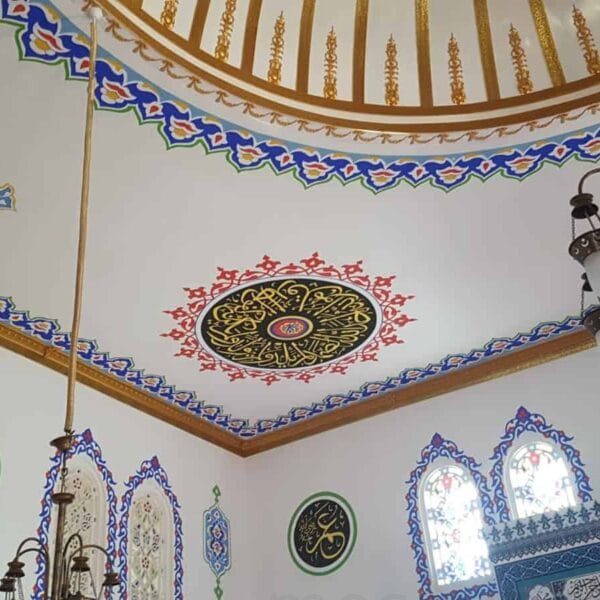
Domes: Curved surfaces often feature radial designs with central Allah or Muhammad (PBUH) inscriptions, symbolizing divine unity.
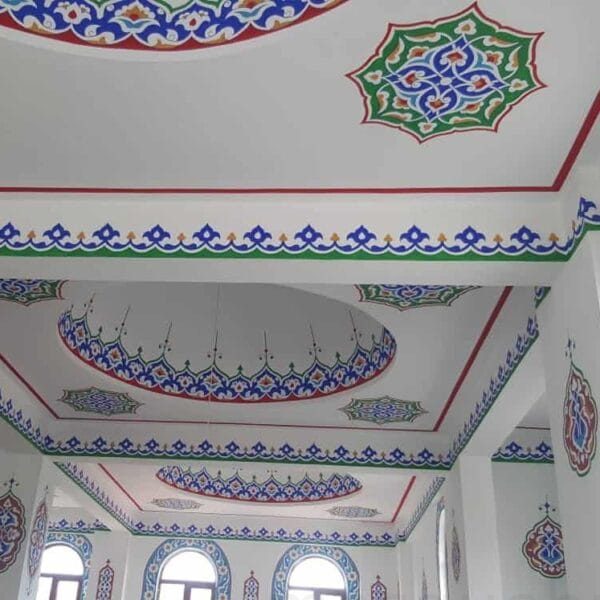
Flat Ceilings: Large, uninterrupted spaces allow for expansive compositions like Surah Al-Ikhlas or symmetrical geometric patterns intertwined with script.
Walls: Vertical panels highlight verses emphasizing mercy, prayer, or unity, such as Surah An-Nur’s “Allah is the Light of the heavens and the earth.”
Artists use high-quality materials like gold leaf, acrylics, or gilded finishes to ensure durability and visual brilliance. Modern techniques, including digital design and precision stenciling, complement handcrafted methods for flawless execution.
Customization for Architectural Harmony
Every mosque has unique architectural nuances. Moschee-Wand- und Deckenkalligrafie can be tailored to color schemes, spatial dimensions, and thematic preferences. For instance, Ottoman-style designs favor floral motifs and gold accents, while contemporary spaces may opt for minimalist scripts. Collaborative consultations ensure the artwork aligns with the mosque’s identity and enhances its aesthetic coherence.
Preserving Tradition with Modern Durability
Beyond aesthetics, these artworks are engineered for longevity. Climate-resistant paints and protective coatings safeguard against fading, humidity, and wear. This commitment to quality ensures that the calligraphy remains vibrant for decades, serving as a lasting testament to faith and craftsmanship.
 English
 German
 Turkish
 Russian
 French
 Arabic