


Mosque Dome & Minaret Restoration
Определите причину перед выбором ремонта
Полный коммерческий обзор, спецификации и проектные варианты смотрите в нашей системы куполов мечетей страницу.
Видимое повреждение не всегда показывает первопричину. Вода может проникать через швы, навершия, проходки, примыкания или скрытые слои гидроизоляции. Деформации конструкции или коррозия также могут способствовать проблеме.
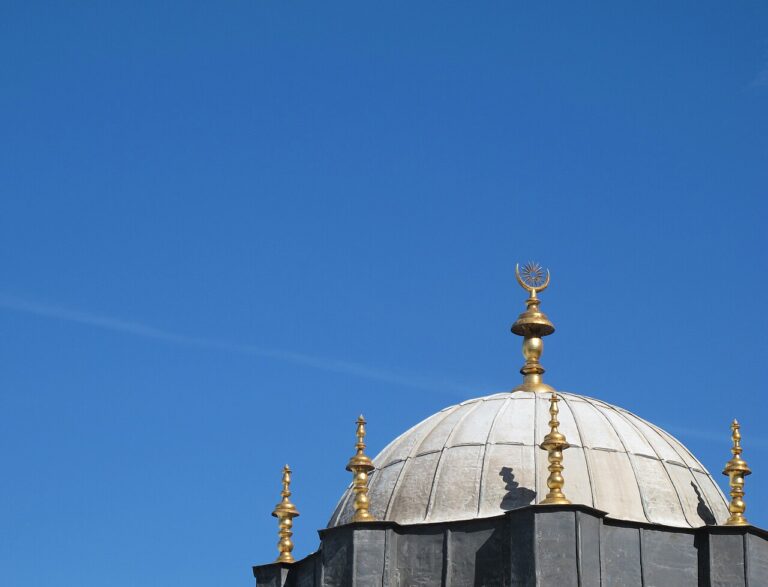
MosqueBuild обследует существующую архитектурную систему и определяет объём вмешательства от локального ремонта до полной повторной облицовки или замены лёгкой оболочки купола. Исторический характер может сохраняться при улучшении водозащиты и конструктивной работы.
- Повторяющиеся протечки или следы воды внутри
- Ослабленные, треснувшие или разрушенные швы листового металла
- Коррозия, усталость поверхности или прежние локальные ремонты
- Повреждённое основание под видимой облицовкой
Типовые состояния, которые мы проверяем
Повторяющиеся протечки или следы воды внутри
Ослабленные, треснувшие или разрушенные швы листового металла
Коррозия, усталость поверхности или прежние локальные ремонты
Повреждённое основание под видимой облицовкой
Реставрация начинается с фактов, а не с предположений
Следы воды, разрушенные швы или поверхностная коррозия могут быть лишь видимым симптомом, а не полной причиной. Поэтому план реставрации должен фиксировать существующую облицовку, основание, предыдущие ремонты и состояние гидроизоляции до определения объёма работ.
Mosque Dome Restoration and Re-Cladding — project coordination guide
Mosque Dome Restoration and Re-Cladding is best treated as part of the complete mosque project rather than as an isolated design or procurement decision. The architecture, engineering, specialist manufacturing, building services, site logistics and long-term maintenance strategy can all affect the final solution. A strong project brief therefore defines the intended performance, the information available, the decision owner, the required deliverables and the interfaces with adjacent work packages before detailed design begins.
Information to confirm before detailed design
Before developing Mosque Dome Restoration and Re-Cladding, the project team should verify the latest site information, dimensions, architectural drawings, structural assumptions, occupancy or capacity requirements, local authority constraints and any relevant material or finish preferences. Existing buildings should be surveyed instead of relying only on record drawings. When a specialist element connects to concrete, steel, masonry, waterproofing or MEP systems, the support condition and tolerances should be confirmed early.
Dome geometry, support and load path
Define dome span, rise, profile, drum or support-ring geometry, openings and architectural interfaces before structural or fabrication detailing. The supporting ring, shell or steel frame must transfer self-weight, wind, maintenance and other project-specific actions into the primary building structure without relying on cladding or finish layers to perform structural work.
Water, condensation and roof interfaces
Dome performance depends on more than the visible outer finish. Coordinate substrate, vapour control, insulation, ventilation cavity where required, waterproofing, standing seams or panel joints, flashings, gutters, penetrations and drainage paths as one build-up.
Interior package coordination
Key mosque elements should share a coordinated hierarchy of scale, material, colour and detail. Mihrab, minbar, kursi, wall cladding, doors, carpet, calligraphy and chandeliers should be reviewed together rather than approved as unrelated purchases.
Manufacturing information and tolerances
Specialist joinery and decorative elements require verified openings, wall build-ups, floor levels, fixing zones and service locations. Shop drawings should identify overall dimensions, module joints, access panels, fixing methods and interfaces with finished surfaces.
Coordination, quality and risk control
Mosque Dome Restoration and Re-Cladding can influence several disciplines at once. Architecture establishes geometry and visual intent; structural engineering verifies load paths and support; MEP teams protect routes, penetrations and access; specialist manufacturers translate approved design information into fabrication details; and the contractor manages tolerances, sequencing and site conditions. An interface register is useful for tracking decisions that cross these boundaries.
Common risks around Mosque Dome Restoration and Re-Cladding include starting detailed work with incomplete dimensions, assuming responsibility belongs to another trade, approving appearance without checking buildability, and changing geometry after dependent packages have been released. Another frequent problem is treating transport, lifting, maintenance access or replacement as an afterthought. These risks are easier to control when the project team assigns ownership and freezes interfaces in stages.
Procurement and handover
Commercial comparisons for Mosque Dome Restoration and Re-Cladding should be based on a clearly defined scope rather than headline unit price. Requests for quotation should state dimensions, quantities, materials, finishes, engineering responsibilities, drawing requirements, testing, packing, shipping, installation scope and exclusions. Where alternatives are considered, compare programme, maintenance, logistics and life-cycle implications alongside initial cost.
The handover package for Mosque Dome Restoration and Re-Cladding should preserve the information needed for operation, inspection, maintenance and future modification. Record approved materials, product data, warranties, cleaning or inspection intervals, access requirements, spare components and as-built changes. For engineered elements, retain the final approved drawings and relevant calculation or certification references in the project archive.
Türkiye Project Service
For Türkiye-specific survey, quotation, installation and city information:
Explore Mosque Dome Systems
Continue from this guide to the main solution page, technical directory and closely related resources.
Technical Information at a Glance
- Scope
- Survey / repair / re-cladding / replacement
- Проект дизайна мечети на заказ для проектов мечетей
- Existing system dependent
- Waterproofing
- Reviewed as interface
- Historic projects
- Appearance-sensitive detailing
- 01
Document existing condition and visible failures
- 02
Identify interfaces requiring opening or further investigation
- 03
Agree conservation / replacement strategy
- 04
Prepare compatible material and detail proposals
Before You Request a Quote
Can you repair only the leaking area?
Can the existing metal be retained?
Can the dome be changed to a different material during renovation?
Can finials be restored or replaced at the same time?
Continue With the Right System


Discuss Your Mosque Project With Our Team
Send drawings, dimensions or reference images. We will review the appropriate system and next project step.
 English
 German
 Turkish
 Russian
 French
 Arabic