


Precast Concrete Minaret
☰ Minaret Engineering Menu · Minaret Types
Precast Concrete Minaret Systems: Modules, Joints, Lifting and Erection
Specialist MosqueBuild technical guidance for precast concrete minaret, integrated into the Minaret Engineering Library.
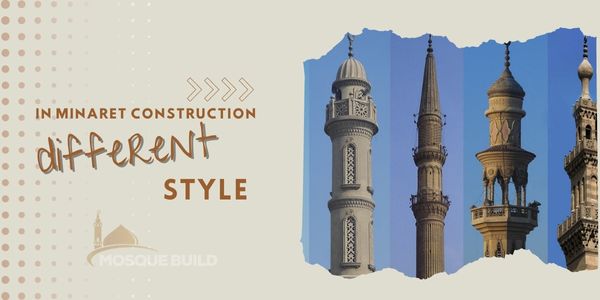
Precast minarets move structural production into the factory
A precast-concrete minaret is assembled from factory-made structural or architectural modules rather than cast entirely in place. The concept can improve dimensional consistency, surface quality and programme certainty, but it replaces formwork challenges with joint, lifting and transport challenges. The engineering of the connections becomes central because global wind and seismic forces must pass reliably from one module to the next and into the foundation.
Segment strategy
Modules may be cylindrical rings, polygonal shell sections, full-height precast wall panels or hybrid units built around a steel core. Segment length is controlled by transport weight, crane capacity, road dimensions and factory moulding. Longer modules reduce the number of structural joints but increase handling risk. Shorter modules simplify transport yet introduce more interfaces and alignment operations. The optimum segmentation therefore belongs in concept design, not only in the logistics plan.
Structural joints
Joints can use post-tensioning, grouted reinforcement sleeves, bolted steel plates, welded embedded plates or other engineered systems. The connection must transfer axial force, shear and bending while tolerating erection accuracy. In seismic regions, joint ductility and cyclic behaviour deserve special attention. Dry bearing surfaces should not be assumed to transfer tension unless a positive connector provides it. Drawings need to distinguish temporary erection bolts from final structural connections.
Vertical alignment and tolerance
Small angular errors can accumulate quickly over many stacked rings. Bearing faces, dowel positions and survey marks should therefore be produced accurately. Shims or grout layers may be used where the design allows adjustment. Erection surveys after each module help detect lean before the next section magnifies the problem. Architectural flutes and panel joints also need rotational alignment, especially where the minaret has a continuous vertical pattern.
Lifting design
Each precast unit needs engineered lifting points for demoulding, factory handling, transport and final erection. These load cases can differ from the completed structural condition. Lifting anchors require sufficient edge distance and reinforcement to control local cracking. The rigging arrangement should keep slings from damaging finished surfaces. Heavy balcony units may need spreader beams or multiple pick points to maintain orientation.
Balcony modules
The serefe can be precast as radial segments, a complete ring or a combination of structural brackets and architectural fascia panels. A full ring minimizes joints but may be too heavy or wide for normal transport. Segmental balconies require reliable waterproofing at radial joints and a continuous structural load path around the shaft. Drainage slopes should be formed in the mould rather than improvised with thick site-applied materials where possible.
Water management at horizontal joints
Stacked precast rings create horizontal interfaces that can become water paths. External profiles should shed rain and include drips or overlapping details. Sealants need the correct joint geometry and movement capacity. Where the structural joint is grouted, the weather seal and structural grout should be treated as separate functions. A drained cavity can provide additional resilience behind architectural joints.
Surface finish and factory quality
Precasting allows controlled mould surfaces, pigments and textures. Mock-ups can establish acceptable colour variation and joint appearance. Factory quality records should document concrete materials, curing, dimensions, embedded items and lifting anchors. Critical modules can be trial assembled where the support system allows it. Repairs made before shipping should match the approved appearance and remain compatible with long-term weathering.
Transport and site storage
Precast units are vulnerable to edge damage and cracking during transport even when structurally strong in service. Timber supports should align with designed bearing locations. Units should not be stacked in configurations that introduce unplanned bending. Site storage needs stable level ground and restraint against overturning. Identification marks must remain visible so modules are erected in the intended sequence.
Grouting and closure details
Many precast systems rely on grout at base joints, sleeves or bearing interfaces. The grout specification should define strength, flow, shrinkage characteristics and placement method. Access holes and vents should allow the installer to confirm complete filling. Decorative closure pieces should not hide a structural joint before inspection is complete. Where wet joints are exposed to rain during erection, temporary protection prevents dilution and contamination before cure.
Coordination with internal access
Module joints must not obstruct spiral stairs, ladders or cable routes. Internal landing elevations should match external balcony levels and joint rings. Conduits that cross a segment joint need connectors or service loops that tolerate assembly. Planning these details in the factory is far easier than drilling or cutting completed modules on site.
When precast is the right choice
Precast systems work well where repeated geometry, factory access and reliable lifting logistics are available. They are less attractive when the site is extremely constrained, the design changes frequently or local cranes cannot handle module weights. The decision should compare total project logistics rather than only factory unit cost. A successful precast minaret is a coordinated chain of mould design, structural joints, lifting engineering, transport protection, survey control and weatherproof interfaces.
Explore Mosque Minaret Systems
Continue from this guide to the main solution page, technical directory and closely related resources.
 English
 German
 Turkish
 Russian
 French
 Arabic