


Éclairage de Mosquée en France: Chandelier & Cultural Lighting Guide
Éclairage de Mosquée en France: Chandelier & Cultural Lighting Guide
French mosque projects can combine worship, education, community and cultural functions, so lighting decisions need to work across more than one room type. Search intent may appear in English as mosque lighting France or mosque chandelier France, and in French as éclairage de mosquée, luminaire mosquée, lustre mosquée or éclairage centre culturel. This guide connects those niche searches to a practical project workflow.
Prayer hall lighting should remain calm
The main prayer hall needs visual clarity without turning into a commercial interior. A custom chandelier can establish identity, but architectural lighting should support it quietly. Indirect cove light can soften a dome or ceiling, while controlled spotlights can reveal calligraphy and mihrab detail. The qibla wall may benefit from vertical illumination instead of additional downlights.
Chandelier design and scale
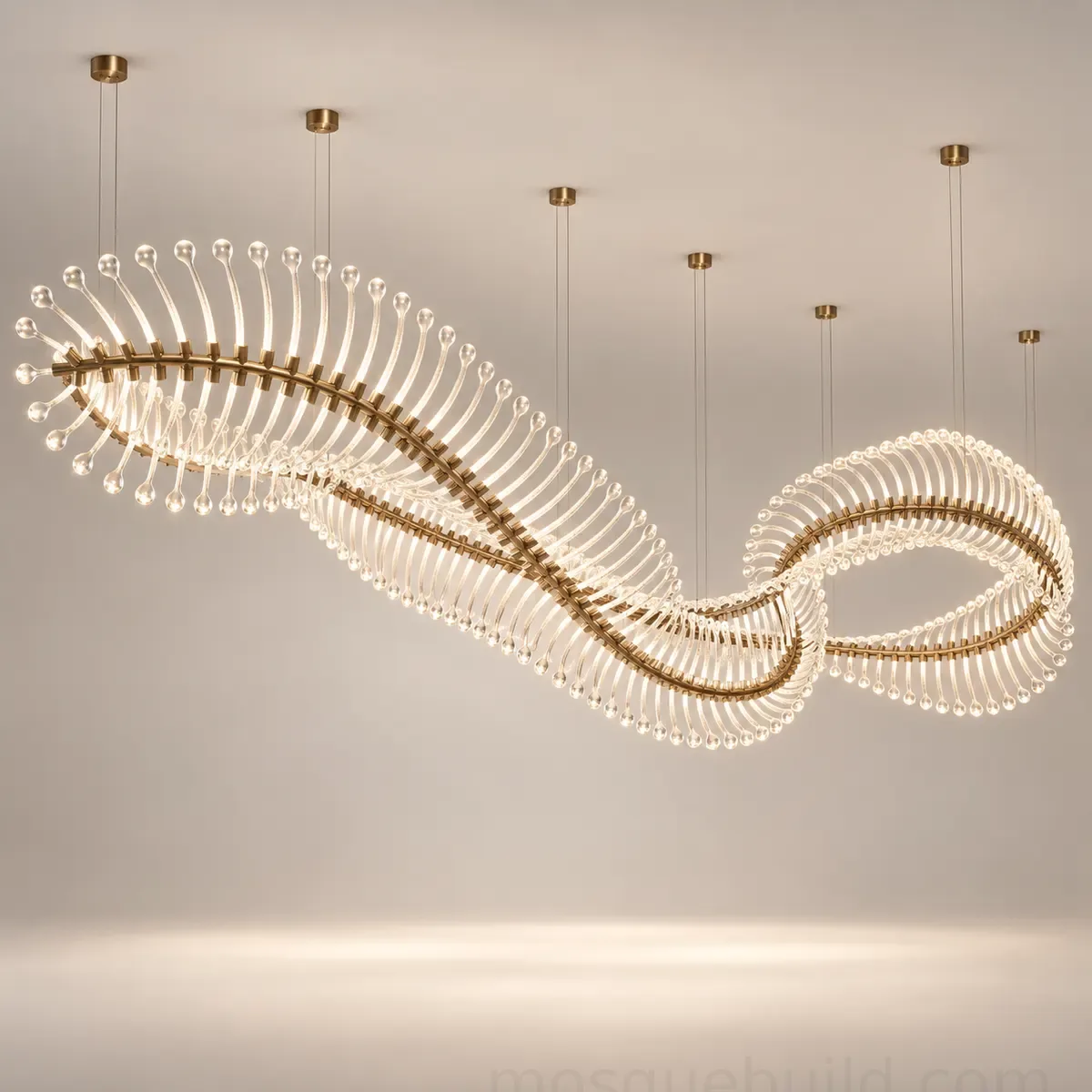
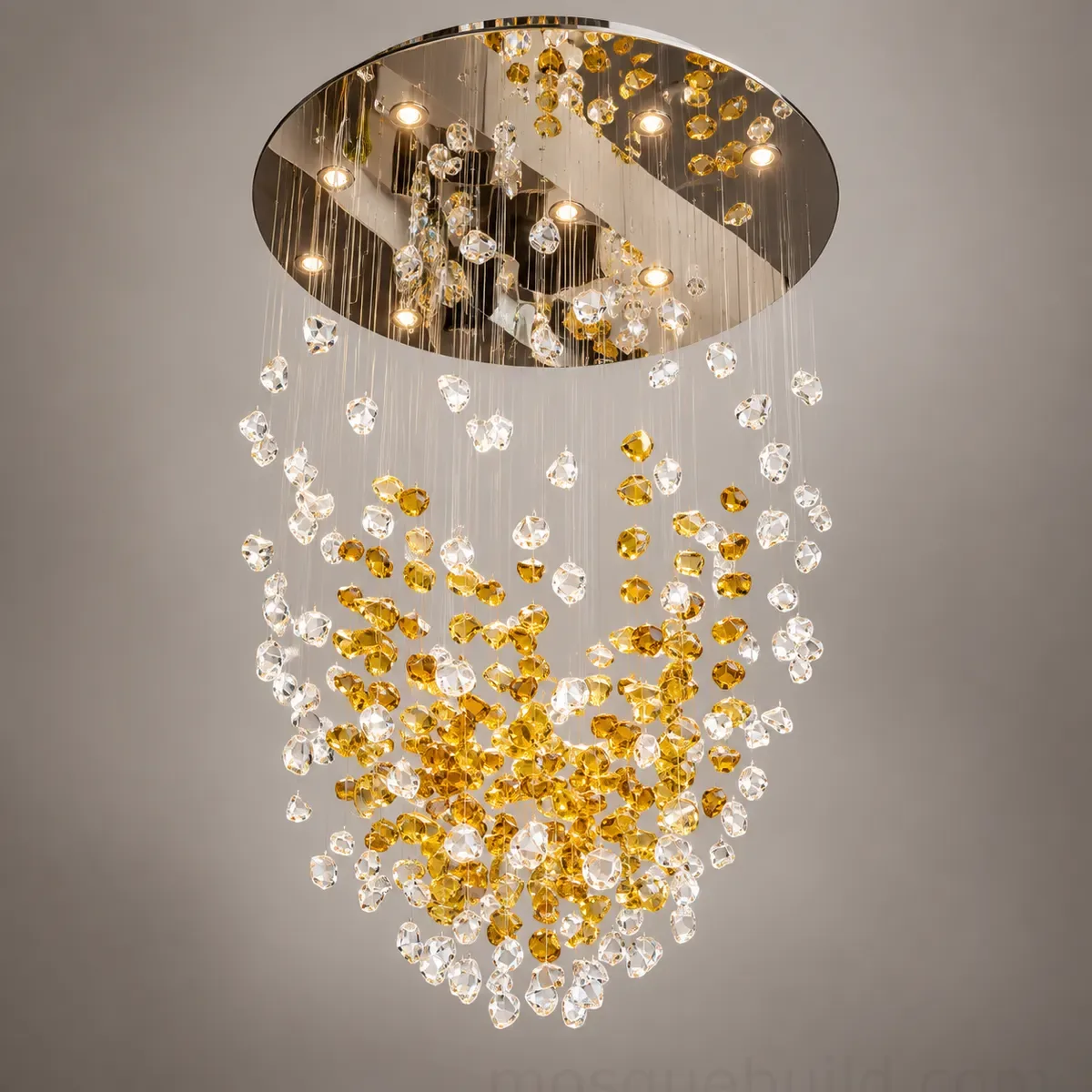
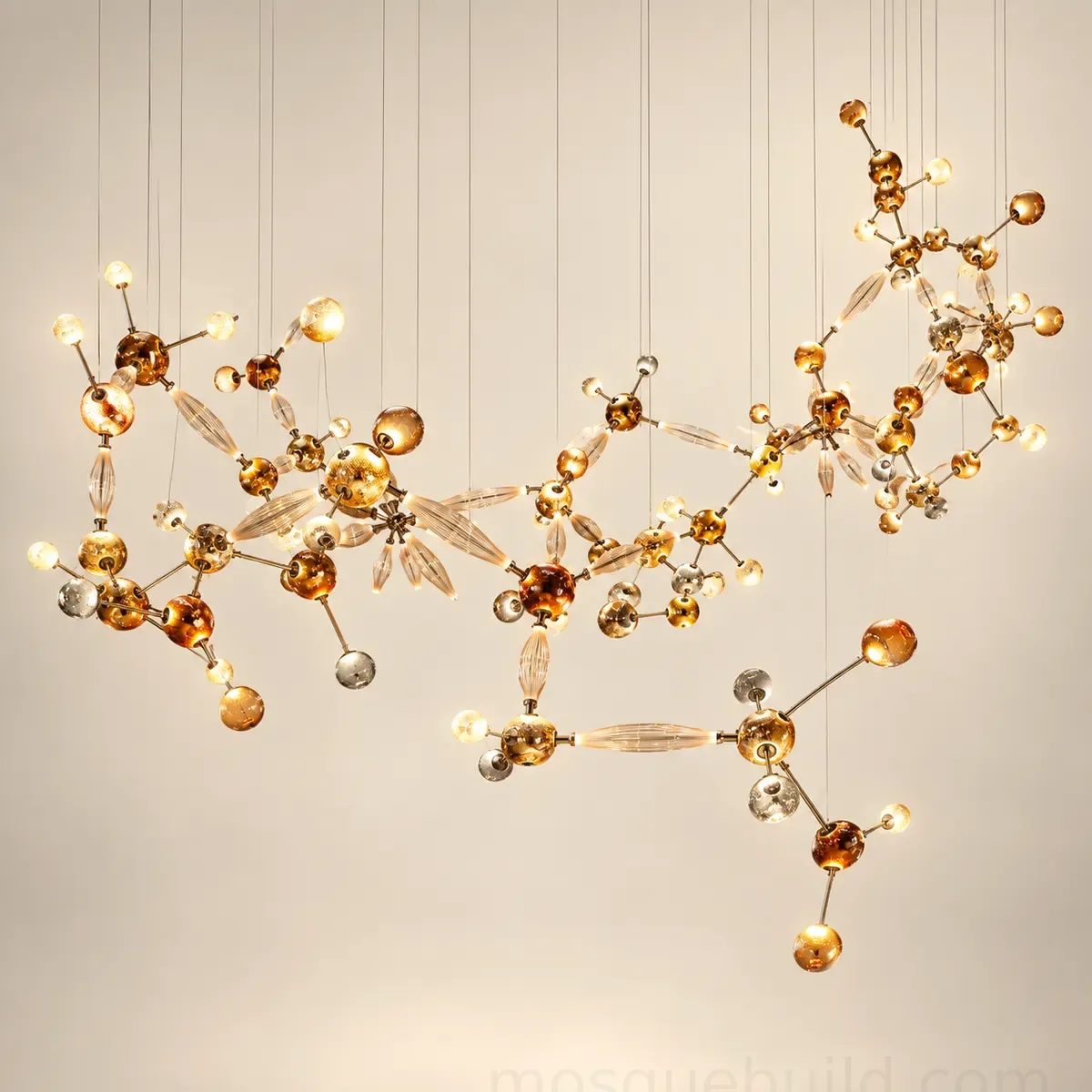
For custom mosque chandeliers, scale should be verified from real dimensions. A 3D render can help clients understand proportion, but production should rely on approved technical drawings. Diameter, drop, bottom elevation, suspension load, canopy, wiring groups and maintenance access should all be documented. Where ceilings are lower, a shallow ring system may be more appropriate than a deep traditional composition.
Lighting cultural and community spaces
Many French mosque complexes include cultural halls, classrooms, libraries or exhibition areas. These spaces need a different lighting vocabulary. Track spotlights allow changing displays; wall washers support graphics and large vertical surfaces; low-glare functional lighting suits classrooms and reading rooms. The Cultural & Heritage Lighting Guide explains how to separate cultural and ceremonial tasks.
Historic and adaptive-reuse interiors
Some projects involve existing buildings where the original structure or facade must remain visible. Lighting can help integrate the new use without hiding the old architecture. Reversible or low-impact mounting may be preferred where surfaces are sensitive. Existing cable routes, access and emergency systems should be surveyed before fixture positions are frozen.
Wall washing and architectural detail
Plaster, stone, timber and decorative wall panels respond differently to light. Uniform wall washing can make a hall feel brighter and more spacious; grazing can reveal texture but may emphasise imperfections. Mock-ups are helpful on polished or irregular surfaces. The luminaire setback and spacing should be chosen from real photometric data.
Controls and scene setting
A mosque and cultural centre can benefit from distinct scenes for daily prayer, Friday gatherings, Ramadan, lectures, exhibitions, cleaning and late evening. Lighting groups should follow the building’s use rather than simply the distribution board. Dimming also helps reconcile decorative lighting with projection screens or events.
Information for a France project quotation
- architectural plans and sections
- prayer-hall dimensions and ceiling height
- cultural/education spaces included in scope
- chandelier style and approximate size
- surfaces requiring accent or wall washing
- lighting calculation requirements
- control and dimming expectations
- delivery city and installation coordination
Technical documentation before production
A useful submittal can include chandelier shop drawings, luminaire schedule, photometric files, DIALux or Relux calculation, control description and material/finish samples. This gives the architect and contractor one coordinated package to review before manufacturing.
For the wider country package, see Mosque Products for France. For technical lighting, continue to Architectural Lighting Design, Museum & Gallery Lighting and Custom Chandeliers.
France project-delivery note
For Paris, Lyon, Marseille and other French projects, it is useful to divide the lighting package by space and decision owner. The prayer hall can carry the chandelier and worship-specific lighting, while cultural rooms and exhibitions use their own schedules. A common finish and colour-temperature palette can still make the building feel coherent. For custom fixtures, signed shop drawings and finish samples should be retained as part of the production approval record.
 English
 German
 Turkish
 Russian
 French
 Arabic