


Women’s Prayer Hall Audio, Acoustics & Imam Connection
Mosque Audio Planning
Women’s Prayer Hall Audio, Acoustics & Imam Connection
Clear imam audio is fundamental to a women’s prayer area, especially when the room is separated by distance, a mezzanine or a privacy screen. Good results depend on loudspeaker placement, timing and room acoustics rather than simply increasing volume.
Map the acoustic path from imam to listener
Identify whether women hear the imam directly from the main hall, through an opening, or only through the sound system. A nearby upper gallery may receive both direct and amplified sound, while a remote enclosed room may depend entirely on loudspeakers. These conditions require different tuning. When amplified sound arrives noticeably later than direct sound, speech can become blurred. The audio designer should therefore understand the actual geometry instead of treating every room as an independent zone with a volume control.
Place speakers for coverage, not symmetry
Two speakers placed symmetrically on a wall may look neat but still leave quiet or overly loud areas. Coverage should match the room shape, ceiling height and absorption from carpet and people. In long rooms, distributed smaller speakers can produce more even speech than one powerful source at the front. In mezzanines, ceiling or wall-mounted speakers should avoid firing directly into nearby hard surfaces or decorative screens that create strong reflections.
Privacy screens affect sound
Open timber lattice generally allows more sound transmission than a solid divider, but the pattern and depth can still influence high-frequency clarity. A dense separator between halls may make the women’s room much more dependent on its own loudspeakers. Do not assume that visible perforations guarantee good speech transmission. If the screen is being custom fabricated, coordinate its location with speaker positions and avoid mounting a loudspeaker where part of its coverage is immediately blocked by a post or deep decorative frame.
Control reverberation without losing mosque character
Carpet already provides significant absorption at floor level, but hard plaster, stone, glass and timber can create lingering reflections above. Small women’s halls with low ceilings may be easy to control; tall galleries or rooms with large glazed surfaces can be more difficult. Acoustic treatment does not have to look like a studio. Perforated timber, absorptive backing behind decorative panels, upholstered elements in teaching zones or discreet ceiling treatment can be integrated into the architecture when measurements indicate a need.
Include operational and safety considerations
The women’s area may need independent volume adjustment, but controls should be protected from accidental changes. Audio for sermons, prayers and classes may require different levels. Emergency voice systems, where required, must remain intelligible and take priority over decorative audio equipment. Cable routes and access to amplifiers should be planned before wall panelling closes cavities. For renovation, document the existing system first; many apparent speaker problems are actually caused by wiring, delay or source configuration.
What to send for an audio review
Provide floor plans and sections showing the imam position, women’s hall location, ceiling heights, openings between spaces and proposed screen materials. Add photographs and any existing speaker model or amplifier information in renovation work. Mark where speech is currently unclear, too loud or delayed. This information allows an audio specialist to diagnose coverage and timing instead of recommending larger speakers without evidence.
Test with speech, not music alone
Commissioning should use spoken voice and actual prayer conditions. Walk the entire women’s area while the imam microphone is active, checking clarity at the front, rear, corners and behind architectural elements. Verify that the system remains intelligible when the room is occupied because people change absorption. Record final level and delay settings so future maintenance does not accidentally return the system to an unsuitable default.
Related: lighting design, partition planning and women’s mahfil design.
Provide redundancy for important prayer audio
If the women’s hall depends entirely on amplified imam sound, a single failed connection can isolate the congregation. The project team should consider sensible redundancy, accessible equipment and a clear troubleshooting path. Label audio zones and retain basic system documentation so future volunteers or technicians can identify the women’s feed without changing unrelated settings in the main hall.
Related Products & Project Applications

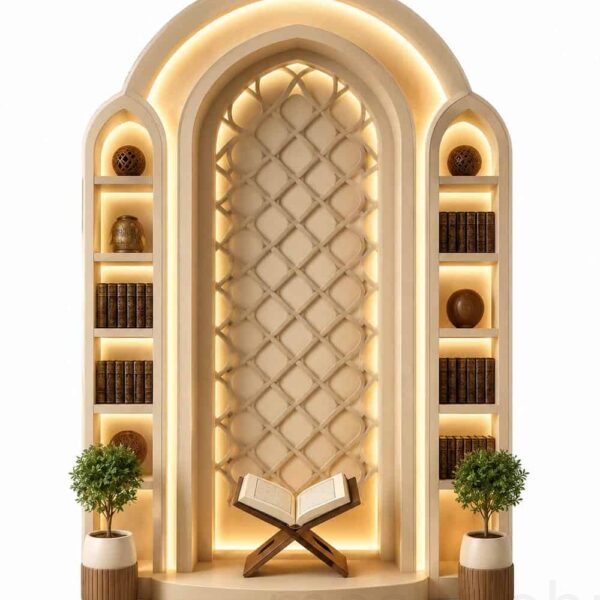
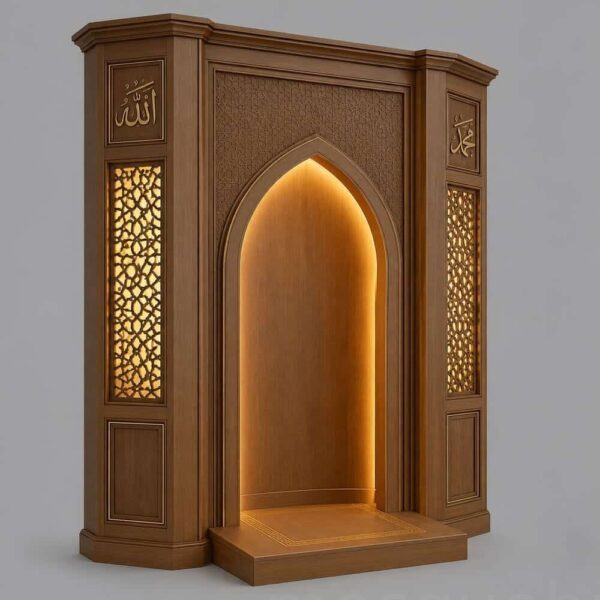
Explore Mihrab, Minbar & Mosque Furniture
Continue from this guide to the main solution page, technical directory and closely related resources.
 English
 German
 Turkish
 Russian
 French
 Arabic