


Qatar Mosque & Cultural Centre Lighting: Doha Project Guide
Qatar Mosque & Cultural Centre Lighting: Doha Project Guide
Qatar projects often combine religious, educational and cultural functions within prominent public architecture. A mosque or Islamic cultural centre in Doha may include a prayer hall, lobby, classrooms, exhibition spaces, event rooms and a night-time facade identity. That makes the search intent behind mosque lighting Qatar or cultural centre lighting Doha broader than selecting one chandelier.
Lighting a mixed-use Islamic cultural project
The prayer hall may require a custom chandelier and dome lighting, while the cultural or educational areas need glare-controlled general light, accent lighting for exhibits, flexible track systems or wall washing. The entrance and exterior may need a separate architectural lighting concept. Dividing the project by visual task keeps each space appropriate to its use and allows different control scenes.
Custom chandeliers for large prayer halls
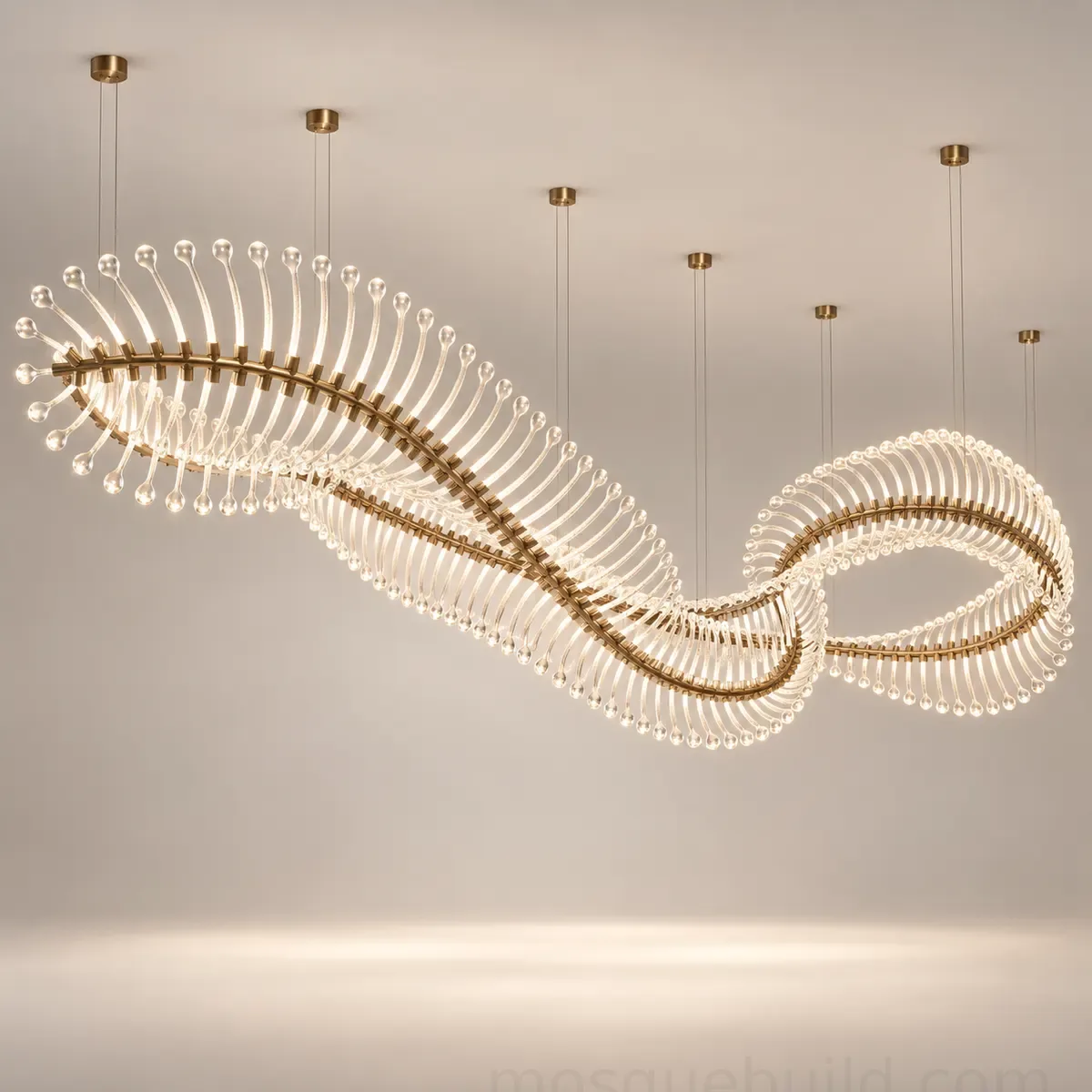
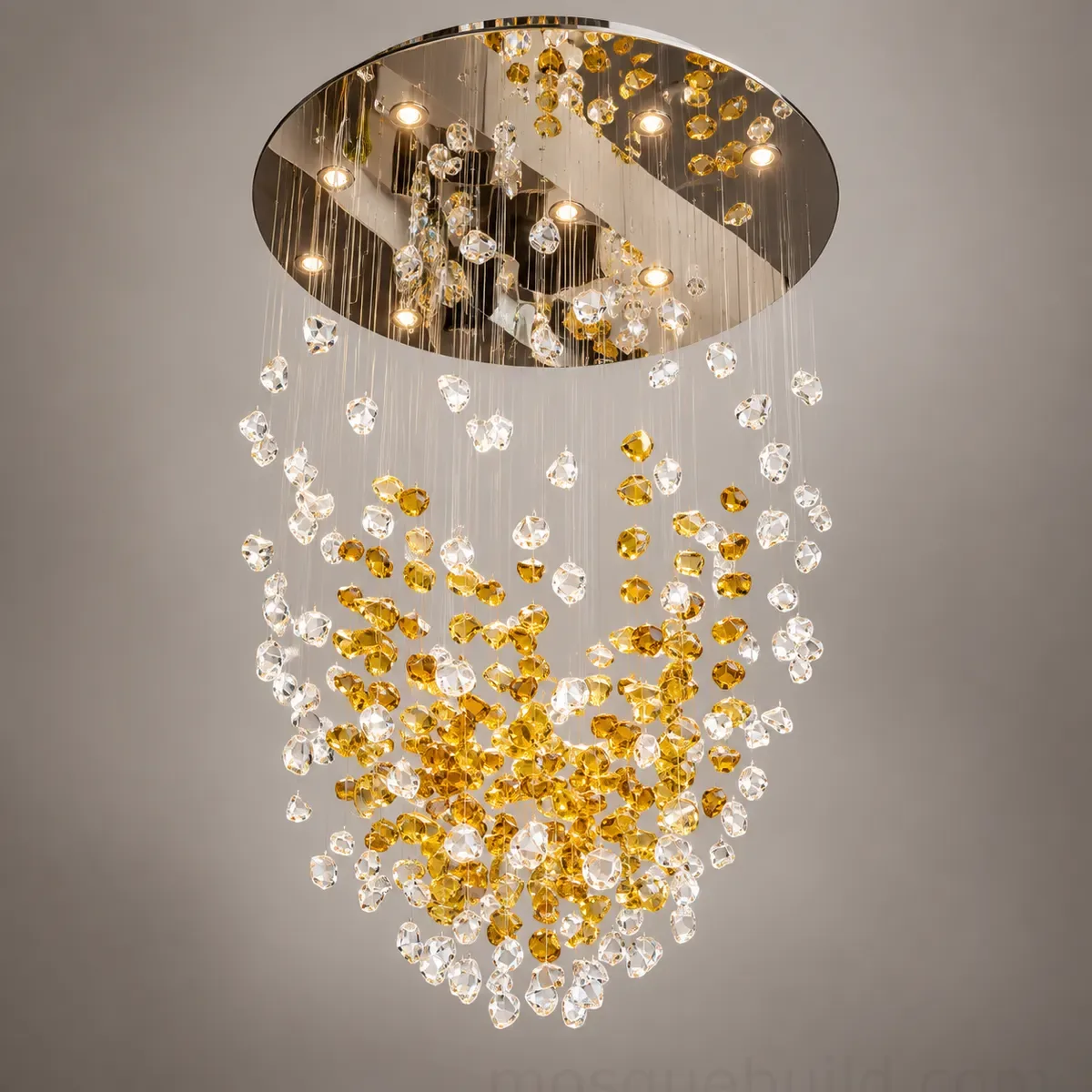
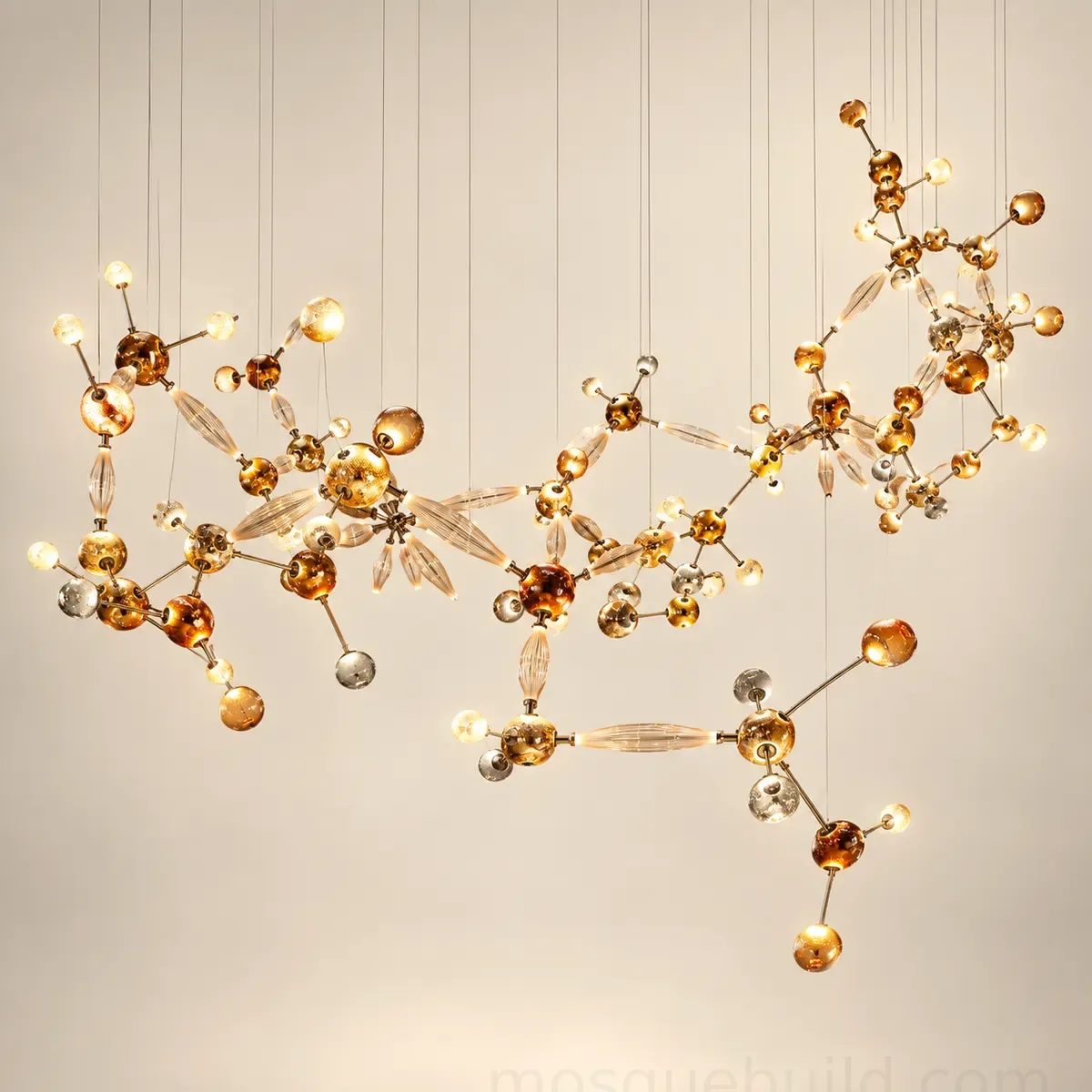
Chandelier size should respond to the room volume and sightlines. In a high dome, an undersized fixture can disappear visually; an oversized fixture may obstruct architecture or create maintenance problems. Confirm diameter, finished bottom elevation, support load, canopy, electrical groups and access before production. The chandelier can be designed as a ring system, multi-tier feature, Ottoman-inspired composition or contemporary geometric fixture depending on the architectural language.
Dome and calligraphy accent lighting
Dome lighting should respect the decorative hierarchy. A soft indirect layer can reveal geometry, while controlled spotlights can highlight calligraphy or muqarnas. The mihrab and qibla axis may need separate emphasis. The key is contrast: focal elements should stand out without creating uncomfortable glare from prayer positions. A curved surface should be modelled as a real surface in the lighting calculation, not approximated only by a flat floor grid.
Cultural and exhibition spaces
When a project includes galleries, displays or heritage content, lighting needs can change. Adjustable track spotlights allow exhibits to move. Wall washers can create even vertical brightness for information panels. Framing projectors can isolate artwork or graphics. Colour quality becomes more important where textiles, manuscripts, art or material samples are displayed. The Museum & Gallery Lighting Guide covers these issues in depth.
Exterior identity after dark
For civic or landmark architecture, the exterior should be read as a composition rather than a flat bright surface. Dome, minaret, entrance and facade planes can be assigned different brightness levels. Architectural projectors should be selected from throw distance and candela data, and shielding should keep useful light on the building. Event scenes can be separated from the normal white-light state.
Control strategy
A multi-use Qatar project may need daily, prayer, event, exhibition, cleaning and late-night scenes. Dimming groups should follow the architecture and operating pattern rather than only the electrical panel layout. Where RGB or RGBW is used externally, a restrained standard scene should still be defined for ordinary nights.
Information to send for a Qatar project review
- architectural plans, sections and elevations
- prayer-hall and dome dimensions
- cultural/exhibition functions in the building
- desired chandelier direction
- important facade viewpoints
- control and scene requirements
- consultant submittal format
- delivery and site-coordination expectations
MosqueBuild can combine custom chandelier manufacturing with architectural lighting design. For cultural venues, also review the Cultural & Heritage Lighting Guide.
Doha and Qatar procurement note
For Doha and wider Qatar projects, the technical proposal should show which items are custom made and which are standard architectural luminaires. Cultural-centre projects benefit from a room-by-room schedule so the prayer hall, exhibition spaces, classrooms and exterior are not mixed into one product list. When chandeliers are large, module drawings, crate labels and a planned lifting sequence should be issued before shipping. This keeps the architectural concept and the practical site programme aligned.
 English
 German
 Turkish
 Russian
 French
 Arabic