

Islamic Geometry & Architectural Woodwork
Islamic Geometric & Carved Mosque Furniture Design
Geometric mosque furniture can range from a single perforated panel to a fully coordinated mihrab, minbar and kursi system. The key is to control pattern scale, repetition, open/solid balance and carving depth so the geometry remains legible from normal prayer-hall viewing distances.
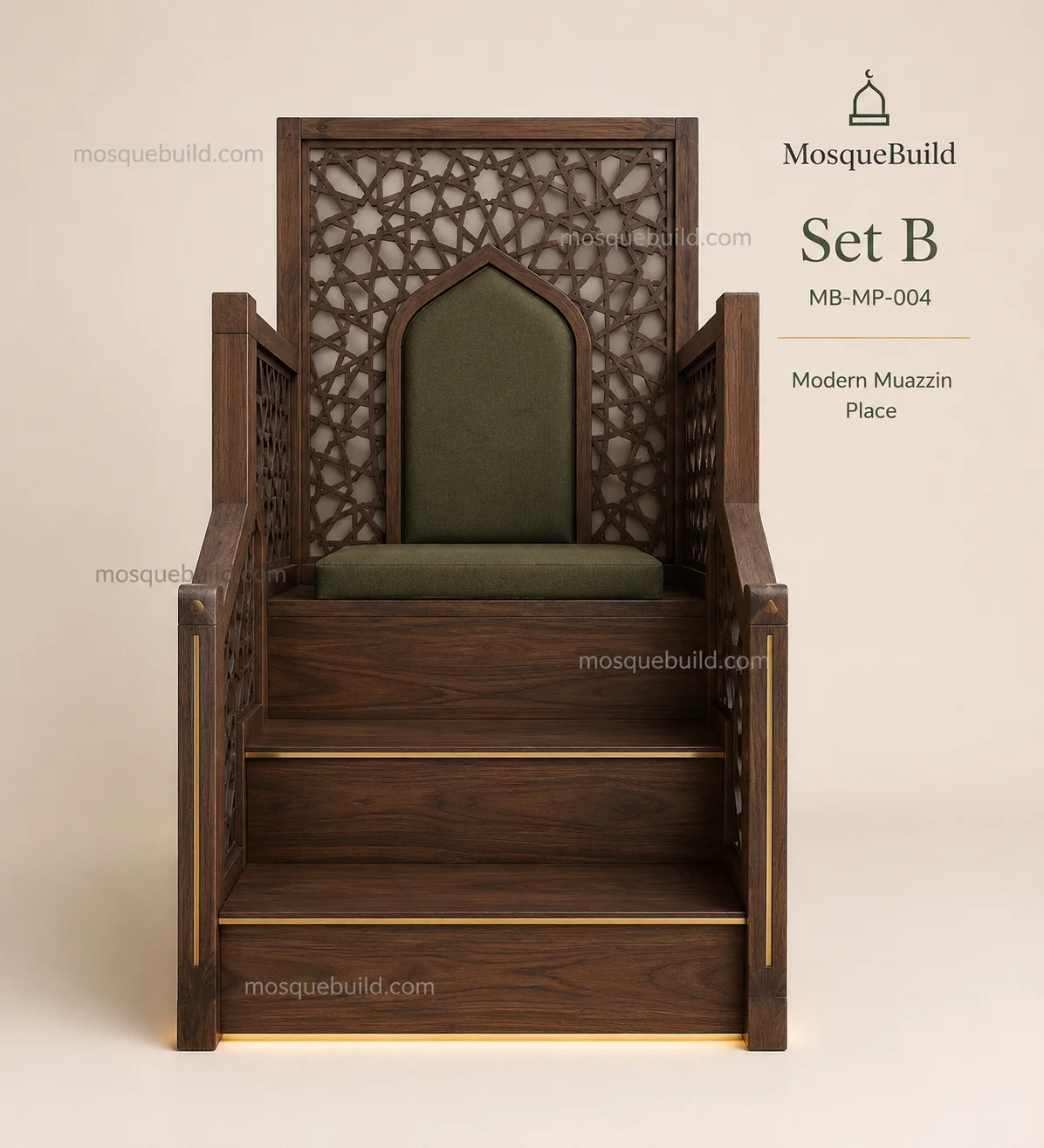
Common geometric design languages
Star geometry
Eight-point, multi-point and interlocking star patterns work well in borders, lattice and focal panels.
Arabesque & floral carving
Flowing vegetal motifs can soften rigid geometry when used as a secondary layer rather than competing with it.
Geometric lattice
Open screens reduce visual weight and are useful on minbar side panels, railings and kursi backrests.
Muqarnas-inspired transitions
Layered or stepped decorative transitions can be used around arches and crowns, but should be scaled carefully for furniture applications.
How to use geometry on mihrab, minbar and kursi
Mihrab
Use geometry to frame the niche, define the arch or create one strong central panel rather than covering every wall surface.
Minbar
Side panels and balustrades are ideal locations for lattice and star patterns because they can remain visually lighter than solid carving.
Kursi / Lectern
A geometric back panel, side rail or front panel can create a strong identity without making the furniture bulky.
Wall & doors
The same geometry can be repeated at lower intensity in qibla-wall panels, screens and doors for a coordinated interior.
Pattern scale and viewing distance
A motif that looks strong in a close-up render can disappear or become noisy when viewed from the back of the prayer hall. Pattern size should be tested against the actual room and product dimensions. Larger halls generally need fewer, larger pattern fields; compact rooms benefit from more restrained geometry.
Production methods
- CNC-cut or routed geometric panels
- Carved relief borders
- Perforated lattice and mashrabiya-style screens
- Layered veneer or inlay effects
- Solid wood framing around patterned panels
- Painted or contrasting back panels for deeper visual definition
- Modular panels for transport and replacement
Selected geometric product directions
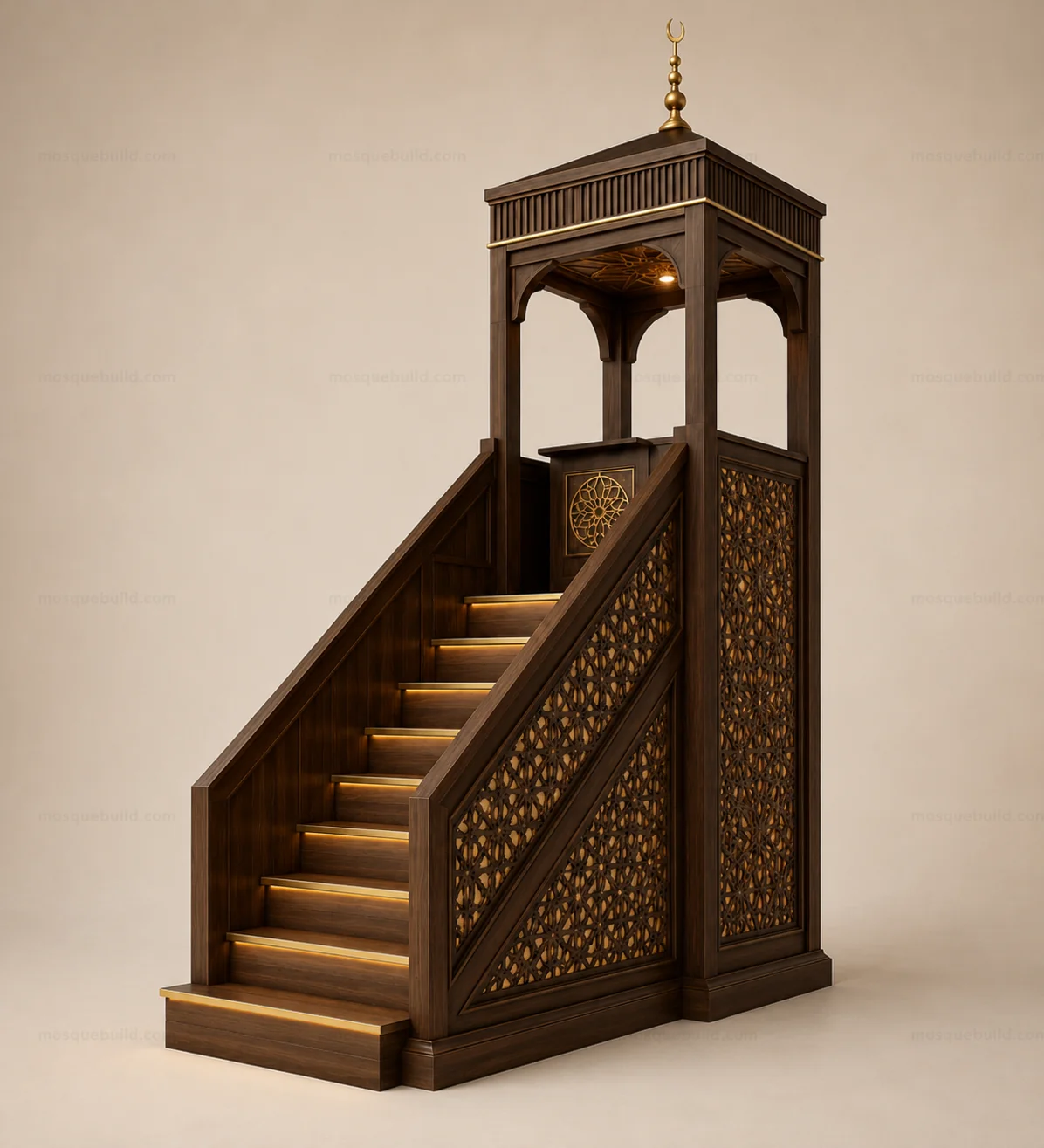 Seljuk Geometric Minbar
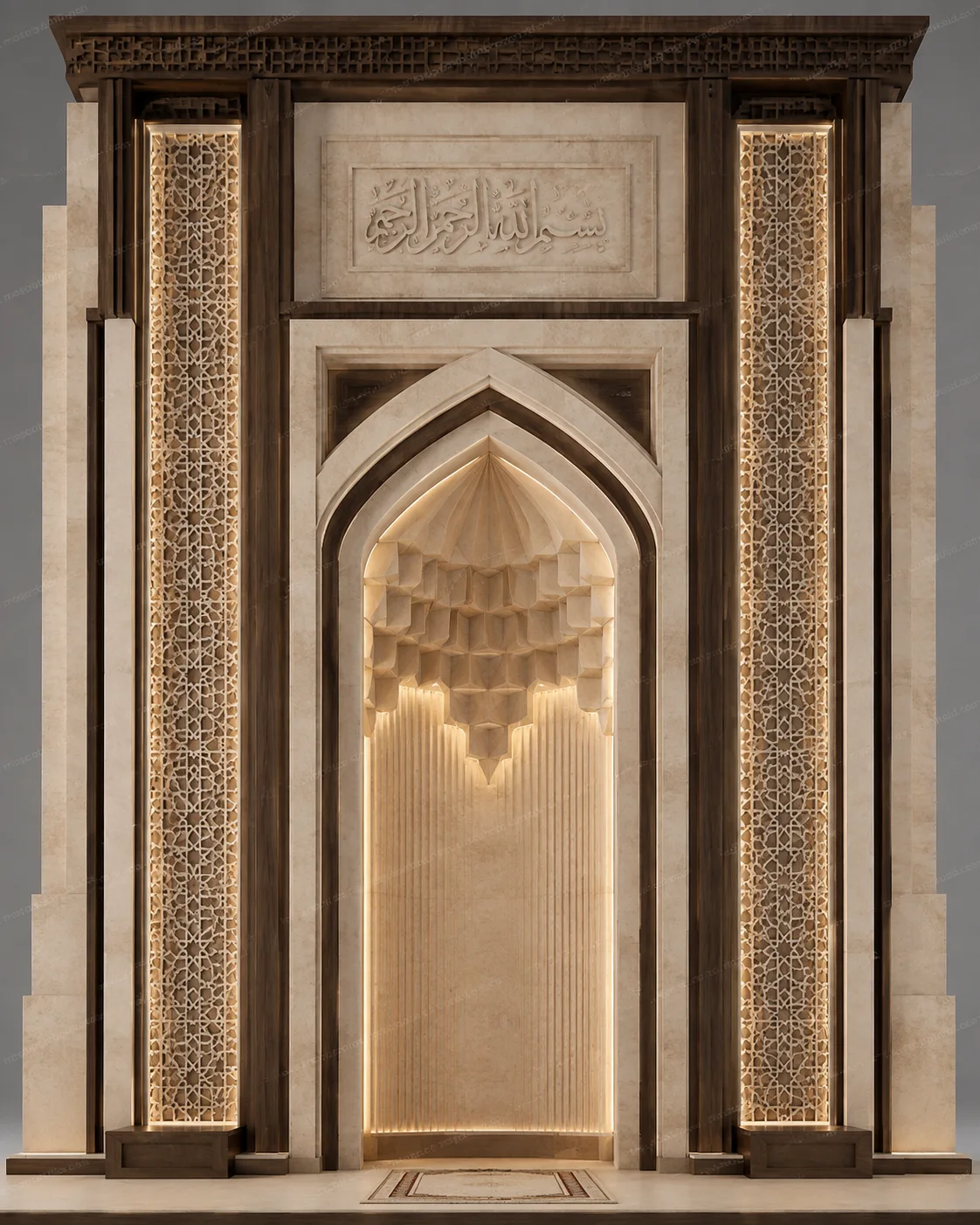 Modern Mihrab Direction
Geometric does not mean the same as traditional
Islamic geometry can support contemporary, Ottoman, Seljuk or completely custom interiors. A modern project may use a large simplified grid, while a heritage project may use denser star geometry and carved borders. The style comes from proportion, material and context—not only from the pattern itself.
Need a custom geometric furniture family?
Send the project dimensions and reference pattern. We can coordinate geometry across the mihrab, minbar, kursi, qibla-wall panels and related woodwork.
Request geometric furniture review English
 German
 Turkish
 Russian
 French
 Arabic