


Cultural Centre & Library Lighting Guide
Cultural Centre & Library Lighting Guide
Coordinate public-space feature lighting with functional reading, circulation, exhibition and event lighting in cultural centres, libraries and civic learning buildings.
One building, several lighting environments
Cultural centres and libraries may include foyers, reading rooms, exhibition zones, lecture halls, auditoriums, cafes, multi-purpose halls and exterior plazas. Each zone needs a different balance of ambient, task, accent and decorative lighting.
Typical applications
- Grand foyer chandeliers and suspended light sculptures
- Reading and study lighting
- Book-stack and shelving illumination
- Gallery and display accent lighting
- Auditorium and event-hall scenes
- Wall washing for civic art and graphics
- Exterior entrance and facade lighting
Reading comfort
Libraries need comfortable task illumination, low glare and consistent colour quality. Fixture placement should be coordinated with tables, shelves, screens and daylight rather than designed only from the ceiling grid.
Foyers and public identity
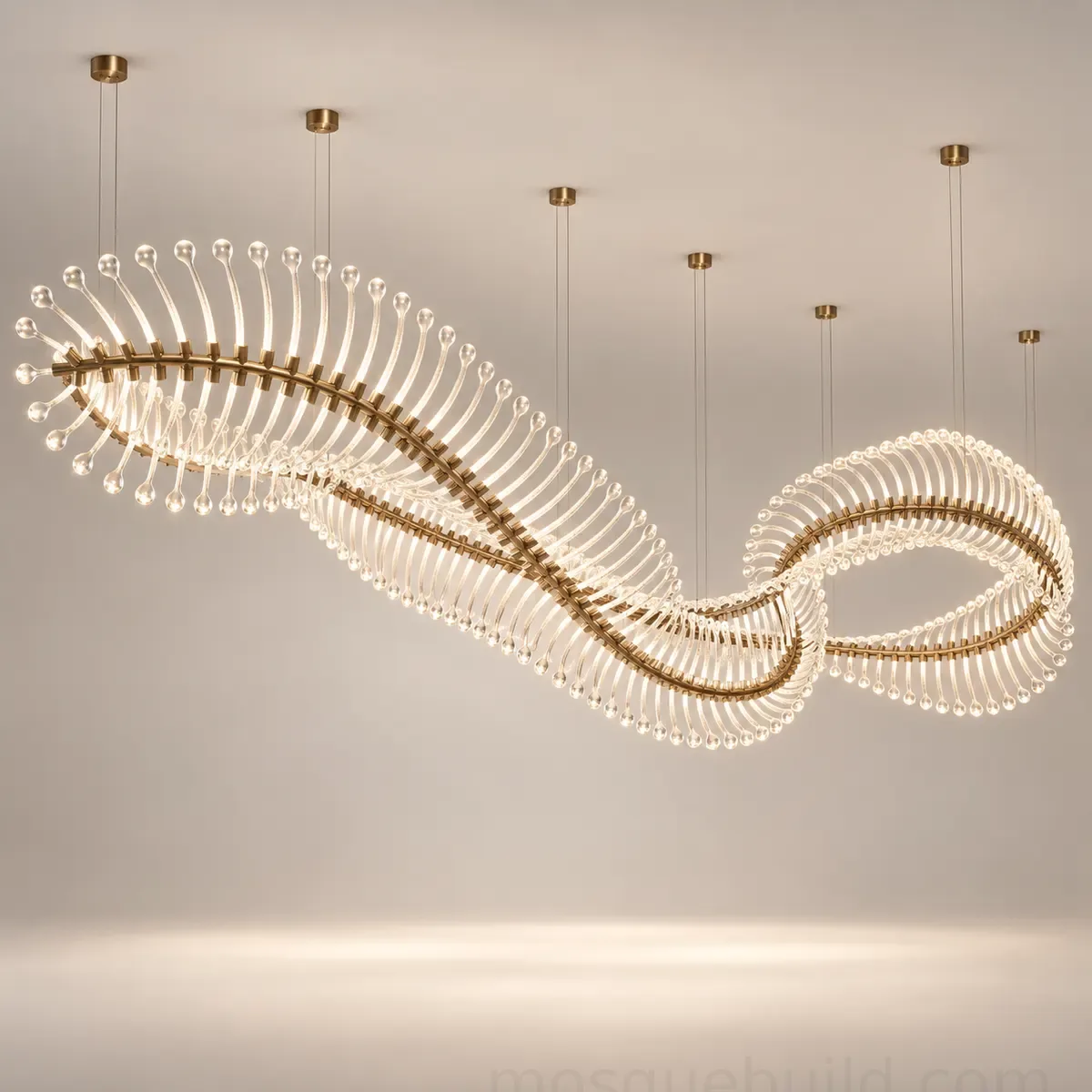
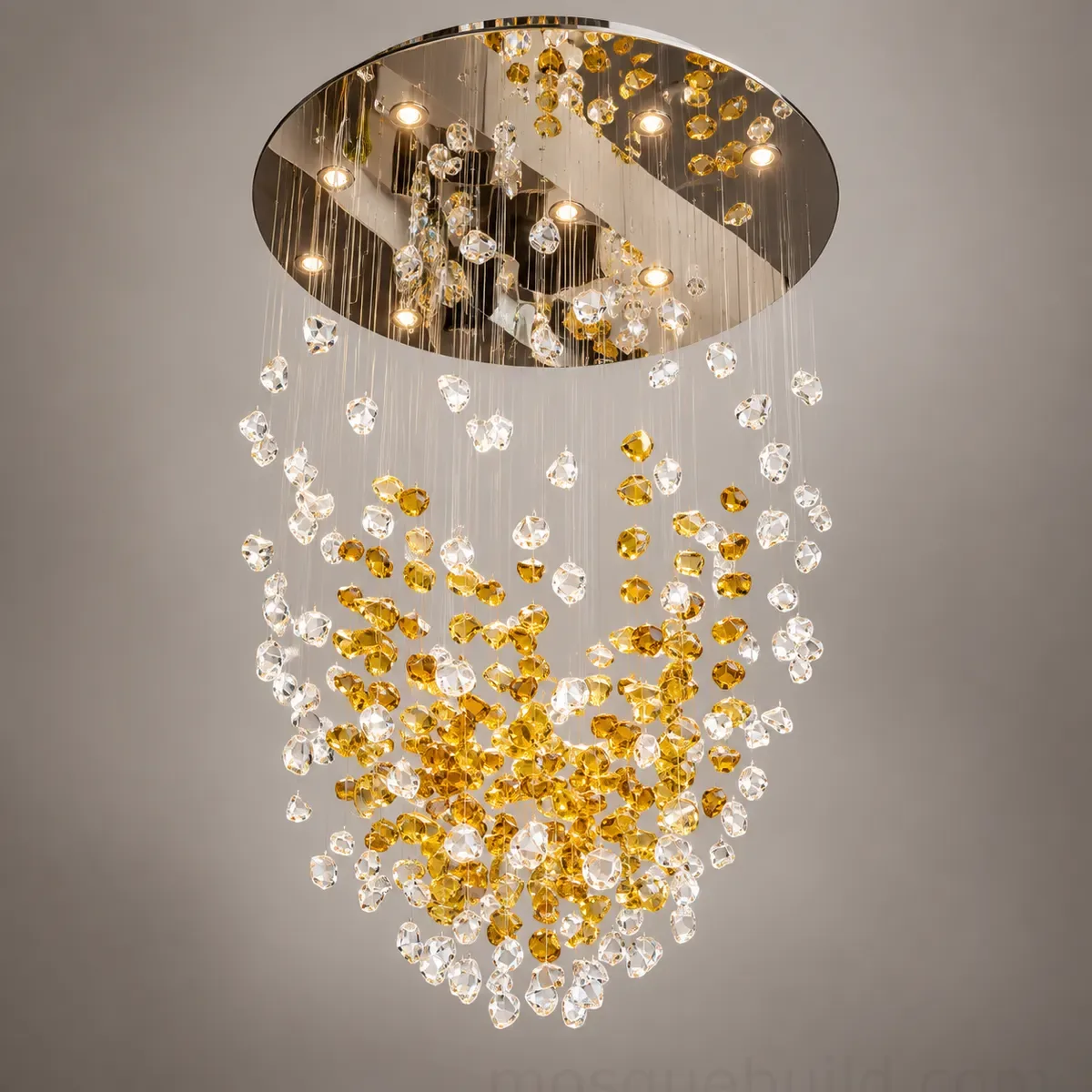
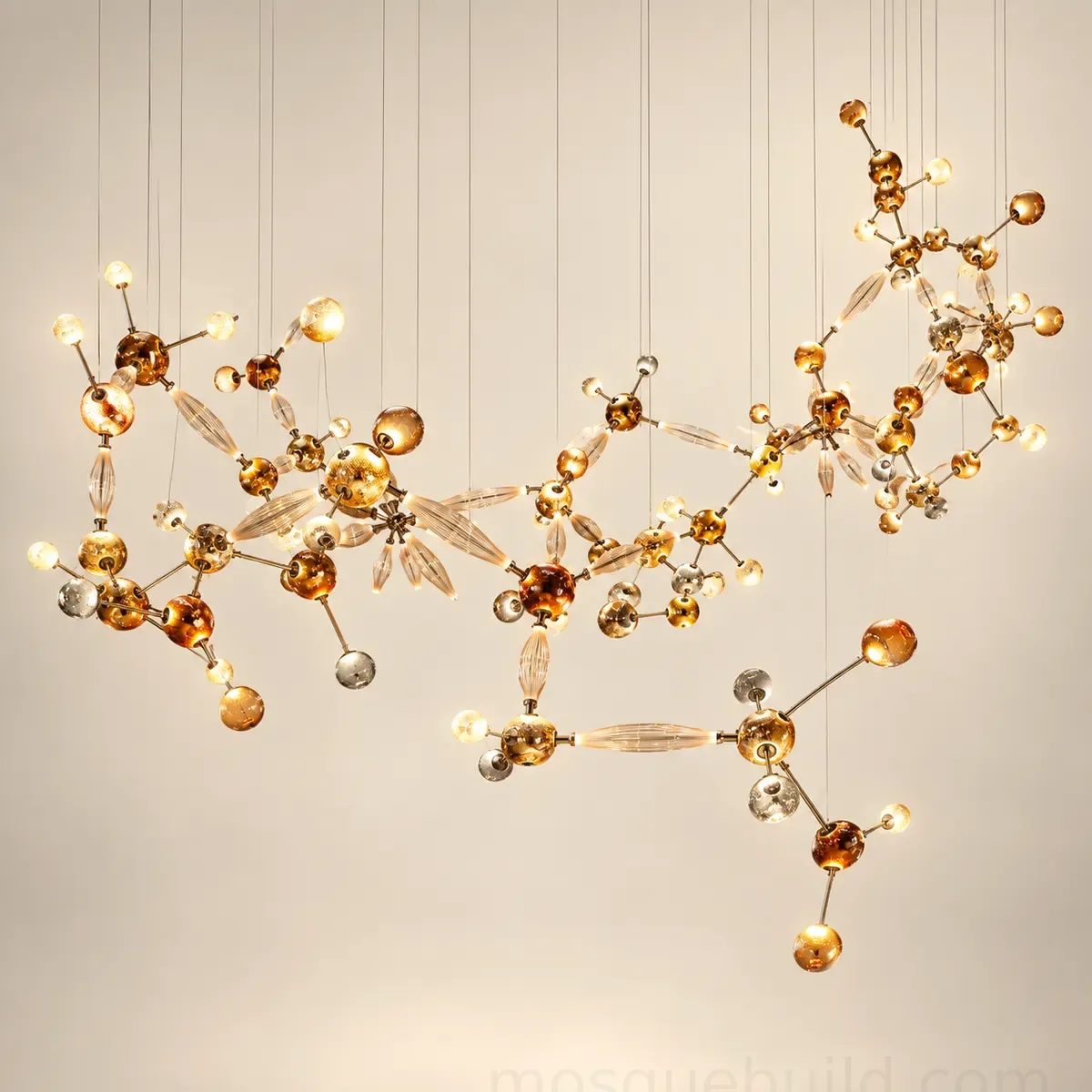
Large entrance spaces are suitable for custom chandeliers, ring systems or architectural light sculptures. These pieces should be engineered together with the supporting structure, emergency routes and the surrounding technical lighting.
Flexible multi-purpose spaces
Dimming and scene controls allow one room to support lectures, exhibitions, ceremonies and social events without changing the physical lighting installation. Controls should be simple enough for facility staff to operate and maintain.
Cultural-centre and library zone matrix
| Zone | Lighting task | Typical system |
|---|---|---|
| Entrance / foyer | Orientation and public identity | Ambient light + chandelier / light sculpture |
| Reading room | Visual comfort and sustained task work | Low-glare general + local task lighting |
| Bookshelves / stacks | Vertical title visibility | Linear or asymmetric shelf/aisle lighting |
| Exhibition zone | Flexible accent and display hierarchy | Track spotlights + wall washing |
| Auditorium / hall | Multiple event scenes | Dimmable architectural + decorative lighting |
| Stairs / circulation | Safe movement and wayfinding | Integrated ambient / step / handrail lighting |
| Exterior plaza | Arrival, facade identity and safety | Facade projectors + landscape lighting |
Reading-space design priorities
Library lighting should support long periods of reading without excessive glare or contrast. Ceiling fixtures, daylight, table lamps, screens and shelves must be coordinated together. The arrangement should avoid bright reflections on screens and maintain useful vertical light on bookshelves.
Daylight and electric-light coordination
Libraries and cultural centres often have large glazed areas. Daylight can reduce electric-light demand, but uncontrolled sunlight may create glare and heat gain. Lighting controls can respond by zone so interior fixtures dim where daylight is sufficient while deeper areas maintain stable illumination.
Feature chandeliers in public foyers
A chandelier or suspended light sculpture can become the visual identity of a cultural centre, library atrium or civic foyer. The fixture should be coordinated with structural support, smoke-control and sprinkler zones, maintenance access, emergency routes, acoustic elements and the surrounding technical lighting.
Multi-use halls and scene control
One room may host lectures, ceremonies, exhibitions, receptions or performances. Controls should provide clearly named scenes instead of forcing facility staff to adjust many circuits manually. Typical scenes can include cleaning, lecture, presentation, event, reception and late-night modes.
Контрольный список спецификации проекта
- space schedule and intended activities
- furniture and shelf layouts
- daylight orientation and shading strategy
- ceiling heights and suspension points
- AV, acoustic and fire-system coordination
- required lighting scenes and control interfaces
- maintenance access for high atriums
- emergency-lighting integration
Часто задаваемые вопросы
Can the same CCT be used throughout the building?
It can, but not always optimally. Reading, exhibition, hospitality and ceremonial spaces may have different visual goals. A consistent palette can still allow carefully chosen variations.
Should a library use decorative chandeliers?
In foyers, atriums and ceremonial areas they can be very effective. Reading zones still need functional, low-glare lighting independent of the decorative fixture.
How early should lighting coordinate with the interior designer?
Before furniture, ceiling and service layouts are frozen, because shelf positions, acoustic panels, ceiling rafts and feature fixtures all affect the lighting plan.
 English
 German
 Turkish
 Russian
 French
 Arabic