


Museum & Gallery Lighting Design Guide
Museum & Gallery Lighting Design Guide
Balance visual experience, conservation and flexibility with adjustable spotlights, wall washing, track systems, high colour quality and scene control.
Exhibition lighting has two clients: the visitor and the collection
The visitor needs sufficient contrast, colour fidelity and visual comfort; the collection may require strict limitation of illuminance and cumulative light exposure. For this reason, museum lighting should be coordinated with the curator or conservation team rather than applying one lux value to every object.
Typical luminaire families
- Adjustable track spotlights for changing exhibits
- Framing projectors for precise rectangular or shaped light fields
- Wall washers for uniform gallery walls
- Linear display-case lighting
- Indirect ambient lighting for circulation and visual adaptation
- Decorative feature lighting for foyers and public halls
Colour quality
CRI remains a familiar specification, but demanding art and material applications should also consider strong red rendering, chromatic consistency and broader colour-rendering metrics where appropriate. CCT should be selected with the exhibition palette, material sensitivity and curatorial intent.
Control glare and spill
Visitors should see the artwork rather than bright lamp apertures. Snoots, honeycombs, shutters, framing accessories and careful aiming can reduce spill onto adjacent works and circulation zones.
Flexible track lighting
Track systems are valuable where exhibitions change because luminaires can be repositioned and re-aimed. The electrical and control strategy should be planned for future layouts rather than only the opening exhibition.
Conservation and exposure
Sensitive materials such as textiles, works on paper and some pigments can be damaged by light. Project limits should be set from collection policy and object sensitivity, considering both instantaneous illuminance and total exposure over time.
Public areas beyond the galleries
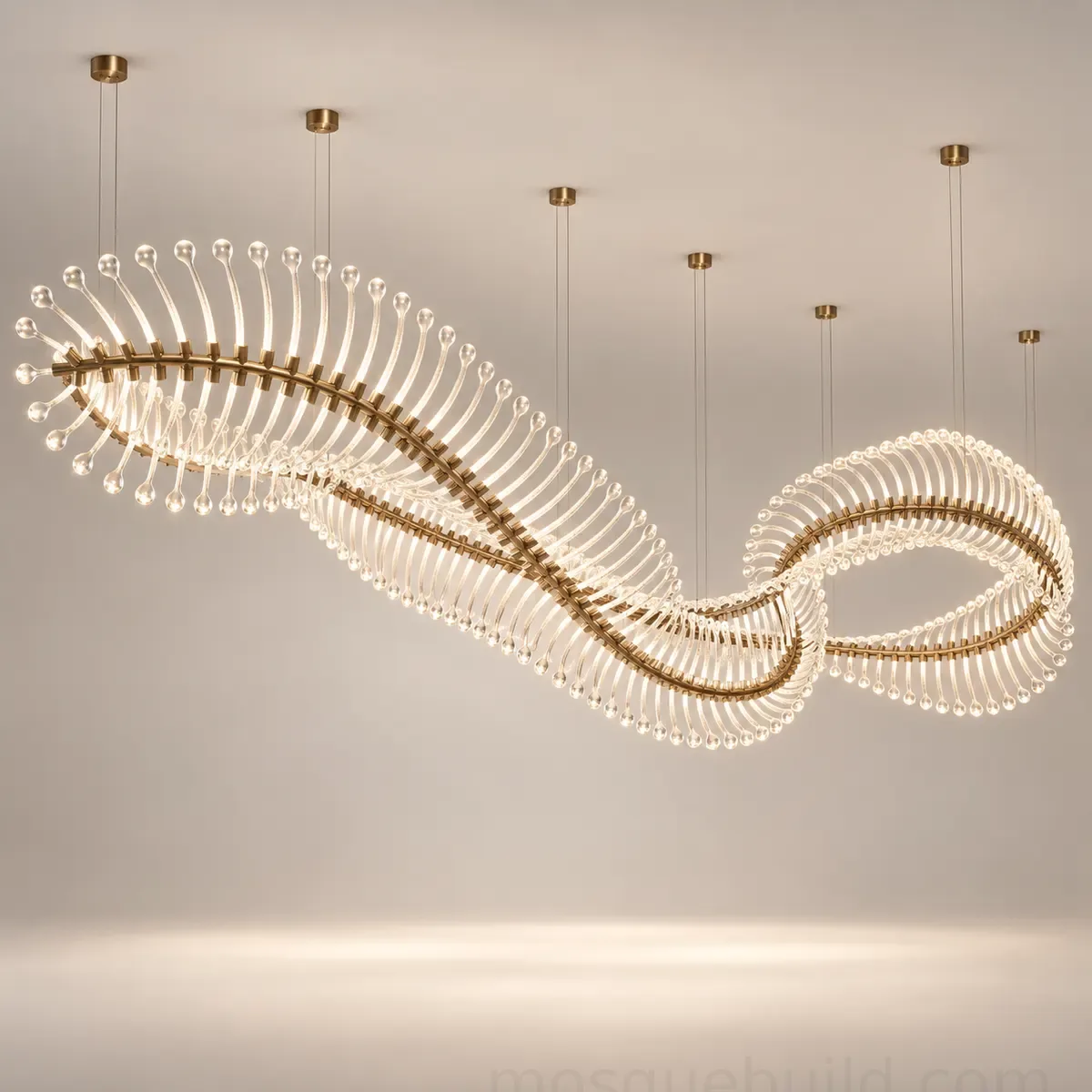
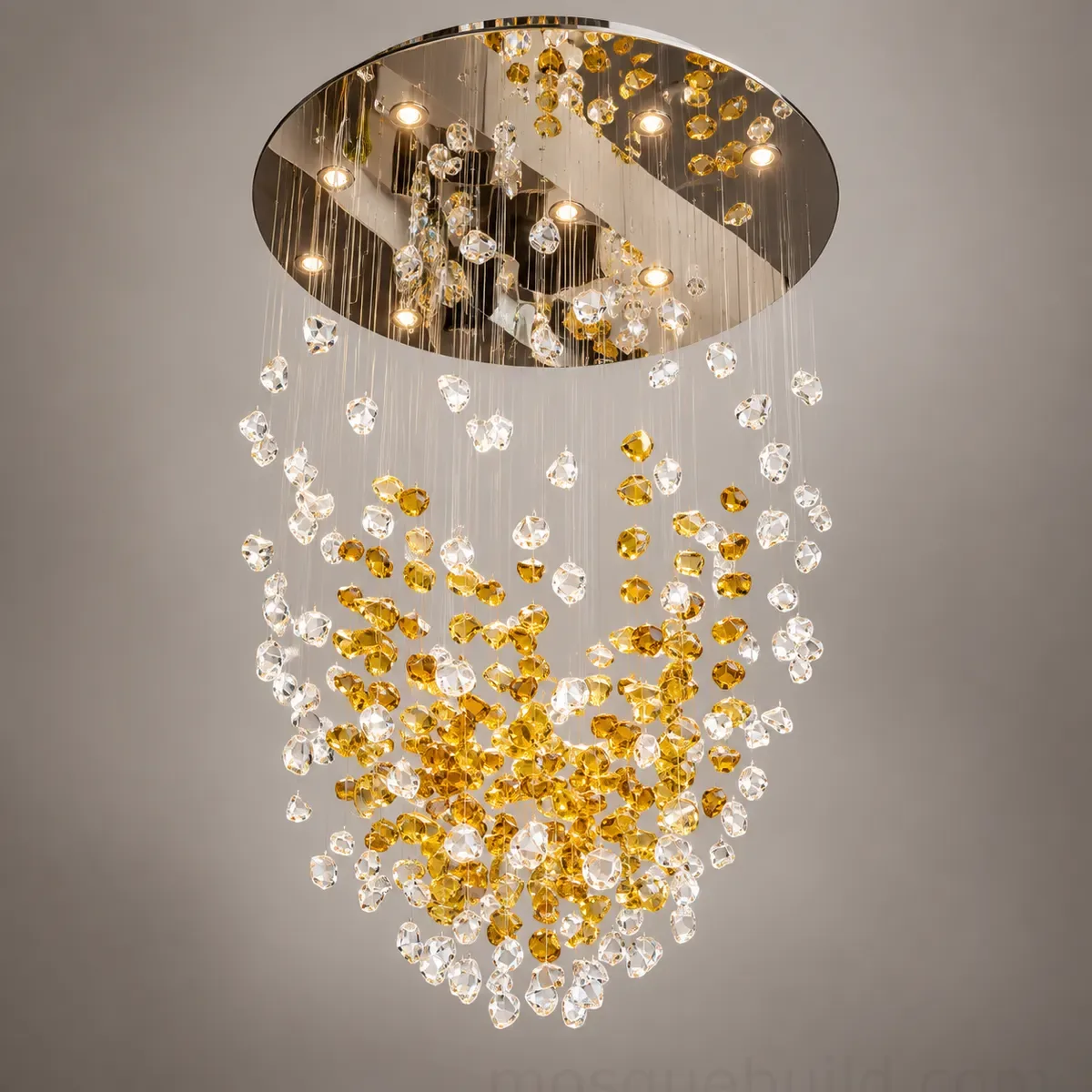
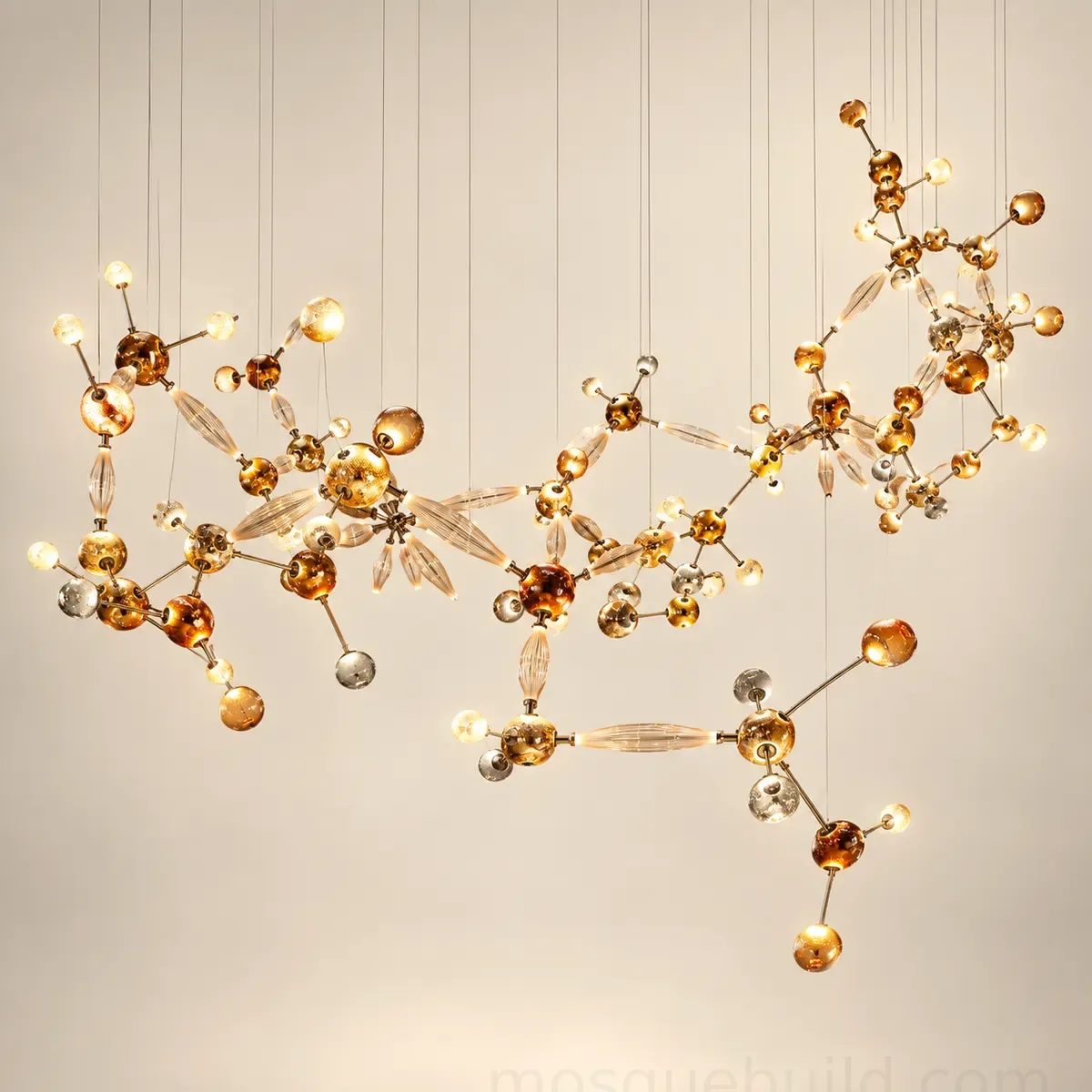
Museum foyers, stairs, cafes, shops, auditoriums and ceremonial spaces can use different lighting families. Large custom chandeliers or architectural light sculptures may form a public focal point while exhibition zones remain technically controlled.
Museum lighting decision matrix
| Zone | Typical lighting approach | Primary concern |
|---|---|---|
| Paintings / wall art | Adjustable spotlight or framing projector | Glare, spill, colour quality and conservation |
| Large gallery wall | Wall washing | Uniformity and vertical brightness |
| Sculpture | Multi-directional accent | Modelling, shadows and visitor sightlines |
| Display case | Integrated linear / miniature accent | Heat, reflections and service access |
| Foyer | Decorative + ambient layers | Identity, circulation and event scenes |
| Temporary gallery | Track lighting | Flexibility and repeatable aiming |
Illuminance and cumulative exposure
Museum lighting is not defined by one universal lux value. Light-sensitive materials can require significantly lower illuminance and controlled operating hours, while less-sensitive objects may tolerate more. The museum’s conservation policy and responsible curator/conservator should define acceptable exposure. Lighting calculations help verify the selected strategy but do not replace conservation decisions.
Colour rendering and consistency
High-quality exhibition light should preserve subtle colour relationships. Specifications may include CRI/Ra, R9, broader colour-fidelity/gamut metrics and chromatic consistency. The appropriate CCT depends on the collection, finishes, curatorial intent and daylight relationship.
Reflections and visitor sightlines
Framed art, glazed cases and polished objects can reflect luminaires directly into the visitor’s view. Fixture location should be coordinated with typical viewing positions, object tilt and case geometry. More light does not solve reflection problems; geometry does.
Flexible exhibition infrastructure
- track locations planned around likely exhibition walls
- sufficient circuit/control flexibility for future layouts
- interchangeable optics and accessories
- repeatable aiming references for recurring exhibitions
- accessible drivers and replaceable components
Museum lighting submittal checklist
- luminaire schedule with optics and accessories
- photometric files and calculation report
- colour-quality data
- dimming/control compatibility
- track/circuit layout
- display-case integration details
- aiming and commissioning notes
- maintenance and spare-parts schedule
Часто задаваемые вопросы
Why not use one high-CRI spotlight everywhere?
Colour quality is only one requirement. Optic, glare, object sensitivity, reflections, flexibility and control must also match the application.
Are wall washers suitable for paintings?
They can create a calm, even gallery wall, but individual artwork may still need different contrast or conservation limits. The curatorial approach determines whether wall washing or individual accent is more appropriate.
Should exhibition lighting be dimmable?
Dimming is highly useful for scene setting, conservation management, event modes and commissioning. The required dimming range and control resolution should be specified early.
 English
 German
 Turkish
 Russian
 French
 Arabic