


Mosque Calligraphy Placement & Coordination Guide
Техническое руководство MosqueBuild
Mosque Calligraphy Placement & Coordination Guide
Mosque calligraphy should be coordinated with architecture so scale, sightlines, lighting, substrate and surrounding ornament support a clear visual hierarchy rather than competing for attention. Use this guide to define the scope, verify the project inputs and connect the technical decision to procurement, installation and long-term use.
Start with the real project conditions
Mosque calligraphy should be coordinated with architecture so scale, sightlines, lighting, substrate and surrounding ornament support a clear visual hierarchy rather than competing for attention. Generic dimensions or reference images are useful for discussion, but final decisions should come from verified site information, destination requirements and the agreed responsibility boundary.
On international projects, record which requirements are controlled by MosqueBuild, the local architect or engineer, the main contractor, customs/logistics parties and the client. On renovation, distinguish verified existing conditions from assumptions. Final statutory compliance must be confirmed by the responsible local professionals.
Technical and planning priorities
1. Hierarchy
Define which inscriptions are primary and secondary in relation to the mihrab, dome, qibla wall, entrances and other focal elements. Record the approved basis clearly so the next project stage does not reinterpret the requirement or repeat the same investigation.
2. Viewing distance
Size lettering and border detail for the real distance and angle from which worshippers will see it, not only for close-up artwork approval. Record the approved basis clearly so the next project stage does not reinterpret the requirement or repeat the same investigation.
3. Substrate and fixing
Coordinate timber, stone, plaster, tile or metal substrates with fixing method, movement and access before fabrication. Record the approved basis clearly so the next project stage does not reinterpret the requirement or repeat the same investigation.
4. Lighting
Use grazing, concealed or ambient lighting carefully so reflections, shadows and hotspots do not reduce legibility. Record the approved basis clearly so the next project stage does not reinterpret the requirement or repeat the same investigation.
5. Artwork approval
Freeze text, spelling, calligraphic composition, dimensions and colour through a controlled artwork approval before production begins. Record the approved basis clearly so the next project stage does not reinterpret the requirement or repeat the same investigation.
Interfaces that should be reviewed together
Coordinate mihrab and qibla wall, dome/ceiling geometry, lighting and electrical routes and woodwork, stone, tile and finish substrates. These interfaces often determine whether a technically correct individual product can actually be transported, installed, operated and maintained in the completed mosque.
Recommended workflow
- Collect: assemble drawings, dimensions, photographs, destination information and the required scope.
- Verify: mark every critical input as verified, assumed or pending; do not allow pending dimensions to become silent fabrication assumptions.
- Coordinate: check adjacent packages, access, services, fixings, finishes, logistics and future maintenance.
- Approve: issue controlled drawings, samples, schedules or technical records appropriate to the topic.
- Deliver and record: inspect the completed result and retain the final information for installation, customs, operation or future replacement as applicable.
Common mistakes
- Approving calligraphy only as a small screen image.
- Changing wall dimensions after artwork is composed.
- Letting lighting create glare on reflective lettering.
- Installing without a coordinated fixing/substrate detail.
Most of these failures can be reduced by freezing information in the correct order. First confirm the requirement and site condition, then coordinate the interfaces, then approve the product or fabrication information. Price comparisons become more reliable when every option is based on the same scope.
Project file and handover
Keep calligraphy location plan, approved artwork files, dimension/fixing detail and finish and lighting mock-up where needed. Add revision dates and responsible parties. For export work, connect package numbers and commercial documents to the same product/drawing references used by the installation team. For architectural work, keep approved geometry and finish information with the as-built record.
Часто задаваемые вопросы
What information is needed for the first technical review?
Send the project location, current drawings or measured sketch, photographs, key dimensions, expected programme and the exact supply/installation boundary. For mosque calligraphy placement, include the specific decisions listed in this guide so the review starts from project evidence rather than a generic catalogue assumption.
Can this be adapted to an existing mosque?
Yes. Existing buildings should be surveyed first. Record actual openings, levels, finishes, services, access restrictions and elements that must remain. New work can then be detailed around the building instead of forcing the building to accept a standard module.
How does this connect to pricing?
Custom mosque work is priced more accurately after dimensions, material/performance requirements, included components, packing, delivery and installation responsibilities are defined. A lower headline price may cover a different boundary, so compare quotations against the same technical scope.
Связанные ресурсы MosqueBuild
Interior Architecture & Furniture · Mosque Mihrab Designs · Архитектурное проектирование мечетей · All MosqueBuild Guides · Запросить проверку проекта
This guide supports planning and coordination. Final structural, electrical, fire, accessibility, customs and local-code requirements must be verified for the actual project by the responsible qualified parties.
Related Products & Project Applications
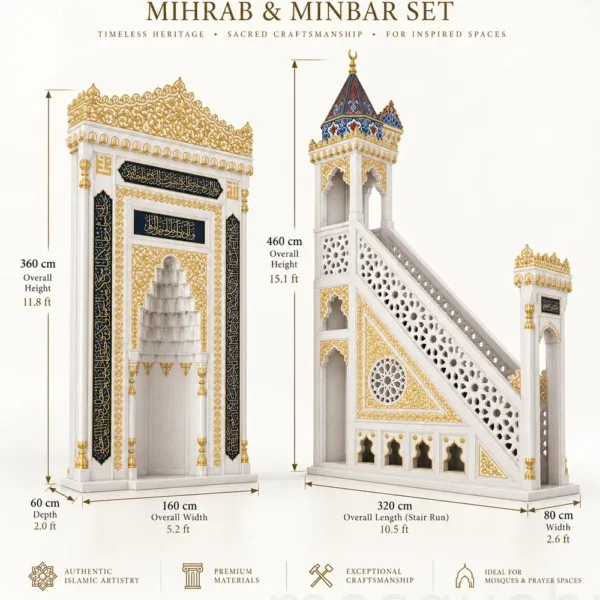


Explore Mihrab, Minbar & Mosque Furniture
Continue from this guide to the main solution page, technical directory and closely related resources.
 English
 German
 Turkish
 Russian
 French
 Arabic