


Minaret System Comparison
☰ Minaret Engineering Menu · Minaret Systems
Minaret Material Comparison: Steel, Concrete, GRP, GRC, Stone and Metal Cladding
Specialist MosqueBuild technical guidance for minaret system comparison, integrated into the Minaret Engineering Library.
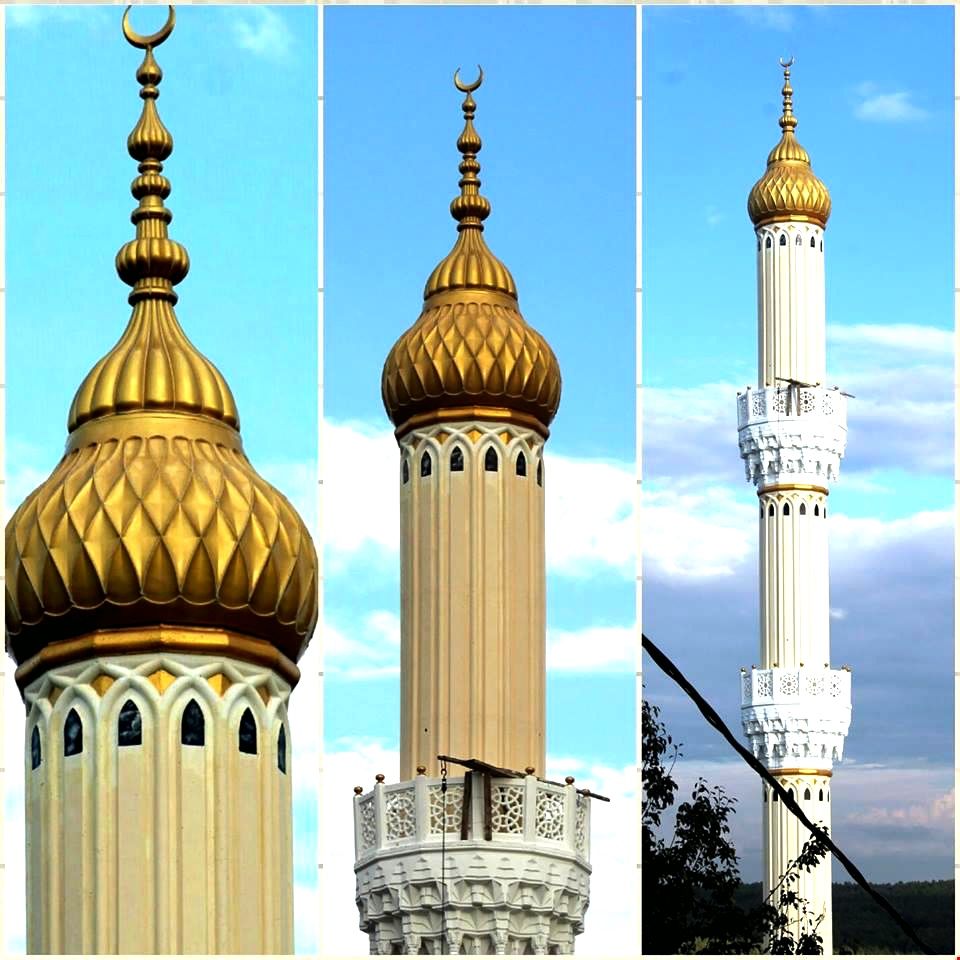
There is no single best material for every minaret
Minaret projects often begin with a material question: steel or concrete, GRP or GRC, stone or metal? The better question is which material should perform which function. A minaret contains a primary structure, secondary supports, architectural envelope, balcony, spire, finial, stairs and equipment. The most reliable solutions often combine materials rather than forcing one material to do everything.
Reinforced concrete
Concrete is well understood by local building trades and can provide substantial stiffness and fire resistance. It works especially well where the minaret is cast as part of the mosque structure. Its disadvantages include high self-weight, formwork complexity, long site duration and sensitivity to workmanship and curing. In seismic design, high mass increases inertia forces, while cracking and reinforcement detailing around openings require careful control.
Structural steel
Steel offers high strength-to-weight ratio, factory precision and excellent compatibility with modular export. It can form slender shafts and support lightweight cladding. Connections, corrosion protection and fire requirements need explicit design. Steel also expands with temperature and can transmit vibration if members or brackets are too flexible. In coastal environments the protection system may be more important to life-cycle performance than the steel grade itself.
GRP / fiberglass
GRP is exceptionally useful as an architectural envelope. It is lightweight, mouldable and can reproduce complex flutes, muqarnas and spires. The resin, fibre reinforcement, gelcoat and fixing system define performance. GRP does not rust, but that does not make the complete minaret immune to coastal deterioration because steel supports and fasteners still require protection. UV weathering and surface maintenance should be planned.
GRC / GFRC
GRC provides a mineral, stone-like appearance with thinner sections than conventional precast concrete. It is well suited to decorative bands, balcony fascias and architectural panels. It is heavier and more brittle than GRP and depends on good curing, AR-glass reinforcement and specialist anchors. GRC should be designed as a panel system with joints and supports rather than as a cosmetic coating.
Natural stone
Stone offers authenticity, durability and a monumental appearance. Its mass becomes significant on tall towers, increasing foundation and seismic demand. Mechanical anchorage is generally important at height. Stone thickness, panel size, support and replaceability need detailed design. It is often most efficient at bases and selected architectural zones rather than across every upper surface.
Aluminium
Aluminium cladding is lightweight and corrosion resistant and can receive durable factory finishes. Thermal expansion is relatively high, so long panels need movement allowance. Thin sheets can oil-can or vibrate under wind if insufficiently stiffened. Aluminium works well for contemporary minarets where clean seams and low weight are priorities.
Copper, brass and zinc
Copper and zinc systems provide premium metal character and evolve through natural patina. Brass offers warm gold tones and can also weather visibly. These materials require specialist sheet-metal workmanship and careful galvanic isolation from supporting metals. They are excellent for spires, bands and selected full cladding systems where budget and detailing support them.
Weight and logistics
Material weight affects almost every downstream decision. Heavy concrete, stone and GRC increase module weight, crane size and foundation demand. Steel and GRP can reduce those loads and make containerized export more practical. Low weight, however, can increase sensitivity to wind during lifting, so logistics still require engineering.
Durability and maintenance
Durability is not a simple ranking. Concrete can crack and expose reinforcement; steel can corrode; GRP can weather; GRC can crack around anchors; stone joints can fail; metal cladding can suffer galvanic corrosion. The correct comparison is whether the full system has appropriate detailing, drainage, protection and an achievable maintenance plan for the site environment.
Fire and code considerations
Material selection also interacts with local fire and façade regulations. Concrete and mineral systems behave differently from polymer composites or thin metal envelopes. A project requiring a particular reaction-to-fire classification should define it early, because changing to a flame-retardant resin, insulated metal build-up or non-combustible backing can affect cost and detailing. Generic material labels are not substitutes for tested assemblies.
Architectural freedom
GRP and GRC lead in moulded ornament. Stone provides natural depth and texture. Sheet metals create crisp contemporary surfaces. Concrete can express strong monolithic forms, while steel defines the hidden geometry efficiently. A hybrid approach can combine a steel structure, GRP upper shaft, GRC balcony details and copper spire, using each material where it performs best.
How to make the final selection
The selection matrix should compare structural weight, wind and seismic implications, local skills, factory capability, transport, crane access, climate, corrosion, fire requirements, architectural style, maintenance access and budget. Initial cost alone is a poor decision criterion. A well-selected minaret material system is one whose technical behaviour, installation method and long-term maintenance all fit the same project conditions.
Explore Mosque Minaret Systems
Continue from this guide to the main solution page, technical directory and closely related resources.
 English
 German
 Turkish
 Russian
 French
 Arabic