



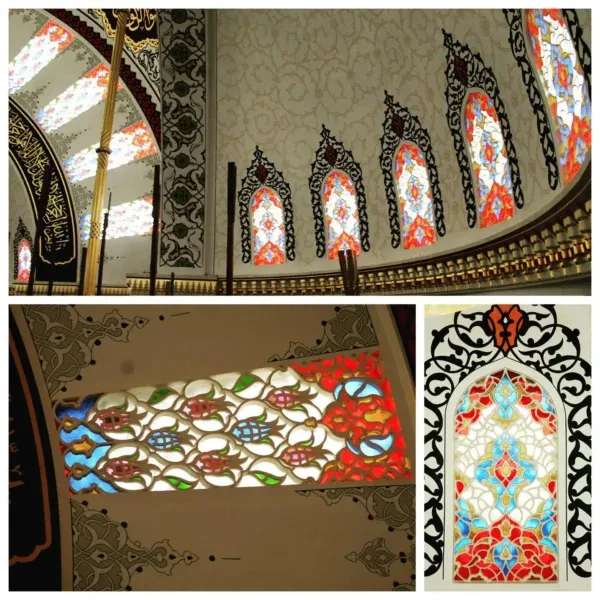
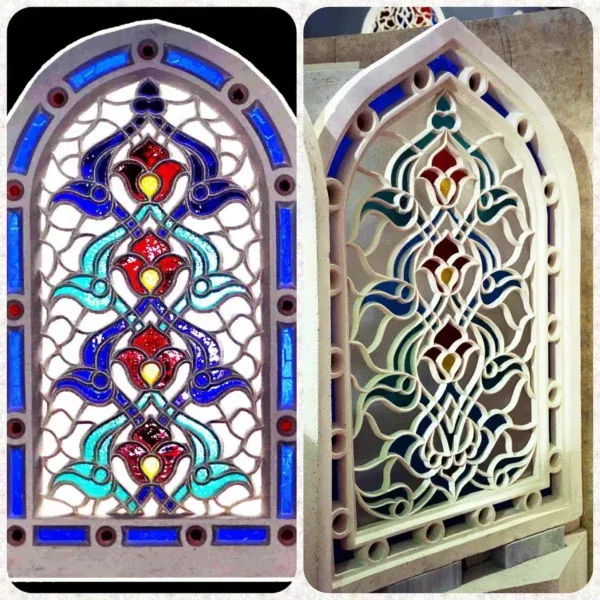
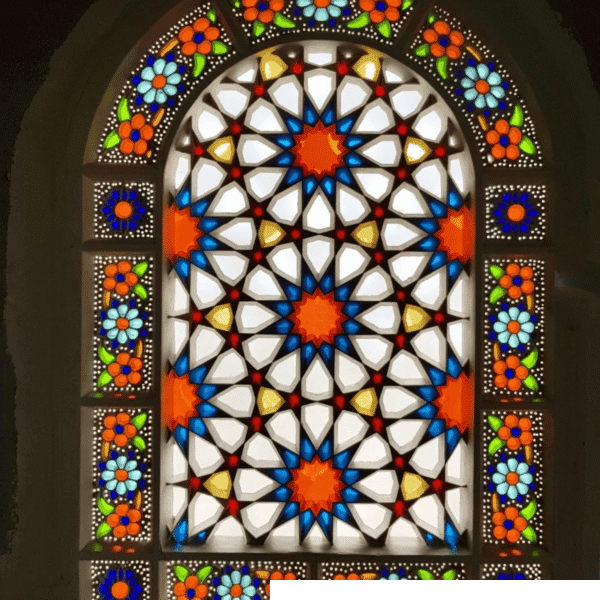
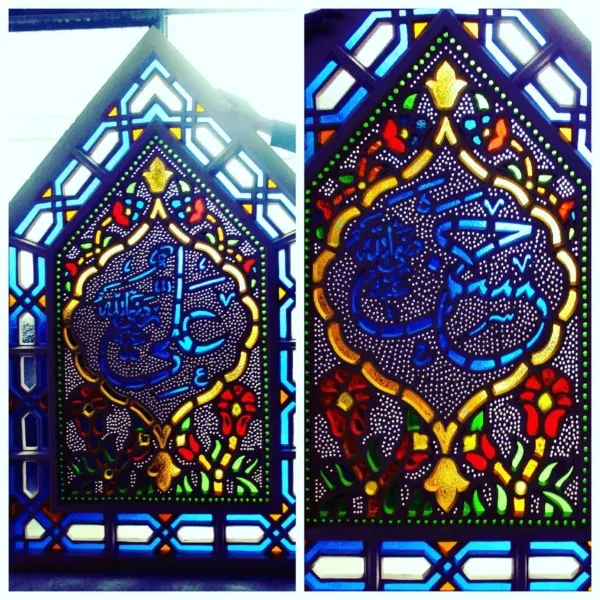
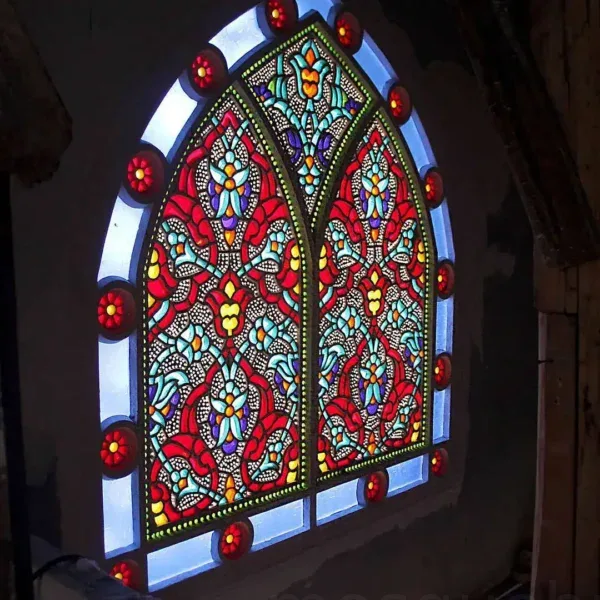
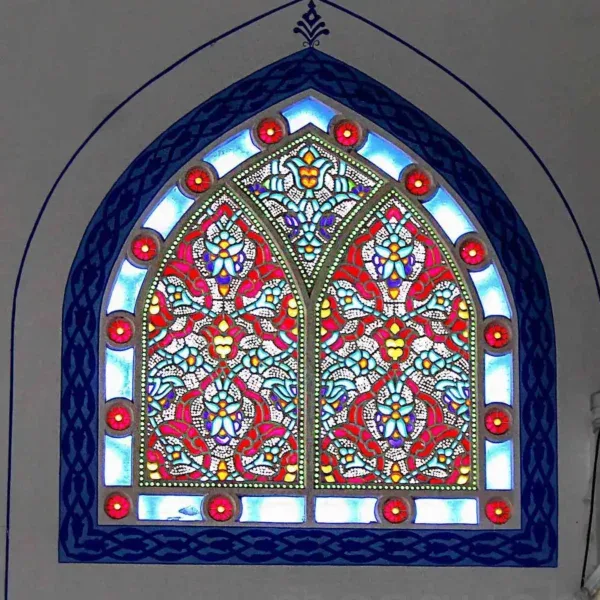
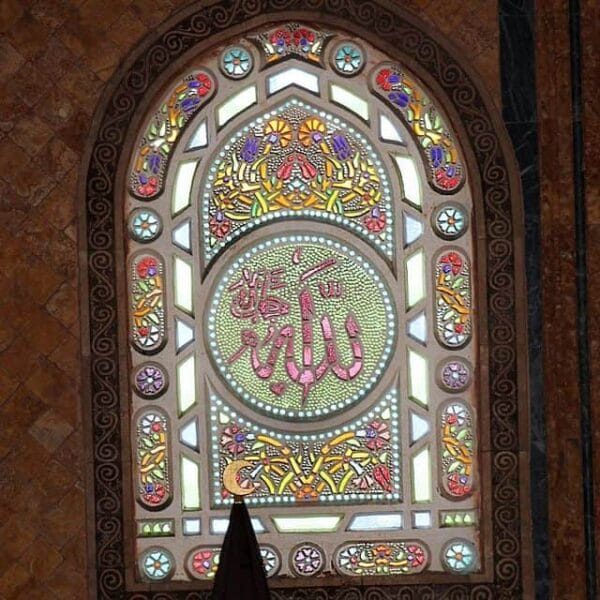
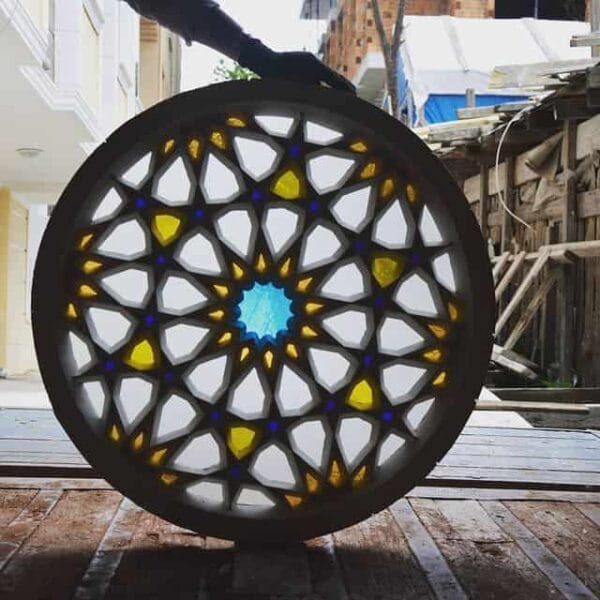
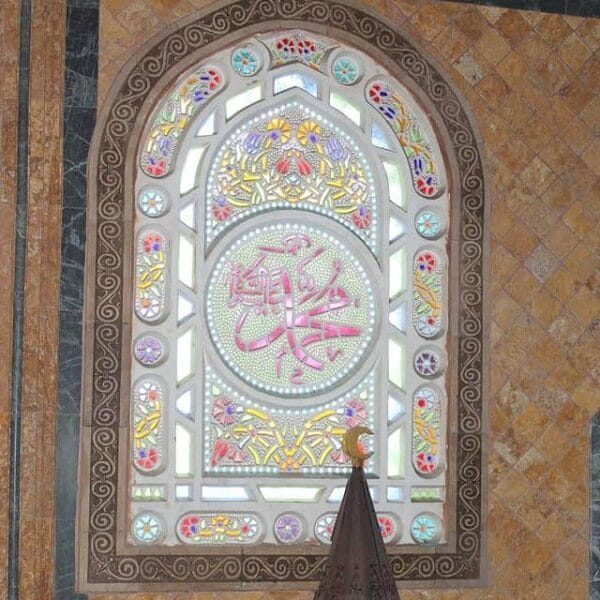
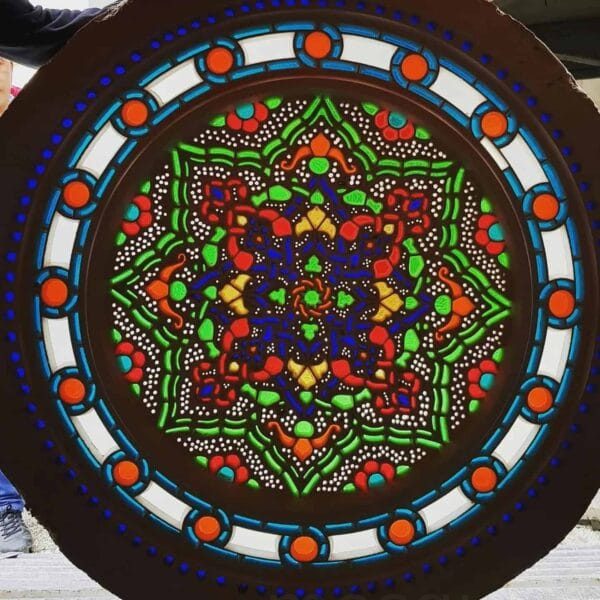
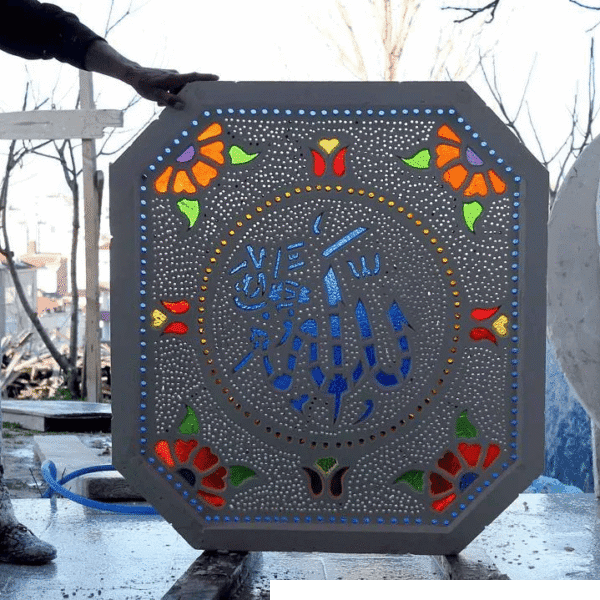
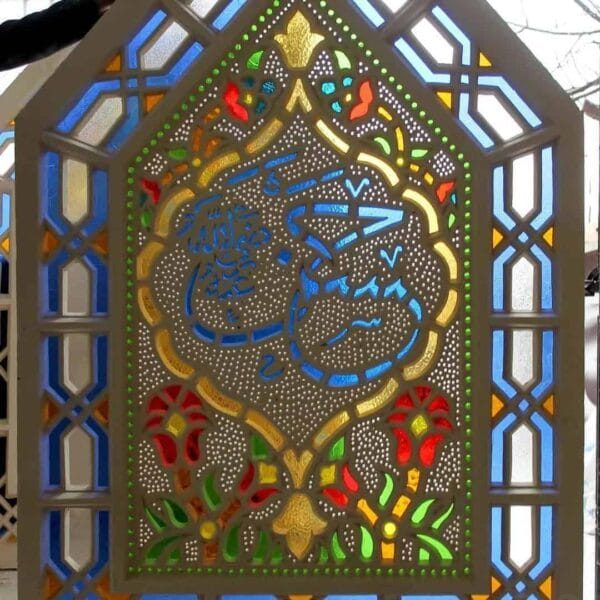
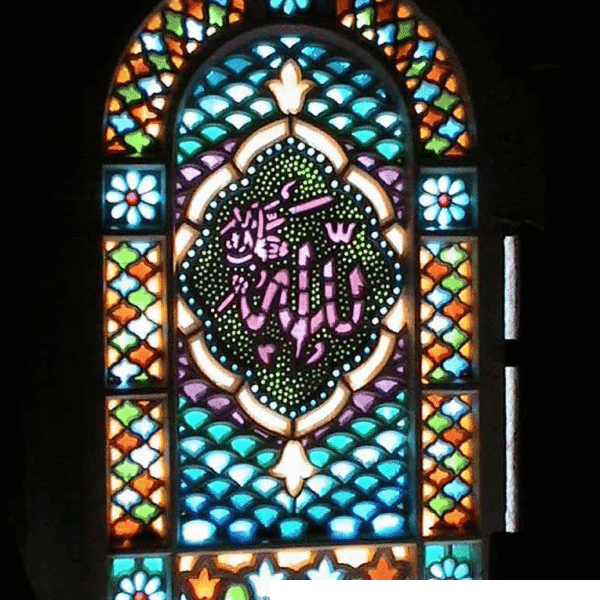
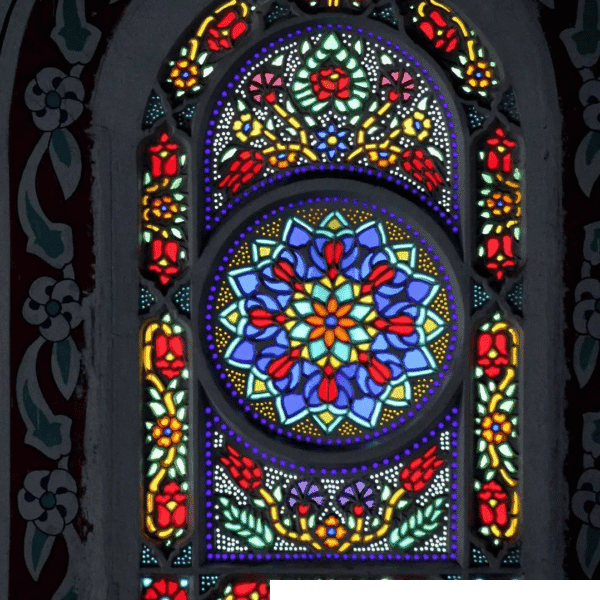
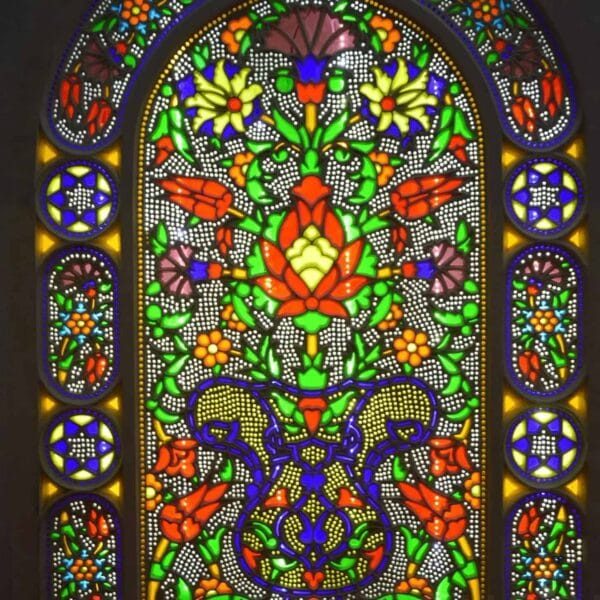
Explore MosqueBuild’s mosque window designs for prayer halls, façades and decorative architectural openings. Stained-glass and patterned window compositions can contribute to daylight, color and visual identity when they are developed around the real opening dimensions and the wider mosque architecture. The strongest results come from coordinating the window pattern with the interior rather than selecting a decorative image independently of the space.
Custom Stained Glass and Decorative Mosque Windows
Window width, height, frame conditions and the amount of natural light all affect the final composition. A pattern that works in a small opening may need a different scale when used across a tall or wide mosque window. Color direction can also be reviewed alongside the carpet, wall finishes, calligraphy and other interior elements so that transmitted light supports the overall atmosphere of the prayer hall.
Project-specific window dimensions and pattern scale
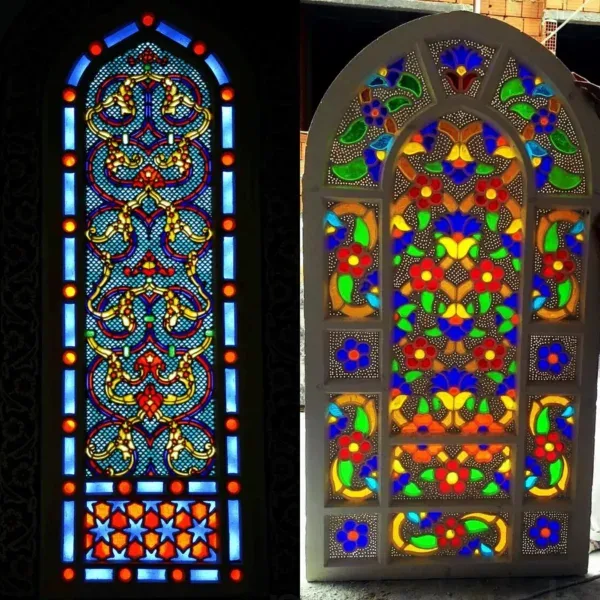
Stained-glass and decorative Islamic design directions
Color coordination with the surrounding mosque interior
Review of opening proportions and architectural context
Design development from drawings, photographs or measured openings
Information Needed for a Mosque Window Proposal
Provide clear opening dimensions, photographs of the wall and any available architectural drawings. Where multiple windows form a repeated series, include the quantity and spacing so the pattern language can be planned consistently across the elevation or prayer hall.
Can mosque window patterns be customized?
Yes. Pattern proportions and color direction can be developed according to the approved project dimensions and design brief.
Can several windows use one coordinated design family?
Yes. A repeated or related pattern system can be prepared for multiple openings while adapting the scale to each window size.
Showing all 23 results
Related Mosque Interior Collections
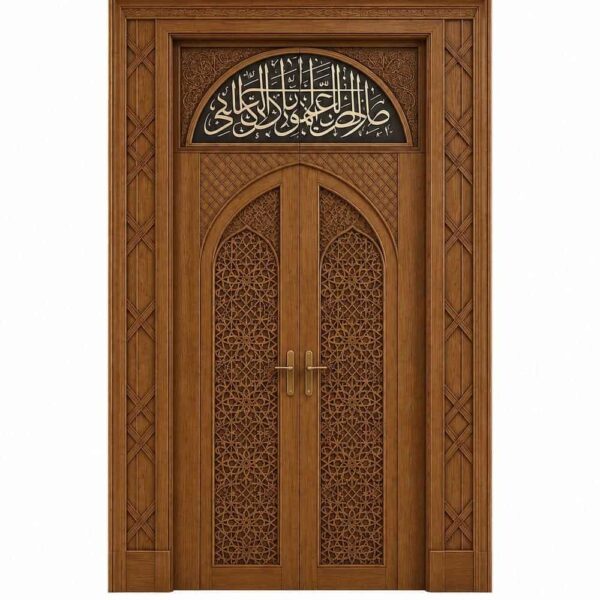
Mosque&Masjid Window: Beauty and Spiritual Symbolism
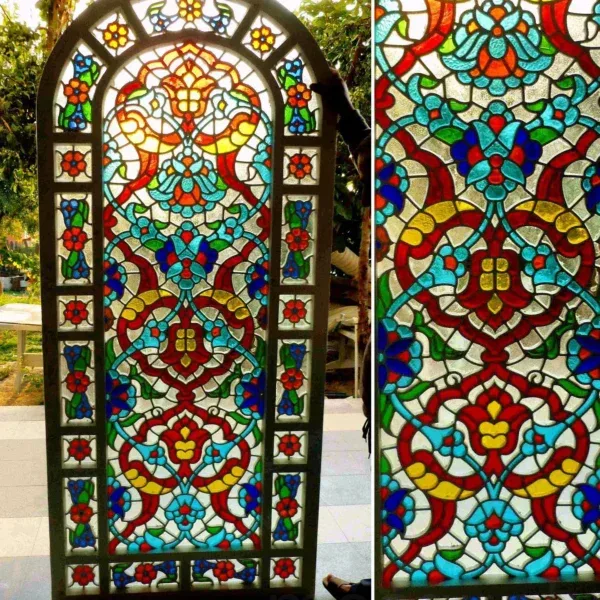
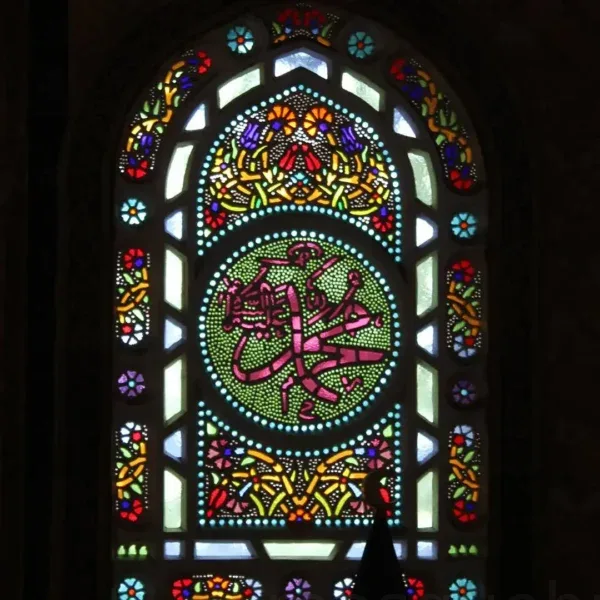
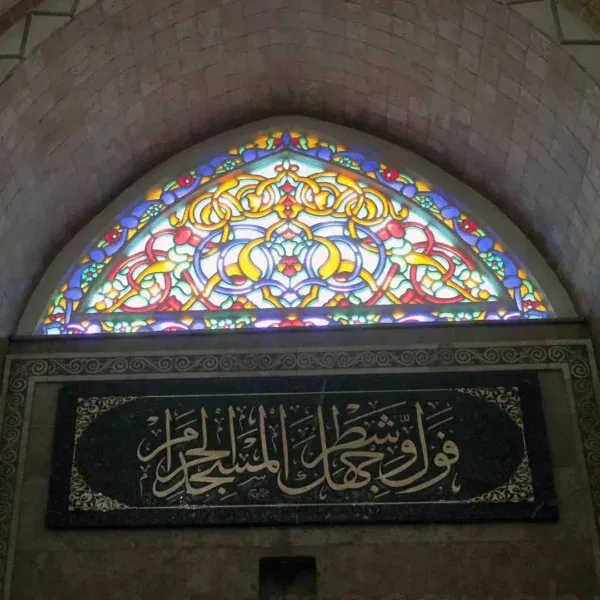
Mosque & Masjid Window designs are not just architectural elements; they are symbols of beauty, faith, and cultural heritage. Known as mosque stained glass or cami vitray in Ottoman tradition, these windows have adorned sacred spaces for centuries, enriching both the visual and spiritual atmosphere of mosques.
The Historical and Spiritual Significance
From the Ottoman era to modern Islamic architecture, the masjid window has held an essential role in mosque interiors. These artistic designs allow light to enter the prayer hall in vibrant colors, creating a sense of harmony and peace. Each masjid window design is carefully crafted to reflect Islamic artistry, turning natural sunlight into a breathtaking spiritual experience.
The use of mosque window design is not purely decorative. It symbolizes the divine light that guides worshippers, offering an atmosphere that elevates prayer and reflection.
Artistic Variety in Mosque Windows
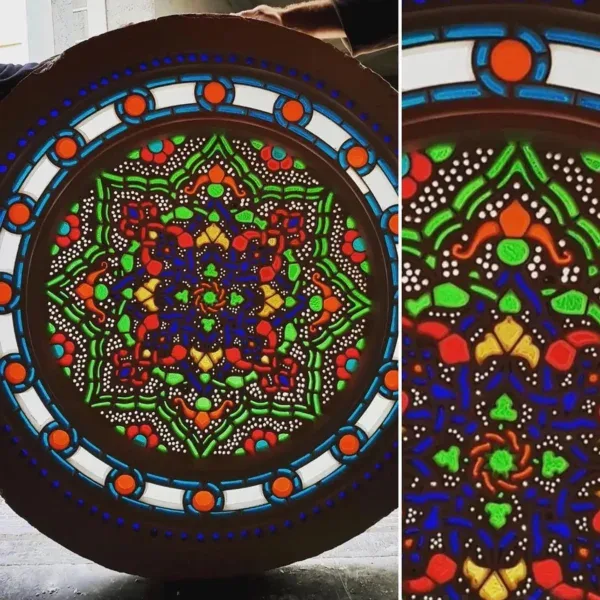
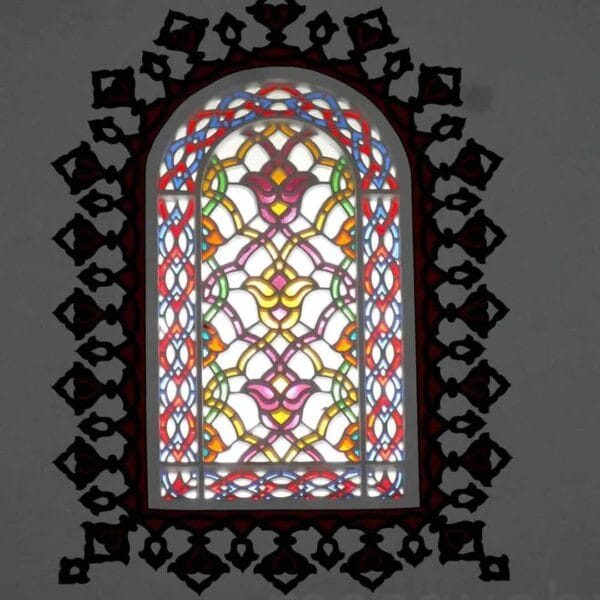
One of the most striking features of a mosque stained glass or masjid window glass design is its vivid use of color. Shades of red, blue, green, and gold blend together, projecting an enchanting harmony across the mosque interior. This interplay of light and color inspires a deeper spiritual connection for worshippers.
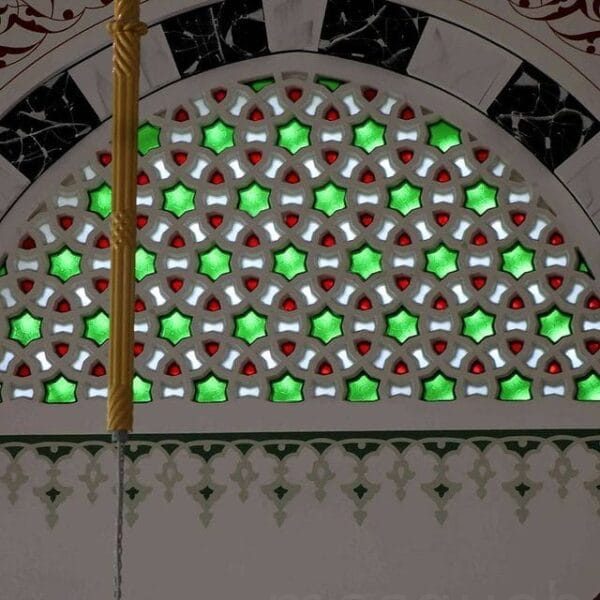
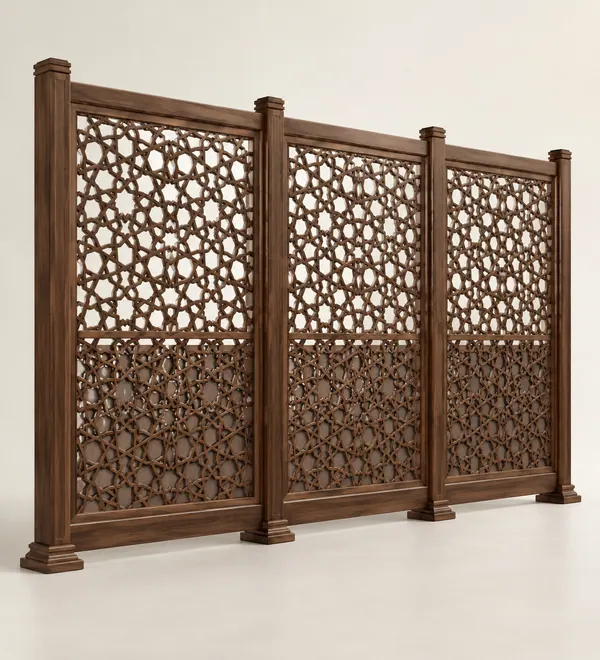
Additionally, mosque window grill design elements are often integrated with stained glass to provide both security and aesthetic appeal. The grills are crafted with geometric and floral patterns, ensuring that every detail aligns with Islamic art principles.
Enhancing the Atmosphere of Worship
A mosque filled with colorful light from its windows creates a truly unique environment. These windows do more than brighten the mosque interior; they establish a peaceful, uplifting ambiance that brings worshippers closer to spirituality. The carefully designed masjid window glass design also supports architectural balance, harmonizing with domes, chandeliers, and calligraphy found within the mosque.
Preserving Tradition, Embracing Modernity
While traditional mosque window design is inspired by Ottoman heritage, modern mosques also embrace innovative techniques. Today’s masjid window styles combine traditional patterns with durable materials, ensuring both beauty and longevity. Whether in historic mosques or contemporary masjids, these windows remain a timeless element of Islamic architecture.
 English
 German
 Turkish
 Russian
 French
 Arabic