

Heritage Mosque Furniture
Ottoman, Seljuk & Kündekâri Mosque Furniture Design
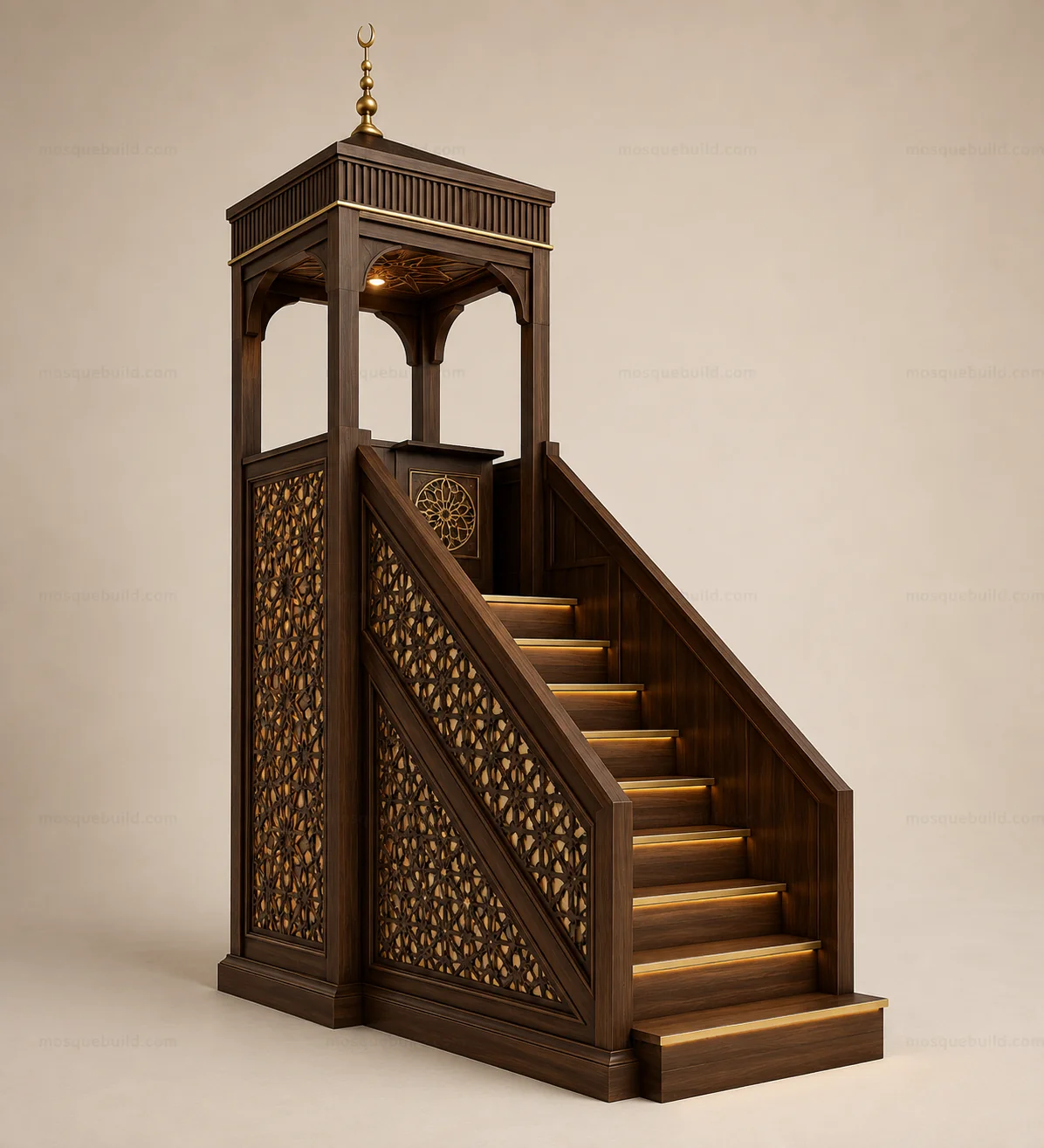
Ottoman and Seljuk-inspired mosque furniture should not be reduced to adding more ornament. Strong heritage design depends on proportion, arch form, geometric structure, lattice density, carving depth, material and how the mihrab, minbar and kursi read together on the qibla wall. Kündekâri-inspired joinery and star geometry can be used selectively to create depth and identity without overwhelming the prayer hall.
Three related but distinct design directions
Ottoman-inspired
Balanced arches, floral/arabesque detailing, calligraphy panels, canopies and a more classical vertical composition.
Seljuk-inspired
Strong geometric structure, pointed forms, star patterns, lattice work and more architectural repetition.
Kündekâri-inspired
Interlocking geometric woodwork language, polygon/star grids and finely controlled panel composition.
How heritage language changes each furniture type
Mihrab
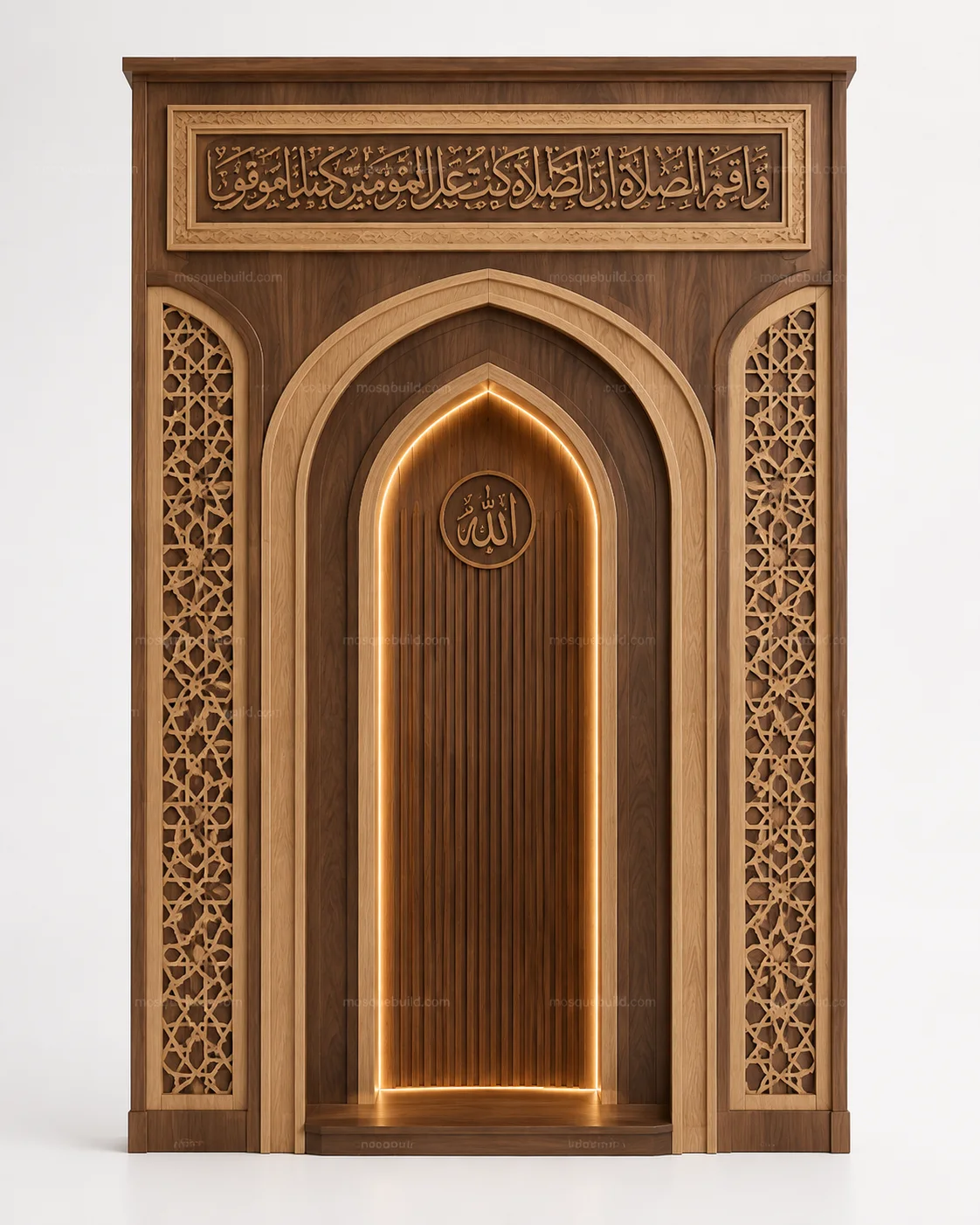
Arch proportion, side columns, niche depth, geometric borders, calligraphy and material layers should reinforce the qibla axis.
Minbar
Side panels and railings carry much of the heritage character. Canopy scale, step count and geometric lattice should remain proportional to the room.
Kursi / Dais
Backrest, side panels, reading surface and upholstery can repeat the same motif family without becoming a miniature copy of the minbar.
Coordinated Set
Matching wood tone, border geometry, calligraphy style and carving depth create a unified qibla-wall composition.
Material and production choices
- Walnut, oak, beech and project-selected hardwood tones
- Solid wood, veneered panels and mixed construction
- CNC carving for repeatable geometric detail
- Hand finishing for edges, relief and surface depth
- Lattice / perforated panels for visual lightness
- Brass-tone or metallic accents where appropriate
- Calligraphy panels coordinated with the furniture geometry
- Modular construction for export and site access
Selected heritage product directions
Canopied Seljuk Wooden MinbarGeometric lattice, strong vertical proportion and project-specific dimensions.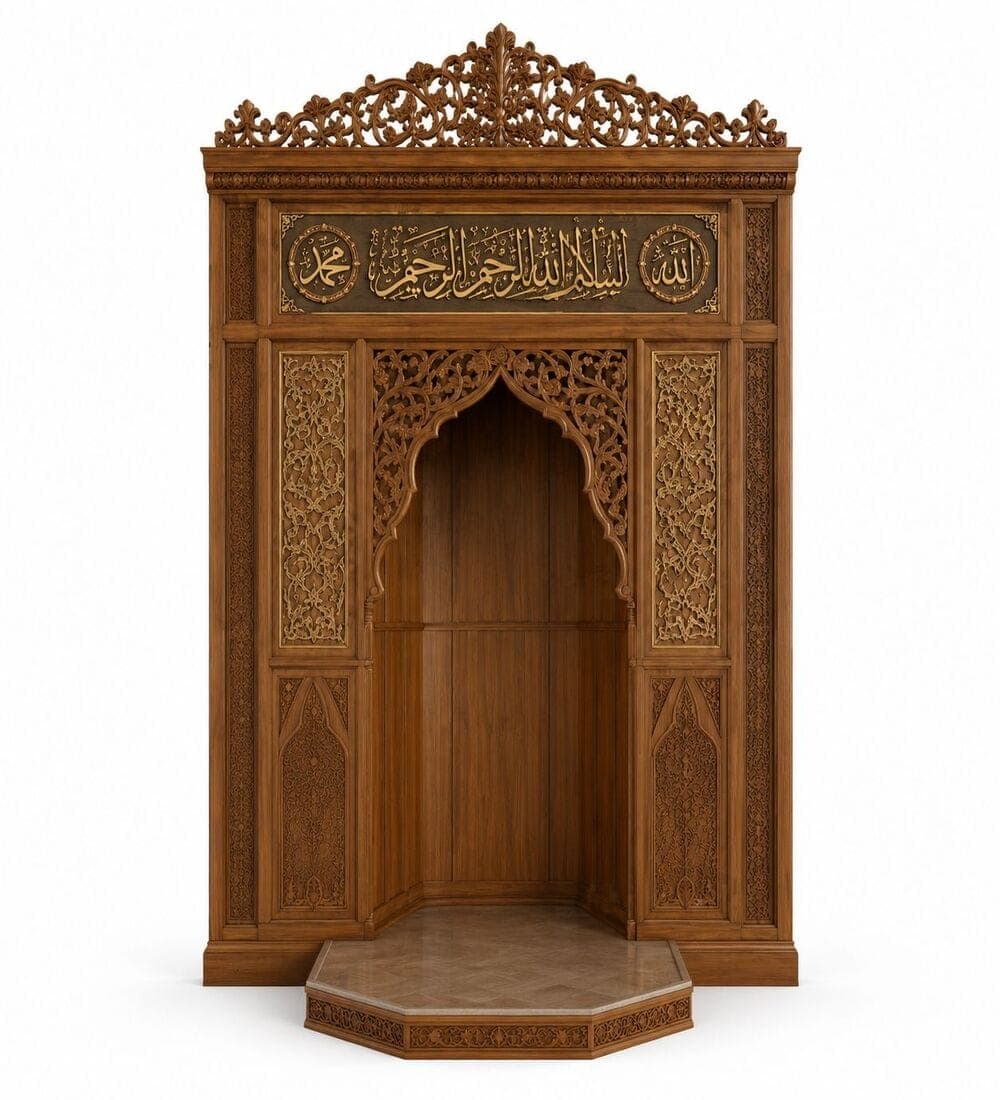 Seljuk-Style Wooden MihrabGeometric woodwork and heritage qibla-wall language.
 Ottoman-Style Kursi / DaisCoordinated arabesque and geometric detailing for preacher furniture.
 Classic Ottoman-Style MihrabMore ornamental heritage direction for larger mosque interiors.
Where heritage detailing works best
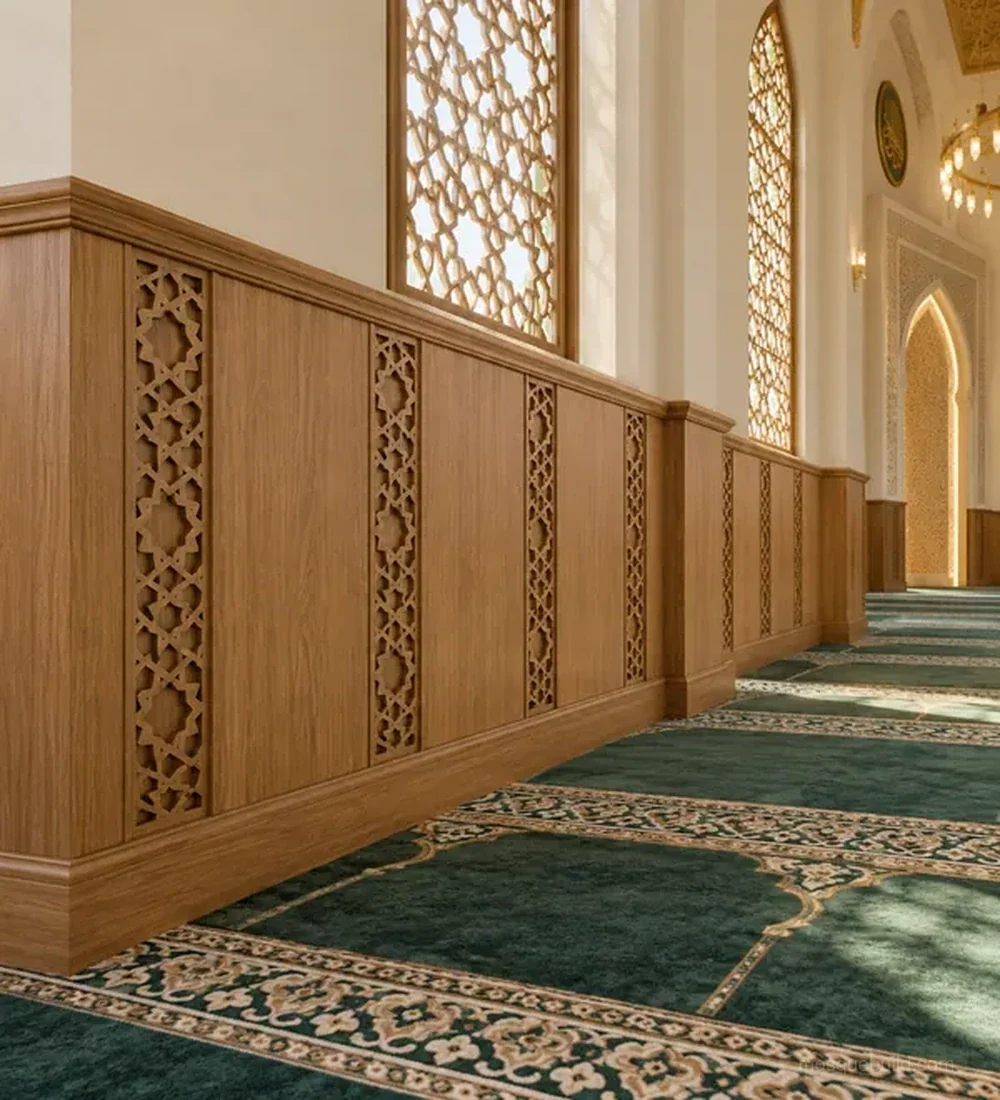
Ottoman, Seljuk and kündekâri-inspired furniture works best when the mosque architecture, ceiling, wall treatment, carpet, doors and lighting share a compatible level of detail. In small rooms, reduce the motif density and use one strong geometric feature rather than covering every surface.
Project information to confirm before production
- Qibla-wall elevation and ceiling height
- Mihrab and minbar relationship
- Selected motif family and carving density
- Wood species / veneer / finish samples
- Calligraphy content and approved artwork
- Lighting integration
- Module sizes and access limits
- Installation and fixing interfaces
Related design guides
Planning Ottoman or Seljuk-inspired mosque furniture?
Send the qibla-wall dimensions, project country, preferred motif direction and reference images for a coordinated mihrab–minbar–kursi review.
Request heritage furniture reviewRelated Products & Project Applications


Related Mosque Interior Solutions

Explore Mihrab, Minbar & Mosque Furniture
Continue from this guide to the main solution page, technical directory and closely related resources.
 English
 German
 Turkish
 Russian
 French
 Arabic