
Mosque Accessibility Retrofit Guide
Mosque Accessibility Retrofit
Accessibility should follow the complete user journey from arrival to prayer, wudu, toilets and community spaces. A compliant ramp at one entrance does not create an accessible mosque if thresholds, shoe storage, internal circulation or wet areas remain unusable.
1. Map the user journey
- Site arrival and drop-off
- External route
- Entrance and threshold
- Shoe removal / storage
- Prayer-hall route and position
- Wudu and toilet access
- Community / teaching spaces
- Safe exit
2. Entrance and level changes
Review steps, ramps, landings, handrails, doors and weather protection as one system. Historic entrances may require an alternative low-impact accessible route where alteration would damage significant fabric.
3. Shoe-removal area
This transition is often overlooked. Provide stable seating, reachable storage and enough space to transfer between mobility aid and prayer area without blocking circulation.
4. Prayer hall
- Clear routes
- Accessible prayer positions integrated with congregation
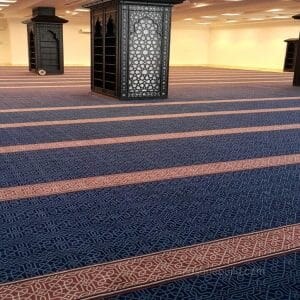
- Avoid trip hazards at carpet edges
- Consider elderly users needing chairs
- Maintain emergency routes
5. Wudu and toilets
Accessible wudu requires more than a low tap. Review seat height, reach, transfer space, grab support, drainage, slip resistance and privacy.
6. Mahfil and upper levels
Where upper spaces must be accessible, evaluate lift or platform solutions with structure, fire strategy, circulation and heritage impact.
7. Visual and wayfinding needs
Use legible signage, appropriate contrast, consistent routes and good lighting. Avoid relying only on decorative scripts for functional wayfinding.
8. Retrofit in historic mosques
Seek solutions that provide genuine access with the least reasonable loss of significant material. Reversible or lightly attached interventions may be appropriate in some contexts.
9. Frequently asked questions
Is an external ramp enough?
No. Accessibility should continue through the entrance, shoe area, prayer hall and required facilities.
Can heritage status prevent accessibility improvements?
Heritage constraints affect how interventions are designed, but the team should still investigate practical low-impact solutions under applicable regulations.