


Masjid Decoration
MosqueBuild / Design & Inspiration
Masjid decoration that brings the whole space together.
A beautiful prayer room is more than a collection of ornaments. Discover how mihrabs, calligraphy, woodwork, carpets, tiles and light can create a calm, welcoming interior.
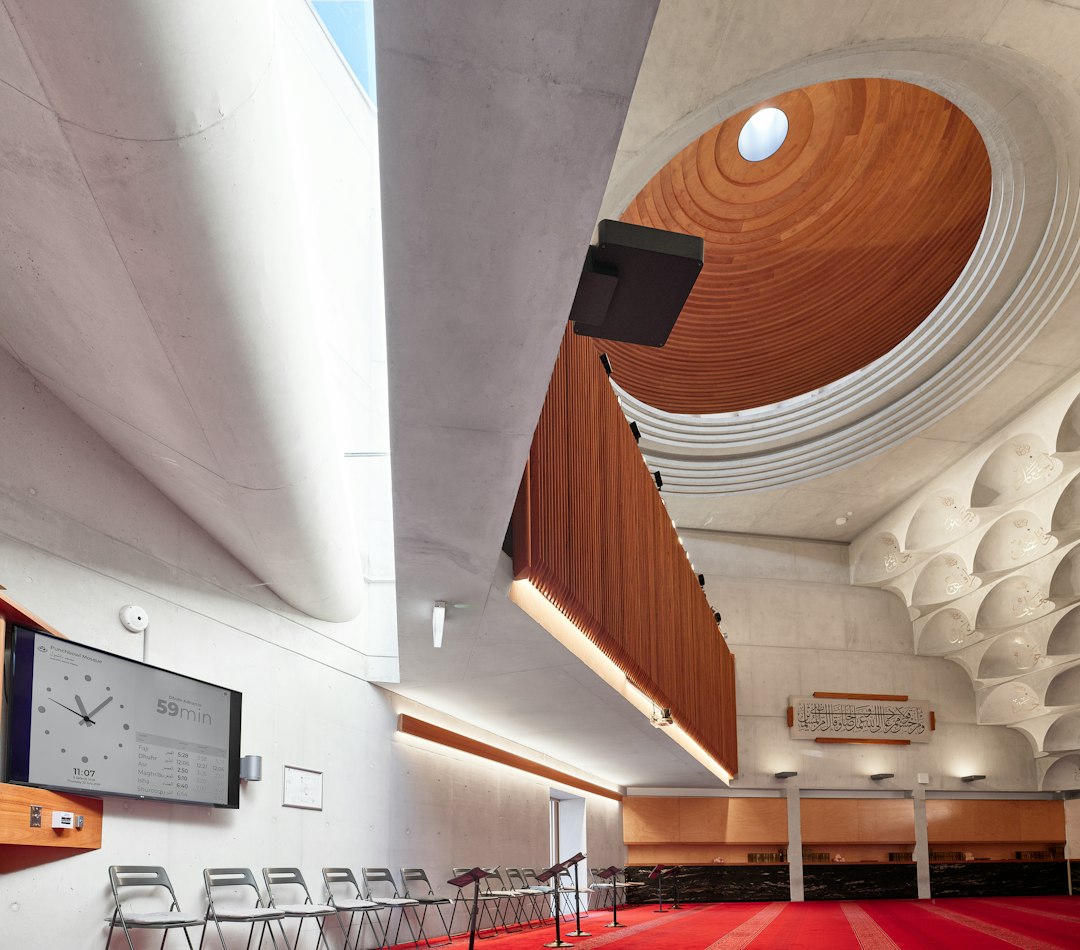 Interior inspiration reference
Why decorate a masjid?
Masjid decoration has long been part of Islamic architectural expression, from carefully composed geometry and calligraphy to beautifully crafted timber and tile.
The aim is not decoration for its own sake. A harmonious interior helps establish the identity of the prayer space, supports a welcoming atmosphere and draws attention to important architectural features without distracting from worship.
Whether the project is a small neighbourhood masjid, a dedicated prayer room or a large congregational mosque, the most effective approach starts with the scale and function of the room.
Balance before ornament
Choose a few complementary motifs, finishes and colours instead of filling every surface with detail.
Respect the prayer layout
Plan the qibla wall, mihrab, circulation and prayer rows before finalising decorative panels and lighting.
Design for long-term use
Consider material durability, cleanability, installation access, acoustic comfort and maintenance.
Decorative elements for a masjid
Each detail plays a different role. Explore the core categories and combine them with a consistent visual direction.
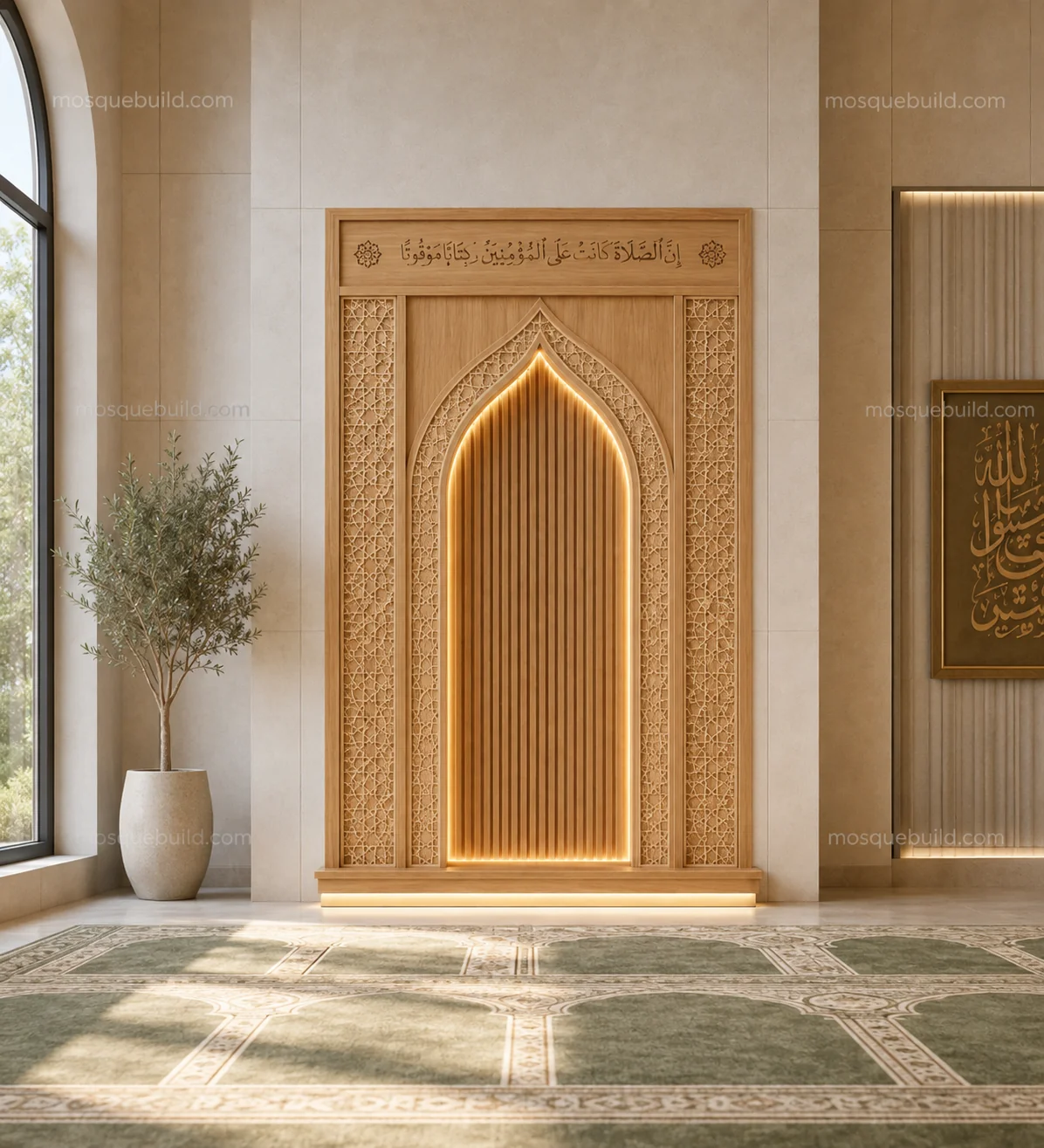
Mihrab & Qibla Wall
The mihrab establishes the visual and directional focus of the prayer hall. Arch proportions, niche depth and finishes should relate naturally to the wall and ceiling.
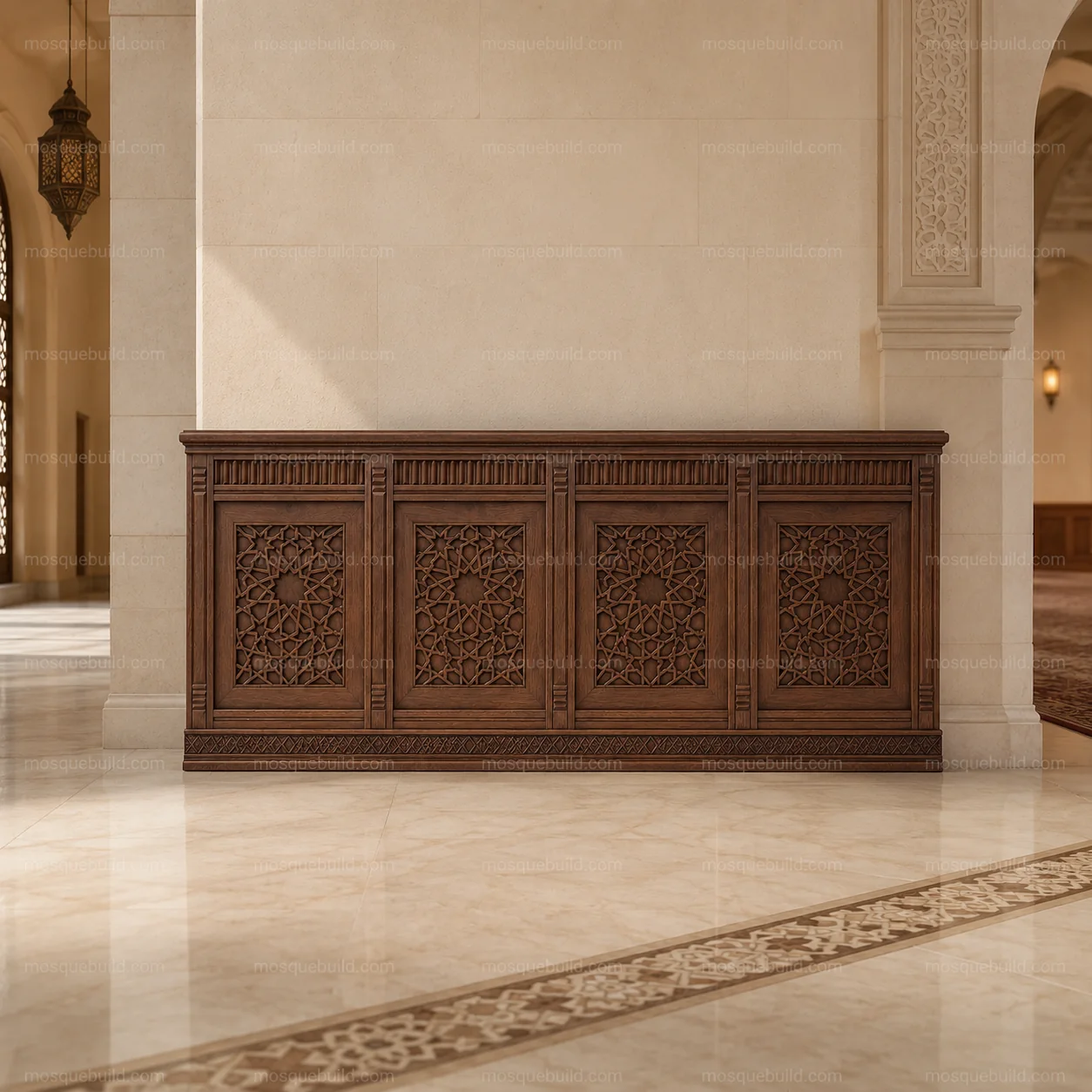
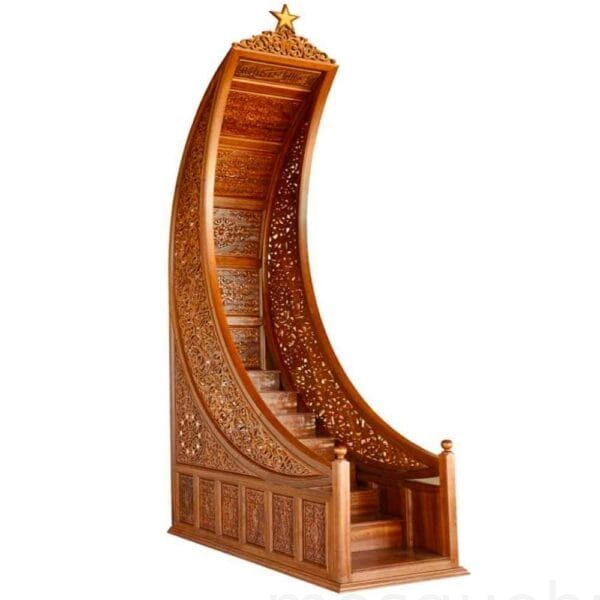
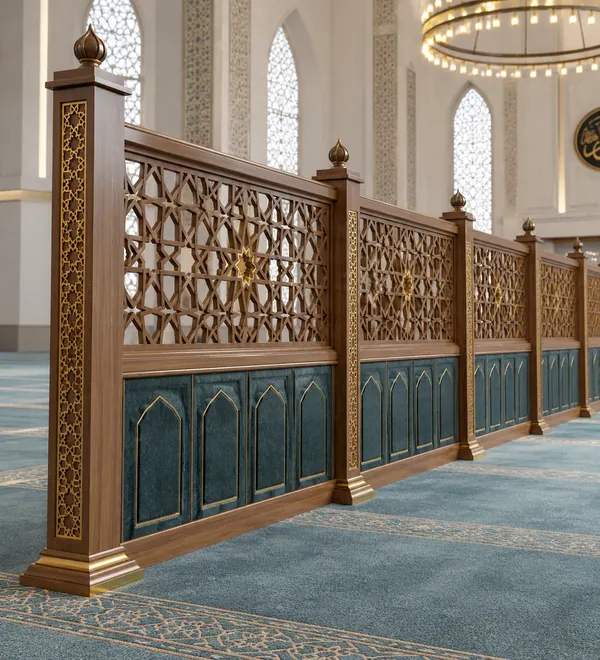
Decorative Woodwork
Carved wall panels, columns and dado details can introduce warmth without overwhelming a compact masjid. Repeat a limited family of motifs for a more coherent result.

Islamic Calligraphy
Calligraphy can create a dignified focal point above an entrance, around a dome or on the qibla wall. Placement and legibility matter as much as ornament.

Tiles & Geometric Art
Tilework brings rhythm and colour to selected architectural zones. Geometric stars, interlacing lines and carefully controlled palettes can complement wood and stone.
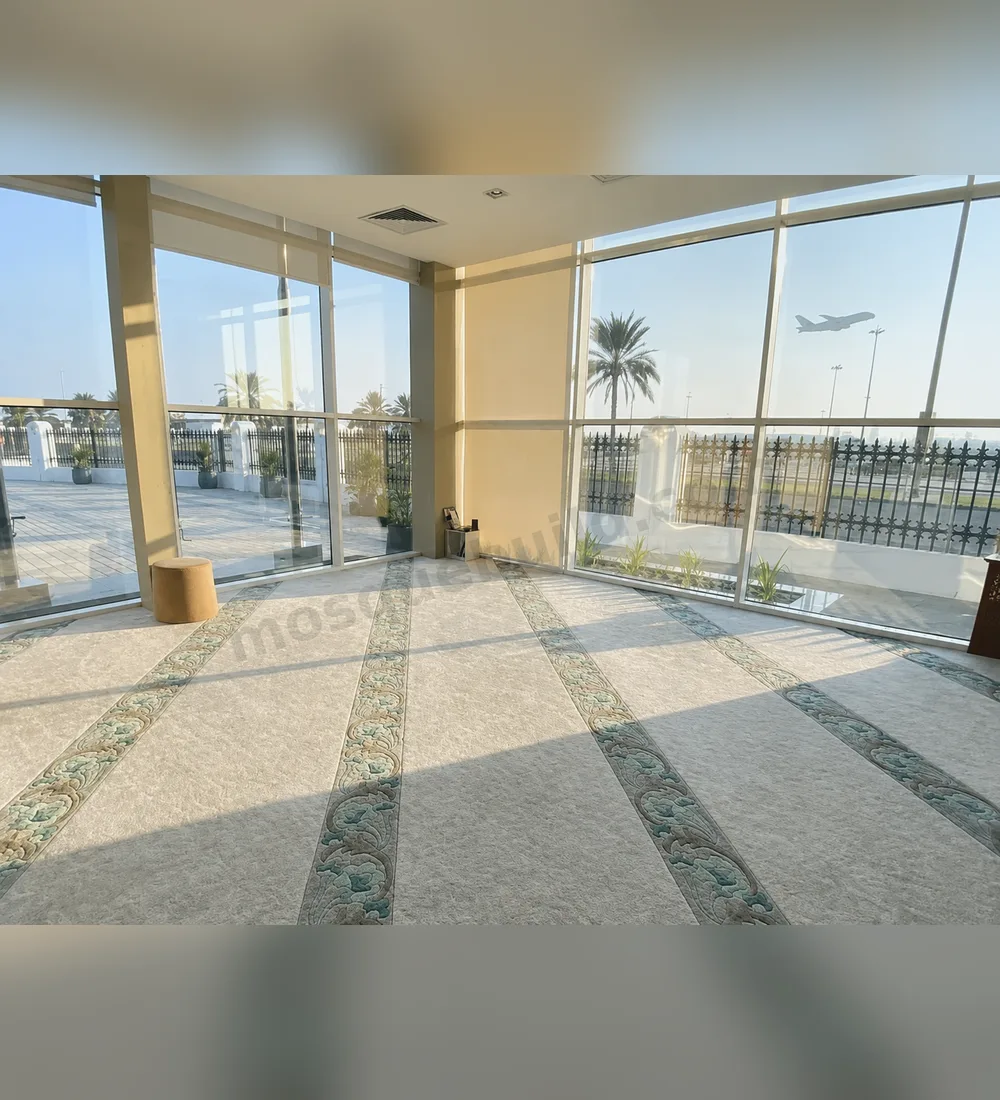
Mosque Carpets
A carpet connects the entire prayer space. Prayer-row alignment, pile choice, colour, cleaning requirements and floor dimensions should be considered together.
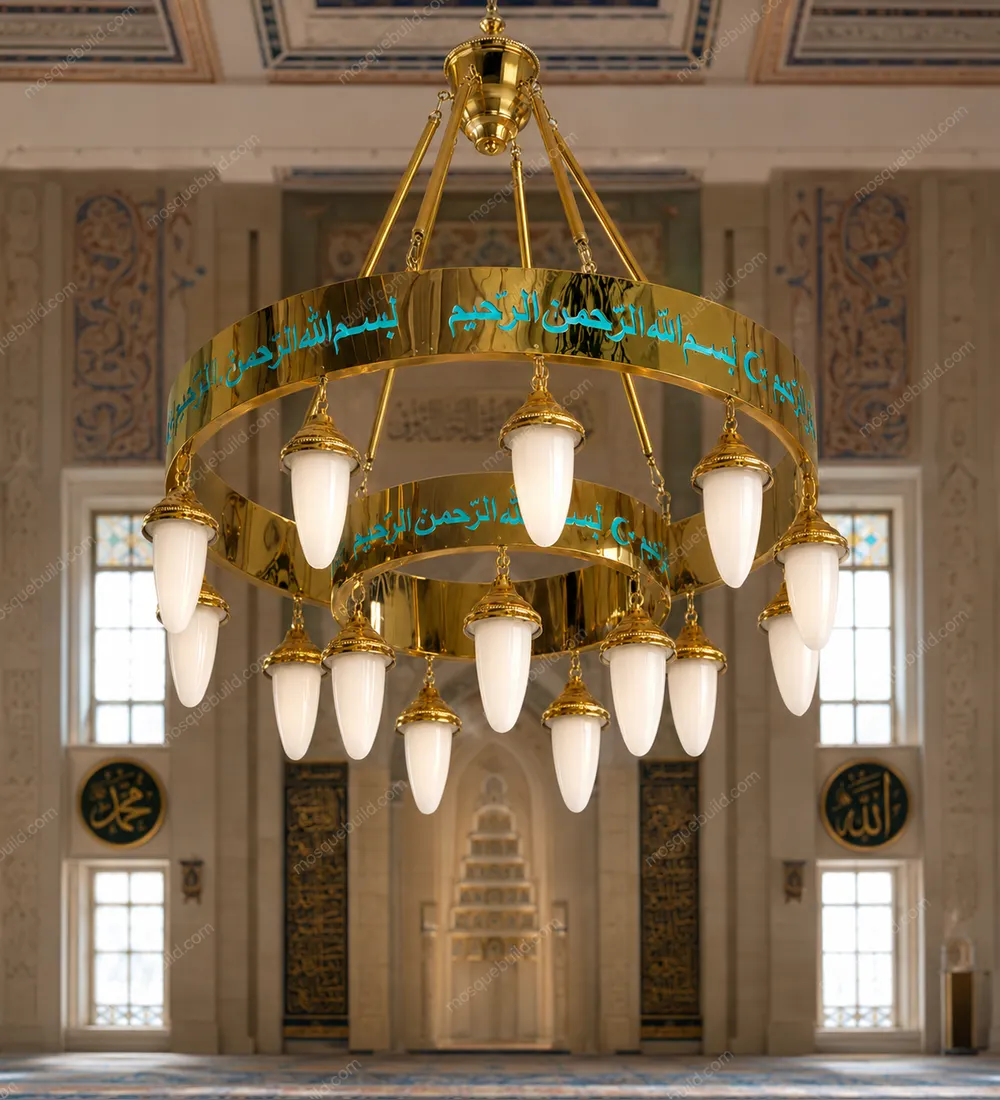
Decorative Lighting
Lighting should support reading, comfort and a calm atmosphere. Chandeliers, concealed architectural lighting and accent lighting work best when planned as one system.
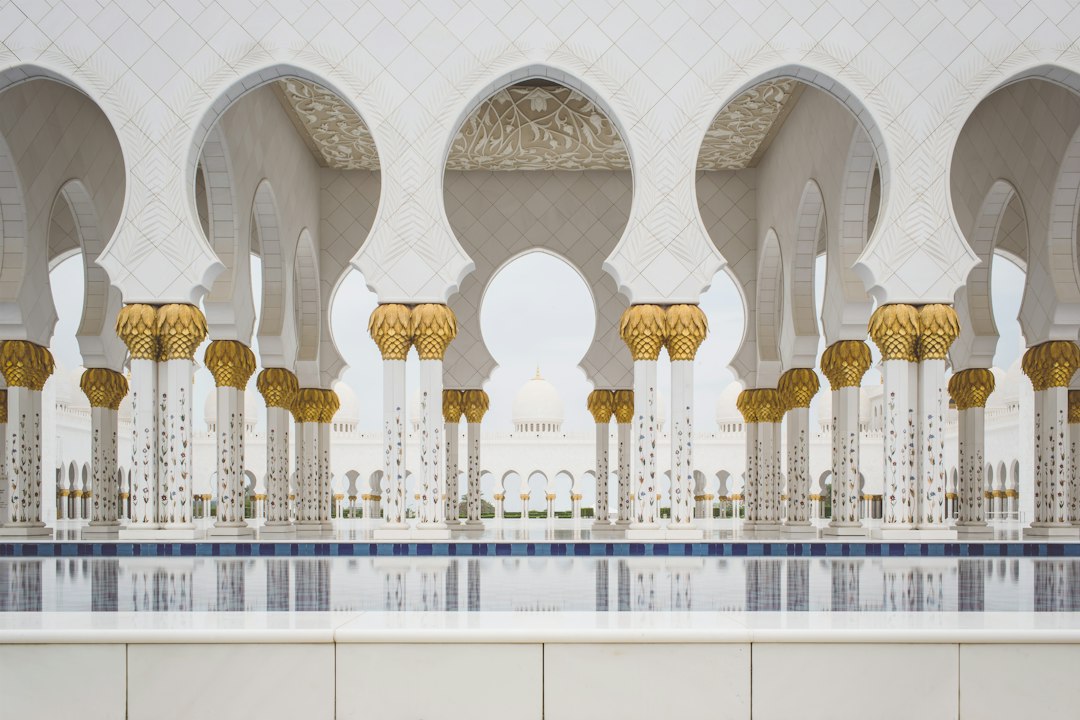
How to plan masjid decoration
Coordinating materials and proportions early prevents small design decisions from competing with one another later. A practical project sequence looks like this:
- 01Document the spaceCollect floor plans, room and ceiling dimensions, photos, qibla direction, door locations and existing architectural features.
- 02Define the visual characterAgree on a contemporary, classical Ottoman, Seljuk-inspired or restrained traditional direction, plus a controlled material palette.
- 03Coordinate each componentStudy the mihrab, calligraphy, wall cladding, carpets and chandeliers together so their scales, motifs and finishes work as one.
- 04Resolve technical interfacesConfirm fixing points, material thicknesses, electrical provision, maintenance access and local project requirements before production.
Colour, pattern and prayer carpets
A quiet base palette often gives calligraphy and feature woodwork more presence. Carpet colours and prayer-row patterns should be checked against the width of the prayer hall and natural daylight. Explore mosque carpet designs alongside the wider scheme rather than choosing floor finishes last.
Materials that work together
Timber adds warmth; tiles add pattern and depth; stone creates visual solidity. Selecting one dominant material and using others selectively can make small and large prayer spaces feel cohesive rather than busy.
Signage and wayfinding
Signs for entrances, ablution areas, shoe storage and circulation should be easy to understand and placed where visitors need them. Legibility and accessibility take priority over ornate lettering in functional signs.
Calligraphy as a focal detail
Choose inscriptions and locations thoughtfully. Proportion, readable letterforms, suitable materials and respectful placement help mosque calligraphy feel integrated with the architecture instead of applied as an afterthought.
Frequently asked questions
What are the main elements of masjid decoration?
The main elements typically include the mihrab and qibla wall, Islamic calligraphy, decorative wall finishes, carpets, tilework, lighting and coordinated architectural details. Not every masjid needs every element; the correct selection depends on space, budget and function.
How can a small masjid look more spacious?
Use a restrained colour palette, simplify patterns, preserve clear circulation and make the mihrab a defined focal point. Consistent carpet rows and balanced lighting often have more impact than adding many decorative features.
Which details should be decided before manufacture?
Confirm site dimensions, wall conditions, niche size, ceiling height, material specifications, mounting interfaces and any required electrical or structural coordination. Final workshop drawings should be checked against actual site measurements.
Can traditional Islamic motifs work in a modern prayer room?
Yes. A modern interior can use a single geometric motif, limited timber carving or carefully placed calligraphy while keeping surfaces clean and uncluttered. Consistency is more important than the number of decorative elements.
Make every detail feel intentional.
Share your dimensions, reference photos and preferred style. MosqueBuild can help you explore coordinated, made-to-measure mosque components for your project.
 English
 German
 Turkish
 Russian
 French
 Arabic